
 English (US)
 繁體中文
繁體中文  日本語
日本語  한국어
한국어  ไทย
ไทย  Русский
I’m Michael Zhang, a Chinese traveler who has explored many countries and spent years focusing on natural geography and cultural history. Rather than quick sightseeing, I gravitate toward places that reward time, context, and repeat visits. Wawu Mountain is one of them. With its world-class table mountain landform, exceptional ecological value, and deep ties to early Taoist history, it offers far more than a scenic backdrop. In this guide, I combine on-the-ground experience with historical and environmental context to walk you through Wawu Mountain’s landscapes, biodiversity, and travel logistics—so you can decide whether it deserves a dedicated trip and how to experience it at a deeper, more thoughtful pace.
Summary
Introduction to Wawu Mountain
Wawu Mountain, also known historically as Shushan and Jushan, takes its name from its roof-like shape. The scenic area covers roughly 700 square kilometers and holds China’s AAAA-level scenic designation. The mountain slopes from west to east, with a broad, flat summit surrounded by steep cliffs. As the world’s second-largest table mountain and the largest in Asia, Wawu Mountain earned the title of “China’s Most Beautiful Table Mountain” from Chinese National Geography.
The area supports more than 3,600 plant species, including nationally protected plants such as the dove tree, water fir, and hemlock. Remarkably, angiosperm families found here account for around 60% of those worldwide, which has led scholars to describe Wawu Mountain as a cradle and diversification center of flowering plants. Wildlife is equally notable, with six first-class protected animals—including giant pandas and takins—and seventeen second-class protected species such as red pandas and monkeys. Beyond its natural value, Wawu Mountain also plays a key role in religious history. During the Han Dynasty, Zhang Daoling founded the Way of the Five Pecks of Rice here, leaving behind the historic Zhang Daoling Stele.
- Address: Jinhuaqiao, Wawu Mountain Town, Hongya County, Meishan, Sichuan (Apple Maps/Amap)
- Opening Hours: 8:00 AM–5:00 PM; last entry at 2:00 PM.
- Recommended Visit Duration: Five to six hours; suitable for a day trip or an overnight stay.
- Best Time to Visit: All year. Spring brings blooming azaleas, summer features dramatic waterfalls, autumn covers the slopes in red foliage, and winter transforms the area into a snow-covered landscape reminiscent of northern China. Sunrises, sea of clouds, Buddha light, sacred lamps, and the rare “three suns” phenomenon can appear in all seasons.
- Ticket Prices:
- Peak season (January, February, July, August, December): 100 CNY.
- Off-season (March–June, September–November): 60 CNY.
- Ticket Purchase:Trip.com Discounts, Klook Deals
- Compare ticket prices and find the best deals:Click Here
Wawu Mountain Map
Why You Should Visit Wawu Mountain
Unique Natural Landscapes
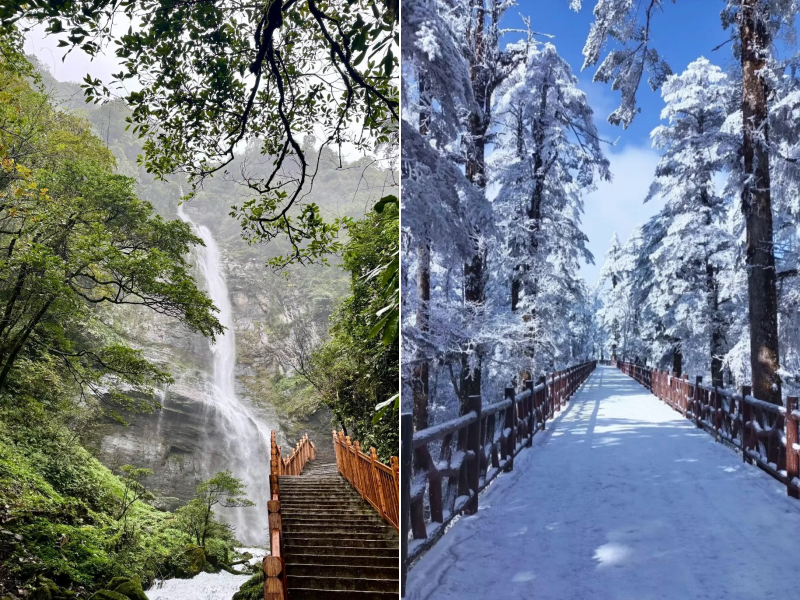
Wawu Mountain features the world’s second-largest flat-topped table mountain, with a summit plateau covering about 11 square kilometers. The broad, level top resembles a natural table, while sunrises and rolling cloud seas create sweeping, painterly scenes. In winter, the mountain becomes a rare ice-and-snow destination in southern China. Snow can last up to half a year, and frozen forests combined with ice formations produce a storybook-like atmosphere.
Exceptional Ecological Diversity
Often described as a “living museum of plants and animals,” Wawu Mountain boasts dense forest coverage and extraordinary biodiversity. More than 3,600 plant species and over 460 wildlife species live here, including giant pandas and the iconic dove tree. While walking the trails, travelers frequently encounter squirrels and birds, adding a sense of vitality to the forested landscape.
Four Distinct Seasonal Experiences
Each season offers a different reason to visit. Spring fills the mountain with flowers, summer provides cool green refuge, autumn brings layered colors across the forest, and winter combines snow activities with nearby hot spring experiences. In addition, 108 natural springs and 72 waterfalls cascade through the mountain, adding movement and freshness to the journey.
Cultural Heritage and Outdoor Activities
Long regarded as a Taoist sacred site, Wawu Mountain is closely associated with Zhang Daoling, who practiced and taught here, leaving behind historic relics and legends. Today, visitors can join winter mountaineering events, ride high-altitude cable cars, or explore the area on foot. These experiences blend hiking, exploration, and cultural reflection, highlighting the deep connection between landscape and belief.
Top Things to Do in Wawu Mountain
Main Attractions
Lanxi Cliff Plank Walkway
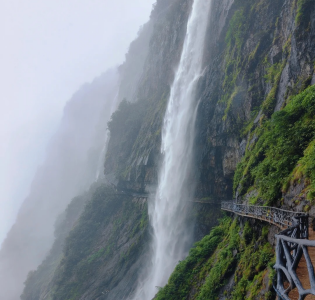
The Lanxi Cliff Plank Walkway is one of the most iconic experiences on Wawu Mountain and the most direct way to understand its table mountain landform. Built along sheer rock faces, the walkway hugs steep cliffs and stretches forward above deep valleys and untouched forest, creating an exceptionally open view. As you walk, the mountain’s sharp, drop-off edges become immediately clear, especially when clouds roll in and surge below the path. Unlike thrill-focused glass walkways, this route emphasizes natural scale and landscape itself, making it ideal for slowing down and observing the changing terrain, clouds, and vegetation.
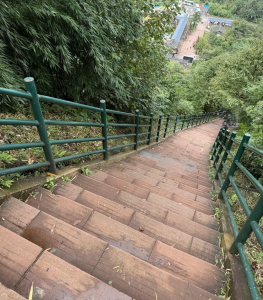
Ancient Buddha Stairway
The Ancient Buddha Stairway is a mountain route that blends physical challenge with cultural depth. Stone steps rise steadily along the slope, and in misty conditions the atmosphere feels especially solemn. Local tradition links this path to Wawu Mountain’s Taoist cultivation history, and along the way you’ll see cliffs, ancient trees, and moss-covered stone blending into one scene. The climb demands effort, but the rhythm remains steady and the route well defined, suiting travelers who want to experience the mountain’s spiritual undertone. Looking back from the upper sections, seas of clouds often spread beneath your feet, making this stretch one of the most ceremonial moments of the journey.
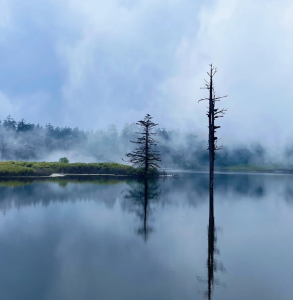
Mandarin Duck Pond
Mandarin Duck Pond sits in a relatively gentle area near the summit and represents one of Wawu Mountain’s few tranquil, static landscapes. The clear water changes character with the seasons: it reflects blue skies and forest in spring and summer, mirrors red foliage in autumn, and may freeze lightly in winter. Compared with dramatic gorges and waterfalls, this spot invites short pauses and a slower pace, allowing visitors to feel the balance and quiet typical of alpine wetlands. Early mornings or moments after rain often bring a thin mist across the surface, making it an ideal place for photography and rest.
Wildlife Encounters
Thanks to its well-preserved ecosystem, wildlife sightings on Wawu Mountain feel like a natural part of the journey rather than a rare coincidence. While walking the trails, you often spot squirrels moving through the trees and monkey groups active at a distance. In denser vegetation and quieter areas, red pandas also appear on occasion. Strong conservation efforts mean animals can be seen year-round, though visitors should keep a respectful distance and avoid feeding them. These unplanned encounters, experienced quietly and without staging, remain one of Wawu Mountain’s most genuine and valuable travel moments.

Wawu Mountain Ticket Guide
Wawu Mountain tickets generally fall into three categories: the entrance ticket, the Jinhuaqiao Cable Car ticket, and the Gufoping Cable Car ticket. Cable cars are not mandatory, although the mountain is vast, and taking at least one section is strongly recommended. If you want to buy only the entrance ticket, on-site purchase is the only option, but queues can be long. Therefore, if I visit during peak season (January, February, July, August, and December), I strongly recommend buying a bundled ticket online in advance. For summer visits, the Entrance Ticket + Jinhuaqiao Cable Car works well. In winter, the Entrance Ticket + both cable car sections is a better choice due to slippery paths and low temperatures.
- Jinhuaqiao Cable Car (round trip): 88 CNY per trip; one-way 50 CNY. This is a long route, and at least a one-way uphill ride is recommended.
- Gufoping Cable Car (round trip): 98 CNY per trip; one-way 50 CNY. After reaching Gufoping, travelers who skip the plank walkways should take this cable car upward.
- Sightseeing Bus (round trip): 68 CNY per trip; one-way 40 CNY. Not essential, but convenient for elderly travelers or families with children. Service stops in winter.
Wawu Mountain Ticket Prices
- Adults: Tickets remain valid for two consecutive days. Visitors staying overnight do not need to repurchase on the second day.
- Peak season (January, February, July, August, December): 100 CNY.
- Off-season (March–June, September–November): 60 CNY.
- Children: Half-price tickets (50 CNY peak / 30 CNY off-season) for ages 6–18.
- Seniors: Half-price tickets (50 CNY peak / 30 CNY off-season) for ages 60–64. Outside Chinese public holidays, visitors aged 60–64 receive free entry.
- Free admission: Children under 6 and seniors aged 65 and above. Outside Chinese public holidays, visitors aged 60–64 also enter free.
Where to Buy Tickets
- Online: Official WeChat account or third-party booking platforms.
- Ticket Purchase: Trip.com Discounts, Klook Deals
- On-site: Scenic area ticket offices. During peak season, online booking is strongly recommended to avoid long lines.
Recommended Wawu Mountain Routes
Thanks to its cable car system, Wawu Mountain offers several route options. The best choice depends on fitness level and travel style.
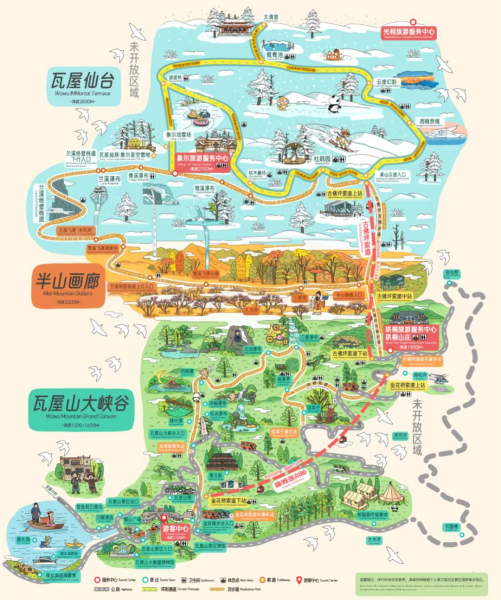
- Full Cable Car Route (recommended for elderly travelers and families): Scenic Area Entrance → Sightseeing Bus / Jinhuaqiao Cable Car → Gufoping Cable Car (upper station) → Summit Plank Walkway → Return. 💡 Highlights: Covers the mountain’s core scenery with minimal physical strain.
- Half Cable Car Route (standard option): Scenic Area Entrance → Sightseeing Bus / Jinhuaqiao Cable Car → Gufoping Cable Car (mid station) → Mid-Mountain Gallery (3.1 km) → Lanxi Cliff Plank Walkway (1.4 km) → Xianger Lodge → Summit Plank Walkway → Return. 💡 Note: Steeper sections require 2–4 hours of hiking and solid stamina, but the scenery is outstanding.
- Full Hiking Route B (for hiking enthusiasts): Visitor Center → Jinshuang Water Valley → Wawu Mountain Grand Canyon → Dove Tree Plank Walkway → Ancient Buddha Stairway → West View of Mount Gongga → Mandarin Duck Pond → Summit Plank Walkway → Return. 💡 Tip: About 13 km total, taking 3–4 hours; the Ancient Buddha Stairway is physically demanding.
- Full Hiking Route A (best for overnight stays, longest and most complete scenery): Visitor Center → Jinshuang Water Valley → Wawu Mountain Grand Canyon → Dove Tree Plank Walkway → Lower Ancient Buddha Stairway → Mid-Mountain Gallery → Lanxi Cliff Plank Walkway → Xianger Lodge → Mandarin Duck Pond → Summit Plank Walkway → Return. 💡 Advantage: Exceptional scenery across roughly 15 km, requiring 4–6 hours.
- Tips
- Clear weather offers the best experience.
- Bring an umbrella, as waterfalls along the Lanxi Cliff Plank Walkway can soak you unexpectedly.
Recommended Food Around Wawu Mountain
Wawu Mountain itself has restaurants and snack stalls, with a wide range of options available. Prices are slightly higher than in town, but overall they remain reasonable for a mountain scenic area.
- Gufoping scenic area, Gufoping cable car upper station, Doumu Palace, Ciyun Temple, Xiangbi Mountain, Dead Tree Cliff scenic spots: fried potatoes, grilled sausages, vegetarian corn, cured pork ribs, instant noodles, and similar quick meals.
- Gufoping complex: hot and sour glass noodles, roasted sweet potatoes, grilled potatoes, wontons, tangyuan, milk tea and hot drinks, cold desserts, roasted beans, and snacks.
- Zhutong Lodge, Xiangkong Lodge: wild mushroom free-range chicken hot pot, greens with cured pork hot pot, yellow beef hot pot, egg fried rice, hot and sour noodles, and simple set meals.
Recommended Hotels Near Wawu Mountain
Most visits to Wawu Mountain start in the morning. If waking up early is difficult, staying overnight near the mountain allows for a more relaxed climb the next day. It’s also a good option if you prefer not to return to Chengdu on the same day. Staying near the mountain entrance is the most convenient choice. You can also stay near Yanu Lake Scenic Area, which offers beautiful scenery, though it is about 17 km away and less convenient.
Holiday Inn Express Wawu Mountain
.webp)
- Location: 1.2 km from the Wawu Mountain scenic area entrance
- Price per night: from 505 CNY
- Check Rates:Trip.com Specials, Compare on Klook
- Rating: Trip.com 9.3
- Special Amenities: laundry room, family rooms
One of the few international chain hotels near Wawu Mountain. It sits about 1.2 km from the entrance and provides a free sightseeing shuttle. Rooms overlook Yanu Lake.
Rooms are spacious, bright, clean, and well maintained. Facilities are relatively new, making it a reliable and comfortable stay overall.
HongYa Minjiang Donghu Wawu Mountain Hot Spring Resort Hotel
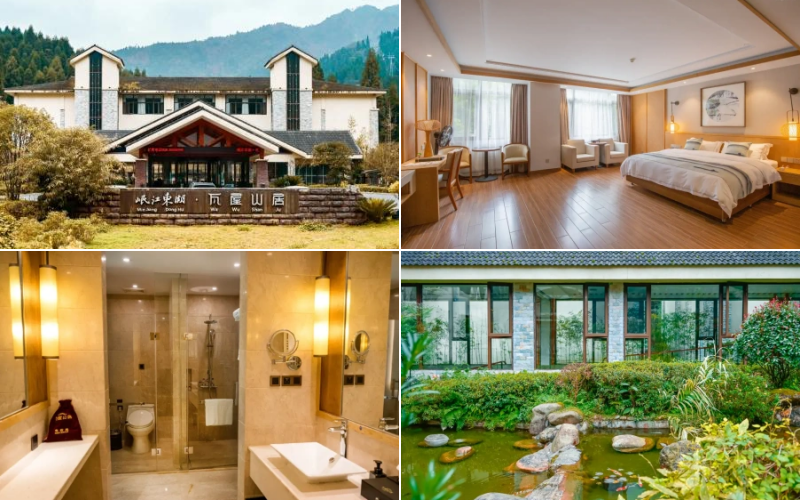
- Location: Adjacent to the Wawu Mountain entrance, about a 5-minute walk
- Price per night: from 527 CNY
- Check Rates:Trip.com Specials
- Rating: Trip.com 9.4
- Special Amenities: children’s playground
Excellent location right next to the scenic area entrance, within walking distance of the ticket office.
Staff provide attentive service, rooms are clean, facilities are well maintained, and bedding is kept in good condition.
How to Get from Chengdu to Wawu Mountain
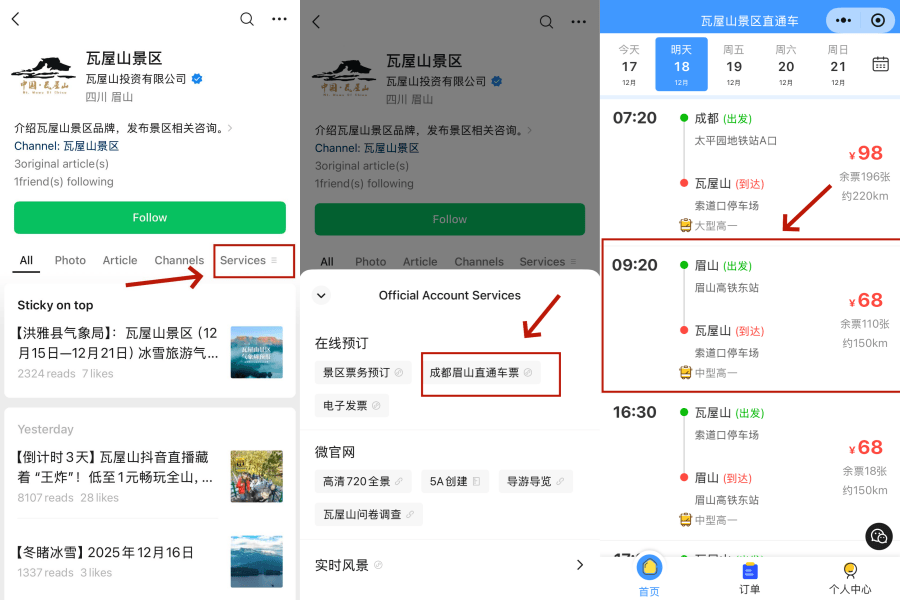
The most convenient option is the direct shuttle bus from Chengdu to the scenic area, although the ride takes about four hours. If you prefer to reduce time on the road, you can take a high-speed train from Chengdu to Meishan and then transfer to the scenic shuttle bus. Cost and total travel time are similar, but the second option shortens the bus ride.
Direct Scenic Shuttle Bus
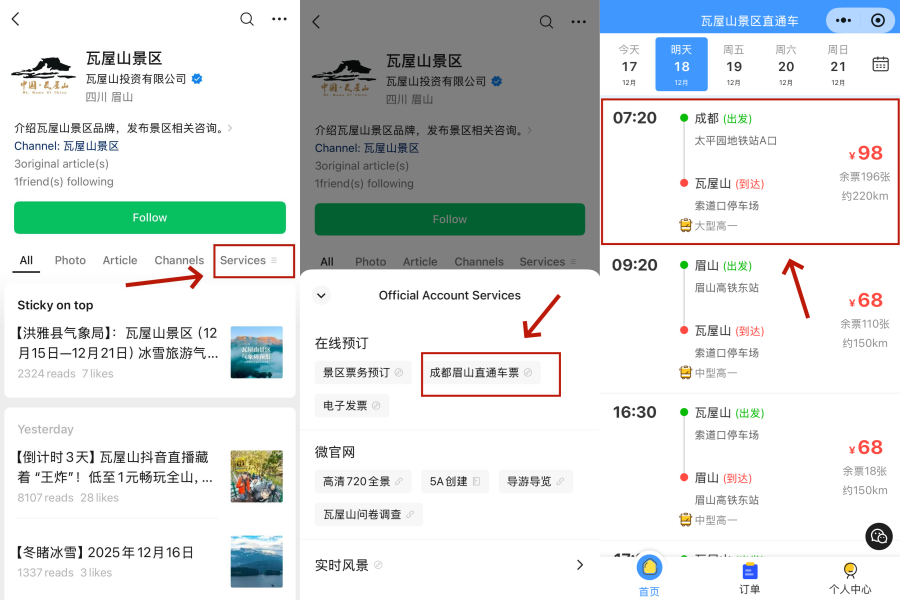
You can purchase tickets through the official WeChat account. This route runs directly from Chengdu to Wawu Mountain and is the simplest option, though the travel time is long. If extended bus rides feel tiring, consider the high-speed rail alternative.
- Schedule: once daily, departing at 7:20 AM
- Pickup location: Taipingyuan Metro Station Exit A, Chengdu (Apple Maps/Amap)
- Drop-off location: Wawu Mountain cable car parking area
- Travel time: about 4 hours
- Fare: 98 CNY
High-Speed Train + Scenic Shuttle Bus
From Chengdu East Railway Station, take a high-speed train to Meishan East Station. After exiting the station, walk straight, follow the signs, turn right at the bus area, cross the road, and turn right again. Yellow minibuses mark the scenic shuttle bus, about a 10-minute walk from the exit. The shuttle ride takes roughly two and a half hours.
- Train route: Chengdu East (Chengdudong) → Meishan East (Meishandong)
- Train time: about 30 minutes
- Train tickets:Click to view and purchase
- Scenic shuttle purchase: official WeChat account
- Shuttle route: Meishan → Wawu Mountain
How to plan your Chengdu trip
Chengdu works well as a 2–3 day highlights trip, or a longer 4–7 day route if you want to combine classic Sichuan scenery and cultural stops with private transfers or high-speed rail. Here are our popular private tour options:
- 7-Day Chengdu, Jiuzhaigou, Bipenggou, Siguniang Mountain & Dagu Glacier Private Tour — Explore Jiuzhaigou, Huanglong, Dagu Glacier, Bipenggou, and Siguniang Mountain with private transfers and a well-paced route.
- 6-Day Chengdu, Daocheng Yading, Xinduqiao & Siguniang Mountain Private Tour — Travel through Xinduqiao, Daocheng Yading, and Siguniang Mountain with private transport for a comfortable Western Sichuan journey.
- Chengdu, Jiuzhaigou & Huanglong 5-Day Private Tour — Experience Jiuzhaigou and Huanglong’s UNESCO landscapes with seamless private transfers throughout the trip.
- 4-Day Jiuzhaigou, Huanglong & Siguniangshan Private Tour — Discover Siguniangshan, Huanglong, and Jiuzhaigou with private transportation for a relaxed and scenic Western Sichuan escape.
- 3-Day Chengdu, Qingcheng Mountain, Dujiangyan & Sanxingdui Private Tour — Visit Qingcheng Mountain, Dujiangyan, and Sanxingdui with private car service for a smooth cultural getaway.
- Chengdu & Jiuzhaigou 2-Day Private Tour — Take the high-speed train to Jiuzhaigou for a fast, easy, and comfortable journey combining Huanglong and Jiuzhaigou’s stunning landscapes.
FAQ
No. Most of the route involves walking and hiking. While cable cars and sightseeing buses are available, strollers and wheelchairs remain impractical along much of the terrain.
Large suitcases can be stored at the luggage counter next to the visitor center ticket office for 20 CNY. Be sure to collect them before 5:30 PM. Small items can be stored for free near the security check at the entrance.
Essential Chengdu Travel Resources
- Comprehensive Chengdu Travel Guide 📖
- Chengdu Travel Recommendations 🏙️
- Hotel Recommendations 🏨
- Transportation Guides ✈️ 🚇 🚄 🚆
- Essential Travel Tips & Tools 🗺️ 🍜 📱 💸 🌤️ 💊
- 🗺️ Chengdu Maps
- 🍜 Chengdu Food and Dining Guide
- 🍜 Sichuan Hot Pot in Chengdu
- 📱 Essential Travel Apps
- 💸 China Tax Refund Guide
- 🌤️ Chengdu Weather Guide
- 💊 Essential Medicines for Traveling
- 🛍️ Travel Deals China
- 🔌 China Plug Types and Power Adapter Guide
- 📶 How to Use eSIM China
- 🧳 Packing List and Travel Checklist
Comment (0)