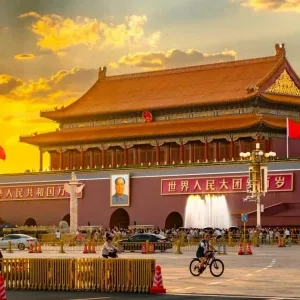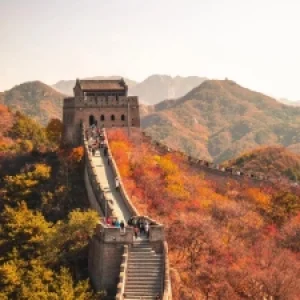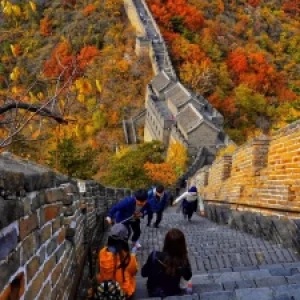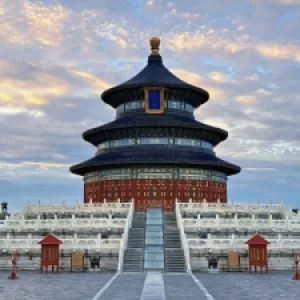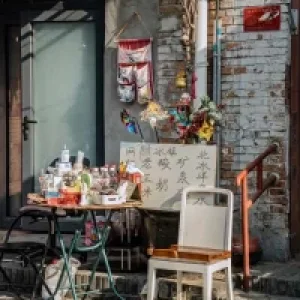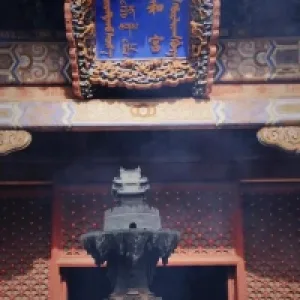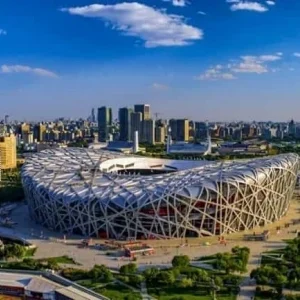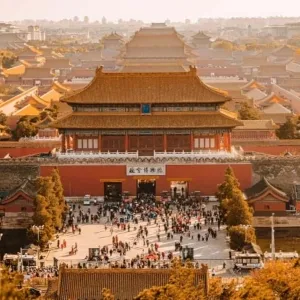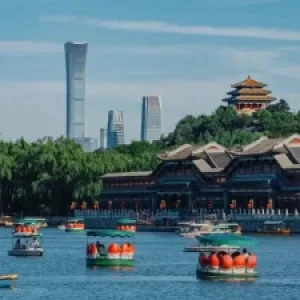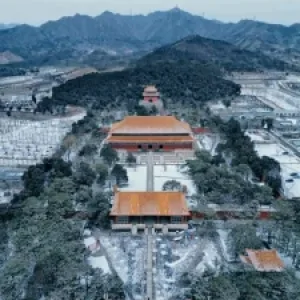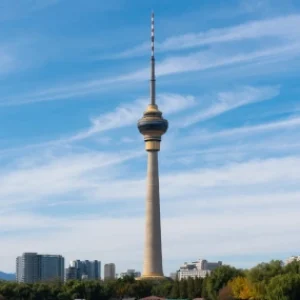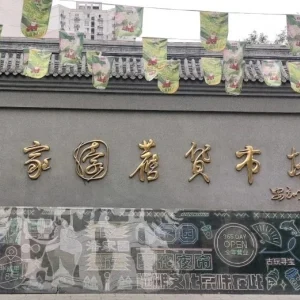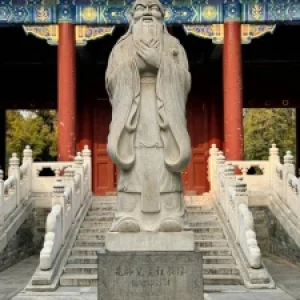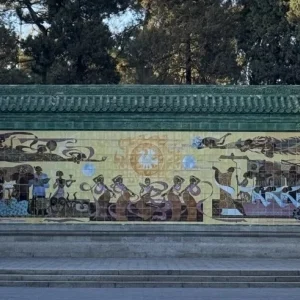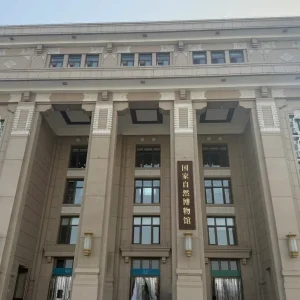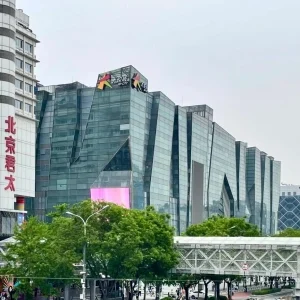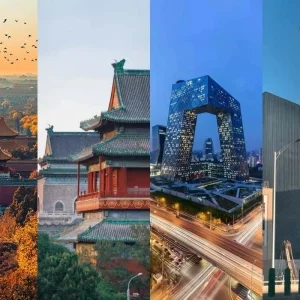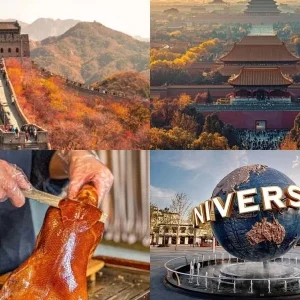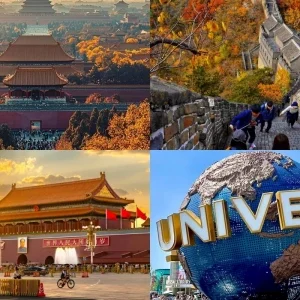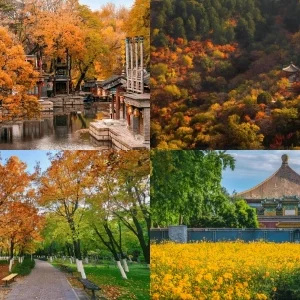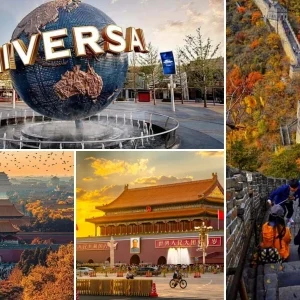
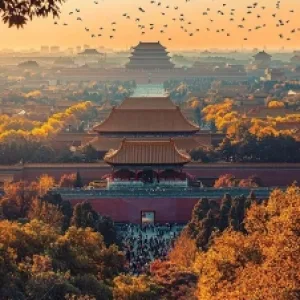
Beijing is one of China's most distinctive travel destinations for history, culture, and capital-city character. It is known for the Forbidden City and the Great Wall, imperial gardens, and the everyday culture of its hutongs. This guide covers Beijing's top attractions, recommended itineraries, best areas to stay, transportation options, local food, best time to visit, map-related information, and practical travel tips to help you plan a smoother trip to Beijing.
Beijing's travel experience usually centers on imperial historic sites, Great Wall excursions, hutong neighborhoods, and museum culture. For a first visit, it is best to prioritize the city's most iconic attractions and experiences, then add neighborhood walks, museums, food stops, night views, or nearby day trips depending on your schedule.
Beijing itineraries can be planned as quick highlights, classic sightseeing routes, or deeper experiences depending on how long you stay. For a first visit, it is best to build your core itinerary around Tiananmen, the Forbidden City, Jingshan Park, the Temple of Heaven, the Summer Palace, and the Great Wall, then add hutong walks, museum visits, or a day trip around the Great Wall area if time allows.
The following Beijing itineraries are suitable for first-time visitors. You can adjust the order of attractions based on your flight, high-speed rail schedule, hotel location, and interests. During public holidays or when popular attractions have reservation limits, it is best to leave more buffer time.
Good for first-time visitors with limited time, covering Beijing's Central Axis, imperial sites, hutong neighborhoods, museums, and Olympic landmarks.
Good for travelers who want a more relaxed Beijing experience, covering classic attractions such as the Forbidden City, the Great Wall, the Temple of Heaven, and the Summer Palace, while also allowing time for Universal Beijing Resort and city leisure or shopping.
● Beijing · 5 days
Universal Studios and Beijing's top landmarks in one trip.
from
per person
● Beijing · 4 days
Classic Beijing sights with private comfort.
from
per person
● Beijing · 3 days
Private tour covering Beijing's must-sees.
from
per person
● Beijing · 2 days
Classic Beijing sights in a short trip.
from
per person
For first-time visitors to Beijing, the most recommended areas to stay are usually around Qianmen, Wangfujing, Dongdan, or Tiananmen, because transportation is convenient, major attractions are easy to reach, and hotel choices are relatively abundant. If you care more about nightlife, food, shopping, a quieter setting, or access to the airport or train stations, you can also choose areas such as Xizhimen, Zhushikou, neighborhoods along southern-city metro lines, or Universal Beijing Resort based on your itinerary.
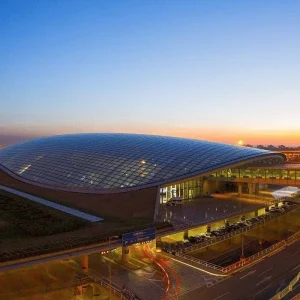
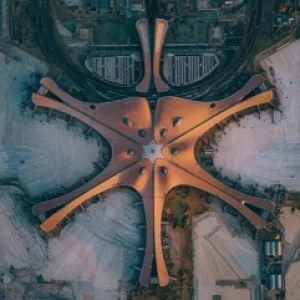
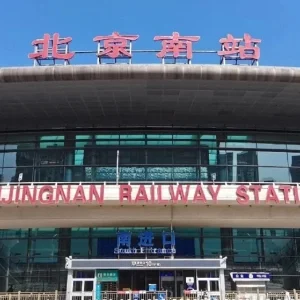
Most travelers reach Beijing by plane or high-speed rail. Beijing is mainly served by Beijing Capital International Airport and Beijing Daxing International Airport for air travel, and it also has major railway stations such as Beijing Railway Station, Beijing West Railway Station, Beijing South Railway Station, Beijing North Railway Station, and Beijing Chaoyang Railway Station. If you are traveling from nearby cities, high-speed rail is usually the most convenient and time-efficient option.
From Beijing Capital International Airport to the city center, you can choose the Capital Airport Express, metro, taxi, ride-hailing service, or airport bus. From Beijing Daxing International Airport to the city center, you can choose the Daxing Airport Express, metro, taxi, ride-hailing service, or airport bus. The best option depends on your arrival time, amount of luggage, hotel location, and budget. Since Beijing has more than one airport, always confirm your arrival airport before booking a hotel or transfer service. In general, Capital Airport is more suitable for access to East Third Ring Road, Sanyuanqiao, Chaoyang District, and the northeast side of the city center, while Daxing Airport may be more convenient for Beijing South Railway Station, Fengtai, southern Beijing, and some transportation connections toward North China.
Beijing also has multiple railway stations, and different stations may serve different high-speed rail or regular train routes. Before buying tickets, carefully confirm your departure and arrival stations, because travel times between train stations within the city can vary significantly.
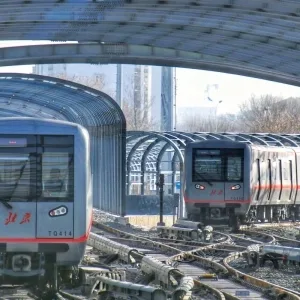
For sightseeing within Beijing, the metro is usually the most convenient and reliable way to get around. Taxis and ride-hailing services are useful for nighttime travel, carrying large luggage, or reaching places not directly served by the subway. If you plan to visit suburban attractions or take a day trip, you can choose trains, buses, private cars, transfer services, or local tours depending on your destination.
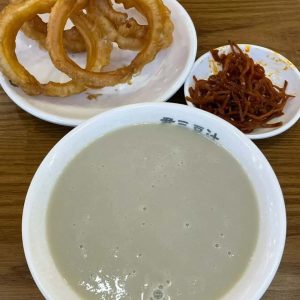
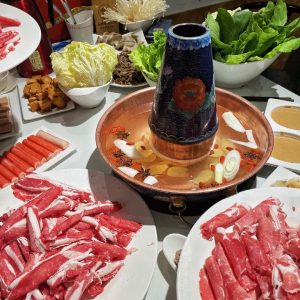
Beijing is an excellent place to try Beijing-style snacks, imperial-style flavors, and northern Chinese cuisine, from classic regional dishes and street food to local restaurants. First-time visitors should prioritize signature foods such as Peking duck, copper-pot hot pot, and zhajiangmian. Some foods can be found near popular attractions and commercial areas, while others are better experienced in local neighborhoods, time-honored restaurants, or traditional markets.

A traditional sweet-and-tart snack commonly found around scenic areas and snack streets.

A distinctive old Beijing drink with a unique flavor, best for travelers who want to try a truly local taste.

A classic Beijing hot pot style, featuring tender lamb and especially popular in autumn and winter.

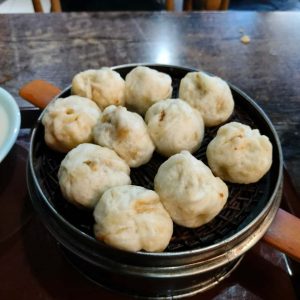
Soup-filled dumplings with a savory, juicy filling, an easy-to-enjoy Chinese dim sum for visitors.

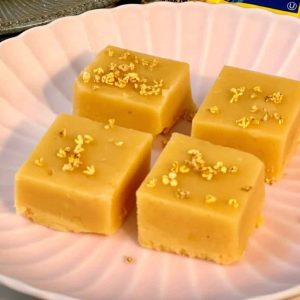
A smooth and lightly sweet pea-flour cake, one of Beijing's traditional pastries.
The best time to visit Beijing is usually spring and autumn, when the weather is clear and temperatures are moderate, making it better for outdoor sightseeing and city walks. Early winter can also be a good option, while midsummer and deep winter may reduce travel comfort because of heat, strong sun, rain, cold, or strong winds.
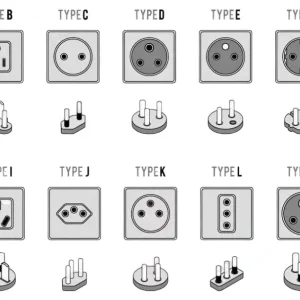
Before visiting Beijing, it is a good idea to plan several practical details in advance, including reservations for popular attractions, payment methods, mobile internet, transportation apps, and packing for the season. Some popular attractions may require advance reservations or ticket purchases, and some services may work differently from what overseas visitors are used to.
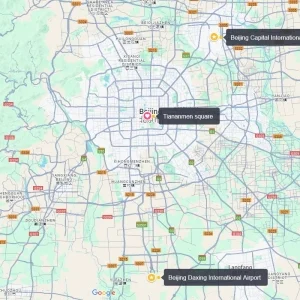
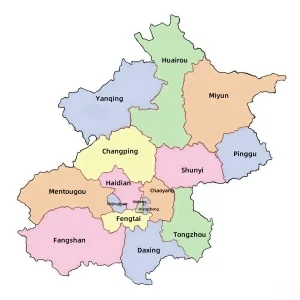
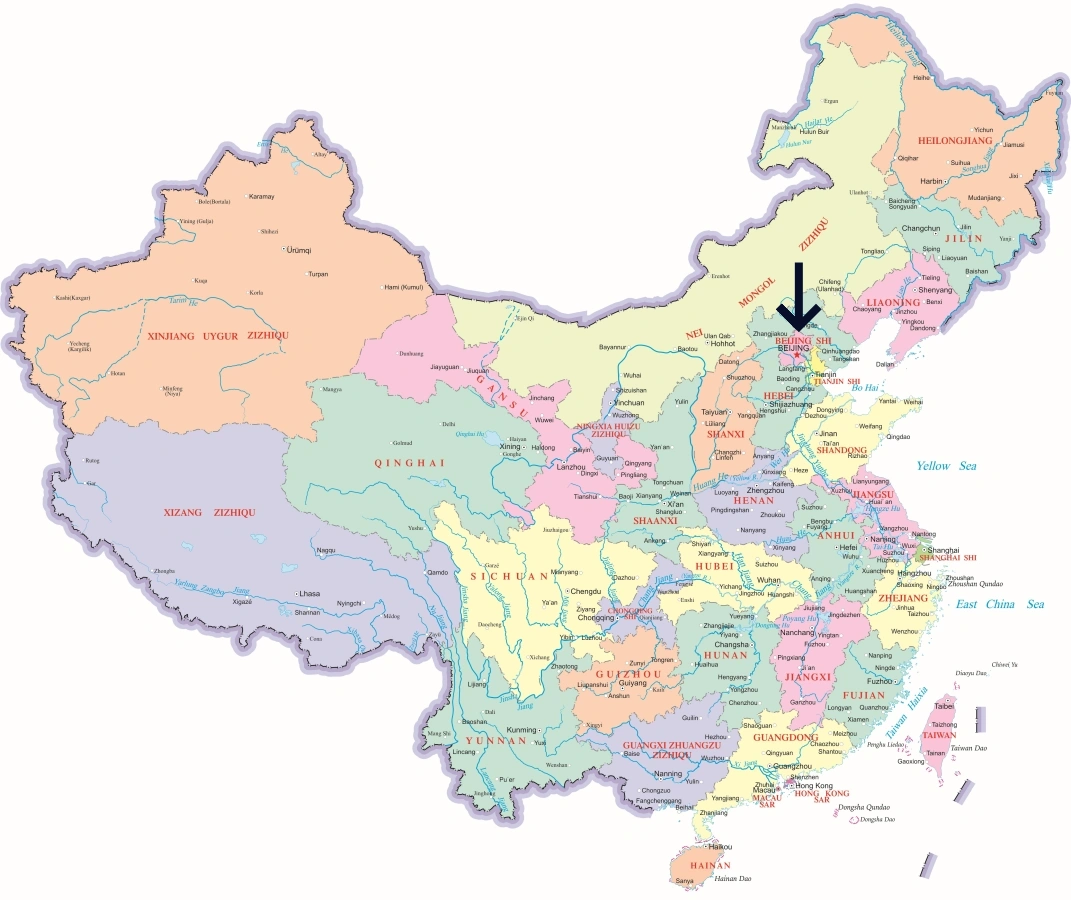
Understanding Beijing's city layout can make itinerary planning easier. This section gives a quick overview of Beijing's location in China and the general distribution of its main administrative districts. For travelers, the most important areas are usually the city center, major transportation hubs, and the urban or suburban districts that connect popular attractions.
Beijing is located in North China and is a directly administered municipality. It is close to Tianjin, Hebei, and the Beijing-Tianjin-Hebei city cluster, and it is connected to other major Chinese cities by air, high-speed rail, and expressways. Thanks to its location and strong transportation links, Beijing is also a convenient starting point for trips to nearby destinations such as Tianjin, Chengde, Qinhuangdao, Gubei Water Town, and surrounding Great Wall scenic areas.
Beijing has multiple administrative districts, but travelers do not need to understand every district in detail. For most trips, it is more important to focus on the areas where major attractions, hotels, restaurants, shopping streets, airports, and train stations are located.
Areas travelers should pay closer attention to include:
Beijing covers a total area of about 16,400 square kilometers and has a permanent resident population of about 21.832 million. Because the city includes central urban areas, suburbs, and some townships, travelers should focus on distances between the city center, major transportation hubs, and popular attractions when planning accommodation and transportation.
Approximate population figures for major districts are as follows:
Beijing's postal codes and telephone area code are commonly used for mailing documents, filling in hotel information, food delivery, local contacts, and some online forms. Beijing's telephone area code is generally 010, and 100000 can usually be used as a city-level postal code, but different districts and streets may have different postal codes.
If you need an accurate postal code, such as for sending documents, receiving items at a hotel, or online shopping, it is best to look it up based on the specific street or full address rather than relying only on the city-level postal code.
Yes. Beijing is known for the Forbidden City, the Great Wall, imperial gardens, and hutong culture, making it ideal for history and culture lovers, first-time visitors to China, and families. If this is your first trip to China, or if you want to experience ancient capital culture, UNESCO World Heritage Sites, museums, and traditional food, Beijing is usually well worth adding to your itinerary.
A stay of 4–6 days is generally recommended. If you have limited time, 3 days and 2 nights can cover the core attractions. If you want a more relaxed city experience, time for food, and a nearby day trip, plan for 5–6 days.
Beijing is mainly known for the Forbidden City, the Great Wall, Tiananmen, imperial gardens, and hutong culture. For travelers, the most representative experiences usually include visiting the Forbidden City, climbing the Great Wall, and walking through old Beijing hutongs.
The most worthwhile experiences in Beijing include the Forbidden City, Tiananmen, the Temple of Heaven, the Summer Palace, the Great Wall, and hutong walks. For a first visit, prioritize the most iconic attractions, then add neighborhood walks, food experiences, or nearby day trips depending on your schedule.
For a first trip to Beijing, it is usually best to stay around Qianmen, Wangfujing, Dongdan, or Tiananmen because transportation is convenient and major attractions and restaurants are easy to reach. If you care more about nightlife, shopping, airport access, or a quieter environment, you can also consider areas around Sanlitun, Xizhimen, Zhushikou, or Universal Beijing Resort.
The best time to visit Beijing is usually spring, from April to May, and autumn, from September to October. During these months, the weather is more comfortable, making it better for outdoor sightseeing and city walks. Early winter can also be considered, but midsummer and deep winter may affect travel comfort because of heat, rain, cold, or strong winds.
The metro is usually the easiest way to get around Beijing. For airport trips, train stations, nighttime travel, or large luggage, taxis or ride-hailing services are useful. For suburban attractions, you may need to combine the metro, buses, high-speed rail, suburban rail, private cars, or local tours.
When traveling in Beijing, try Peking duck, copper-pot hot pot, zhajiangmian, and wandouhuang. These foods represent local flavors well. Some are best enjoyed at time-honored restaurants, while others are better experienced in local neighborhoods, snack streets, or traditional markets.
Beijing is usually a good choice for first-time visitors to China, especially if you are interested in Chinese history, UNESCO World Heritage Sites, or traditional culture. Before departure, prepare your payment methods, mobile internet, maps, and translation tools, and check whether popular attractions require reservations.
Some popular Beijing attractions may require advance reservations or ticket purchases, especially on weekends, public holidays, and during peak travel seasons. Before departure, check opening hours, ticket rules, and entry requirements. For popular attractions, it is best to confirm details several days in advance.
Good day trips or short trips from Beijing include Badaling Great Wall, Mutianyu Great Wall, and Gubei Water Town. If the destination is farther away, confirm transportation time in advance and consider high-speed rail, direct buses, private cars, or local day-tour products.
The cost of traveling in Beijing depends on where you stay, the restaurants you choose, how you get around, and attraction ticket prices. In general, staying in the city center or popular commercial areas is more convenient but more expensive. If you are on a budget, choose a well-connected non-core area, use public transportation often, and eat at local restaurants.
Explore detailed travel guides for China's most popular cities, covering attractions, local food, accommodations, and transportation tips.
Official WeChat Mini Program
Copy the official WeChat Mini Program link, then paste it into the WeChat search bar to open it:
1. Copy the Mini Program link
2. Open WeChat and go to the search bar
3. Paste the link and open the Mini Program
English (US)