
 English (US)
 繁體中文
繁體中文  日本語
日本語  한국어
한국어  ไทย
ไทย  Русский
Hello, I’m Michael Zhang, a China-based traveler who focuses on in-depth journeys. I explore destinations through the lens of history, culture, and geography to understand what truly defines a place. In this guide, I want to take you into Balagezong, a destination that remains relatively under the radar yet delivers some of the most dramatic landscapes in Shangri-La. Beyond its snow mountains and deep canyons, this place holds a thousand-year-old story of Tibetan migration and spiritual belief.
Summary
Balagezong Overview
Balagezong, officially known as Shangri-La Balagezong Scenic Area, sits at the crossroads of Yunnan, Sichuan, and Tibet. It forms part of the Hongshan section within the “Three Parallel Rivers” UNESCO World Heritage Site and holds a AAAA national scenic rating in China. What makes Balagezong stand out is how it brings together steep canyons, towering snow mountains, untouched forests, ancient villages, and authentic Tibetan culture in one place. For this reason, it is often described as “the last hidden paradise of Shangri-La.”
The highest peak here, Balagezong Snow Mountain, rises to 5,626 meters, making it the tallest mountain in Shangri-La. Beyond the natural scenery, the area is also home to Bala Village, a thousand-year-old Tibetan settlement where you can trace the migration history of the Kangba people and experience their traditional way of life.
- Address: Balashe, Nixi Township, Shangri-La, Diqing Tibetan Autonomous Prefecture (Apple Maps/Amap)
- Opening Hours: 08:30 to 16:30
- Recommended Visit Duration: Two days and one night. A day trip is not recommended, especially from Dukezong Ancient Town, as the journey involves long mountain roads and can cause motion sickness.
- Best Time to Visit: Snow season, typically from November to mid-April. Other seasons are still accessible, but the scenery is less dramatic.
- Ticket Price: 170 CNY
- Ticket Purchase:Trip.com Discounts
- Compare ticket prices and find the best deals:Click Here
Is Balagezong worth visiting?
If you’re wondering whether to include Balagezong in your itinerary, my answer is yes—but only if you’re ready for a more immersive travel experience. Compared to the more developed attractions in Shangri-La, this place feels raw and powerful. Snow mountains, deep canyons, sacred peaks, and a traditional Tibetan village all unfold along a single route, creating a layered landscape that feels both vast and intimate. The crowds are also relatively light, which makes it easier to appreciate the sense of isolation that defines this region.
What sets Balagezong apart is how it blends nature with spirituality. The Shambhala Pagoda Snow Mountain reflects the concept of “Buddha, Dharma, and Sangha,” while Bala Village preserves a living record of Tibetan migration. You are not just sightseeing here; you are stepping into a cultural and spiritual landscape that has evolved over centuries. That said, this destination suits travelers who already have some experience with high-altitude travel and are comfortable with long drives on mountain roads.
Balagezong Ticket Guide
There are two main types of tickets for Balagezong. The first is the general entrance ticket, which includes the internal shuttle bus from the entrance to Bala Village and costs 170 CNY. The second is the shuttle from Bala Village to the Shambhala Pagoda, priced at 75 CNY. If you visit during the snow season, the pagoda area is absolutely worth the extra cost.
Balagezong Ticket Prices
- Included: Entrance ticket + internal sightseeing bus; does not include the shuttle to the Pagoda Snow Mountain
- Adults: 170 CNY
- Children: 115 CNY for ages 6 to 18
- Seniors: 115 CNY for ages 60 to 70
- Free Admission: Children under 1.2 meters or under 6 years old, and seniors over 70
Where to Buy Tickets
- Online: Official WeChat account “Shangri-La Balagezong Tourism” or third-party booking platforms
- Ticket Purchase:Trip.com Discounts
- Compare ticket prices and find the best deals:Click Here
- On-site: Tickets are available at the visitor center
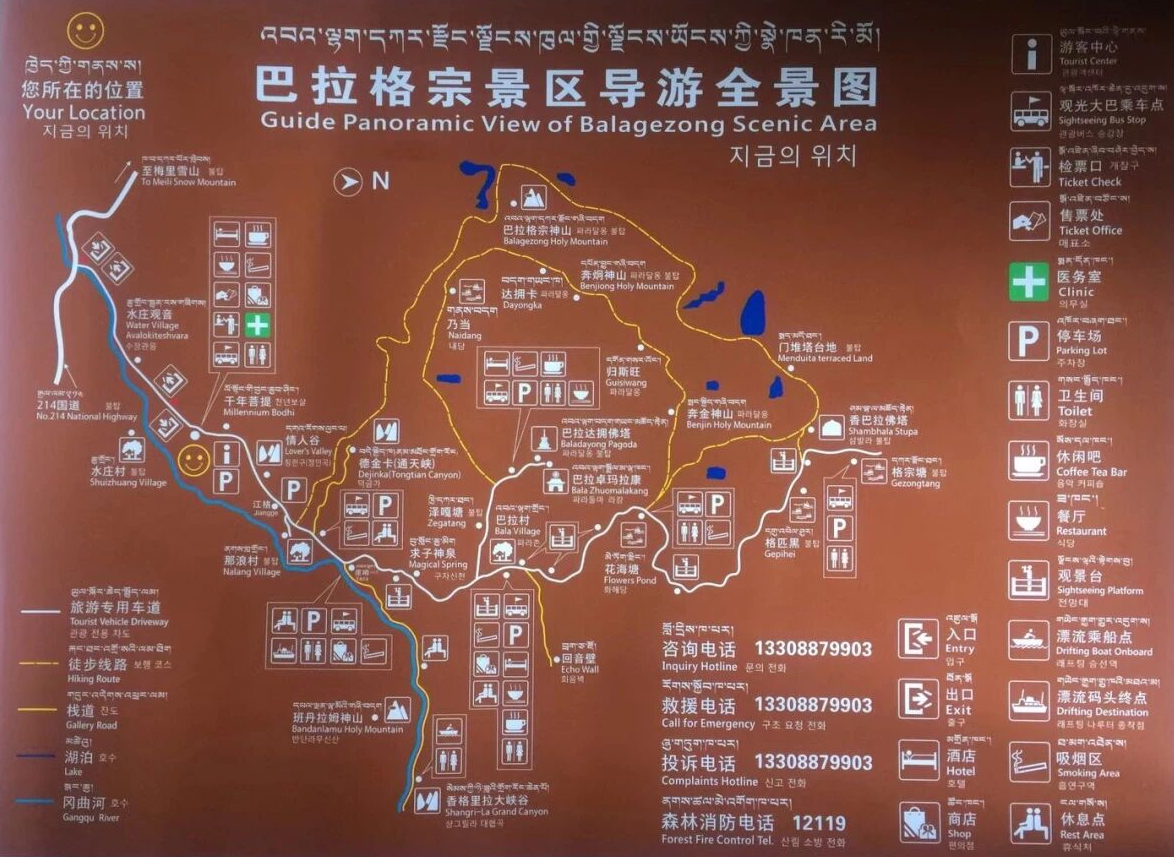
Balagezong Map
Top Things to Do in Balagezong
Balagezong Snow Mountain
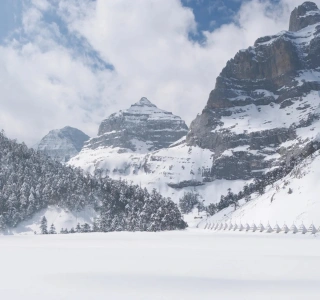
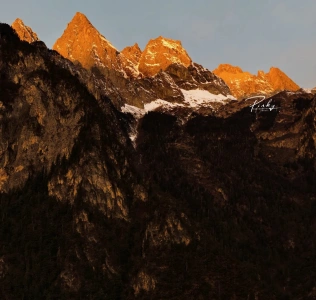
Gezong Snow Mountain is the soul of Balagezong. As the highest peak in Shangri-La, it rises to 5,626 meters and stands like a massive pyramid over this sacred land. The mountain remains snow-covered year-round, and on clear mornings, the golden sunlight reflecting off its peak creates the famous “Golden Mountain” view that many travelers come here to witness.
In Tibetan culture, Gezong Snow Mountain holds a very high status. It ranks among the three most important sacred mountains in the Kangba region, alongside Yading’s Yangmaiyong and Meili Snow Mountain’s Kawagebo. From a spiritual perspective, it represents protection rather than just scenery. Tibetan scriptures describe its three main peaks as the embodiment of the Three Longevity Buddhas, believed to safeguard the health and lifespan of local communities. As a result, both villagers and pilgrims travel here to walk around the mountain and pray, blending faith with the natural landscape.
Bala Village
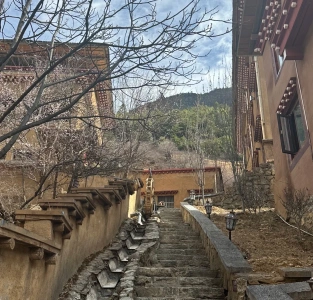
Bala Village sits halfway up the mountain at around 2,900 meters, and it is one of the best places to slow down during your trip. This ancient Tibetan village has a history of over a thousand years and is also the hometown of Sina Dingzhu, the founder of Balagezong Scenic Area.
The village preserves traditional Tibetan architecture in its original form. Thick earthen towers rise along the slope, while three historic beacon towers still stand quietly, with pine branches stacked nearby as if they could be lit at any moment. At the entrance, mani stone piles and colorful prayer flags create a strong spiritual atmosphere. During important days such as the first or fifteenth day of the lunar calendar, villagers gather at the incense platform to perform traditional rituals, and the rising smoke adds to the feeling of a hidden world.
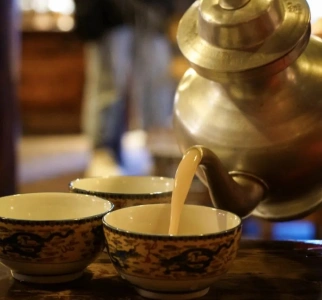
Beyond its history, Bala Village offers a window into daily Tibetan life. You can sit by the window at “Hidden Mountain Café” and enjoy a cup of coffee facing the snow peaks, or try yak butter tea and local dishes. You can also experience traditional Nixi black pottery, a recognized intangible cultural heritage. Spending a night in a Tibetan-style hotel here, surrounded by quiet mountains and starlit skies, often becomes one of the most memorable parts of the journey.
Shambhala Pagoda
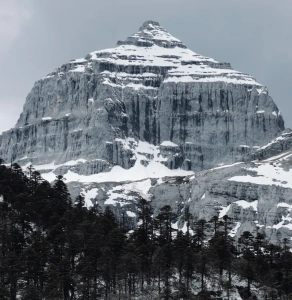
If there is one must-see highlight in Balagezong, it is the Shambhala Pagoda. Located deep inside the scenic area at an altitude of around 4,200 meters, reaching it takes about 2.5 hours round trip and requires an additional shuttle (75 CNY).
As you travel deeper into the high-altitude snow zone, the landscape gradually changes. When the pagoda-shaped mountain finally appears, it becomes clear why this place is often described as a hidden Tibetan sanctuary. After snowfall, the entire peak looks like a giant white jade pagoda, standing in complete silence and purity.
What makes it even more striking is the presence of two neighboring peaks. One resembles a monk sitting in meditation, while the other looks like an open scripture. Together with the main peak, they form the symbolic trio of Buddha, Dharma, and Sangha. This rare alignment between natural formations and spiritual meaning draws many devoted pilgrims each year, creating a powerful and unique atmosphere.
Echo Wall
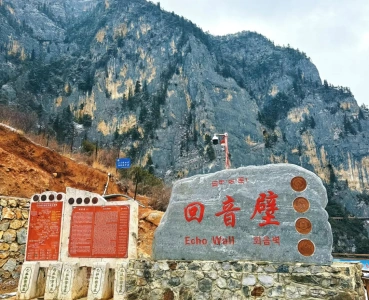
Echo Wall is one of the most interactive spots in Balagezong and adds a sense of adventure to the trip. It lies on the first sacred mountain east of Bala Village at around 3,100 meters.
The main attraction here is the network of high-altitude walkways built along the cliffs. These include suspended paths, a glass viewing platform, and a zipline. From the viewpoint, you can overlook the entire Shangri-La Grand Canyon, with an 800-meter vertical drop creating an intense visual experience. At the same time, the full outline of Gezong Snow Mountain comes into view in the distance.
If your energy allows, walking part of the trail is highly recommended, followed by taking the zipline back. The ride covers 425 meters in about 40 seconds (120 CNY). It may look intimidating at first, but the experience is smooth and stable. Another fun moment comes when you shout toward the opposite cliff and hear your voice echo back across the valley for several seconds, which is exactly how this place got its name.
Shangri-La Grand Canyon
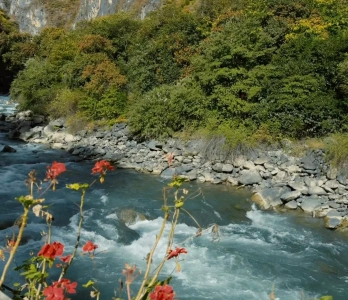
The Shangri-La Grand Canyon runs through the entire scenic area and forms the geological backbone of Balagezong, stretching about 154 kilometers in total.
From a geological perspective, this is a classic high-altitude U-shaped canyon. Steep cliffs rise on both sides, while the Gangqu River flows along the valley floor. The river is fed by meltwater from nine surrounding snow mountains, giving it a clear, emerald color that contrasts sharply with the gray rock walls. The structure of the canyon is complex, with layers upon layers of intersecting valleys that create a sense of depth and scale.
However, from a travel perspective, some sections of the scenery can feel repetitive. If you are short on time, walking a shorter stretch of the trail is enough to appreciate the landscape. The rafting experience here feels more like a gentle boat ride rather than an adrenaline activity, so it can be skipped if your schedule is tight. The cost is 120 CNY.
Recommended Balagezong Itinerary
Trips to Balagezong are usually planned as either a one-day visit or a two-day, one-night stay, and both options are outlined here.
- One-day itinerary from Dukezong Ancient Town: 8:00 wake up -> 1 hour 20 minutes to reach the scenic area -> enter and transfer to Bala Village -> visit Shambhala Pagoda Snow Mountain -> continue exploring other spots -> return at 17:30
- Two-day, one-night itinerary from Dukezong Ancient Town: 12:00 check in at the hotel -> head directly to Shambhala Pagoda from Bala Village -> 20:00 enjoy a Tibetan hot pot dinner -> next morning at 7:30 watch the Golden Mountain sunrise -> visit the zipline and canyon rafting
- Notes:
- Altitude sickness: The Pagoda viewing platform reaches about 4,205 meters, so bring oxygen if needed.
- Sun protection: UV levels are very strong at high altitude, so sunglasses and high-SPF sunscreen are essential.
- Motion sickness: Prepare motion sickness medication, as the journey involves long drives and winding mountain roads both to and inside the scenic area.
Recommended Food in Balagezong
There are plenty of dining options throughout the Balagezong Scenic Area, and you will find restaurants or small eateries near almost every major attraction. You can easily choose between Chinese restaurants, milk tea shops, Western-style cafés, Tibetan cuisine, butter tea houses serving authentic local flavors, and coffee spots, so finding food is never a concern here.
Recommended Hotels in Balagezong
There are several hotels inside the Balagezong Scenic Area, and if you have enough time, a two-day, one-night stay is highly recommended. Staying overnight inside the park allows you to experience the scenery at a slower pace. There are about 7 to 8 hotel options available within the area. If you prefer to stay near Dukezong Ancient Town, you can also check the <Shangri-La Hotel Guide>.
Shuizhuang Hotel
- Location: Entrance of Balagezong Scenic Area
- Price per night: 138 CNY
- Check Rates:Trip.com Specials、Agoda Deals
- Rating: Trip 8.7 / Agoda 8.7
- Special Amenities: None
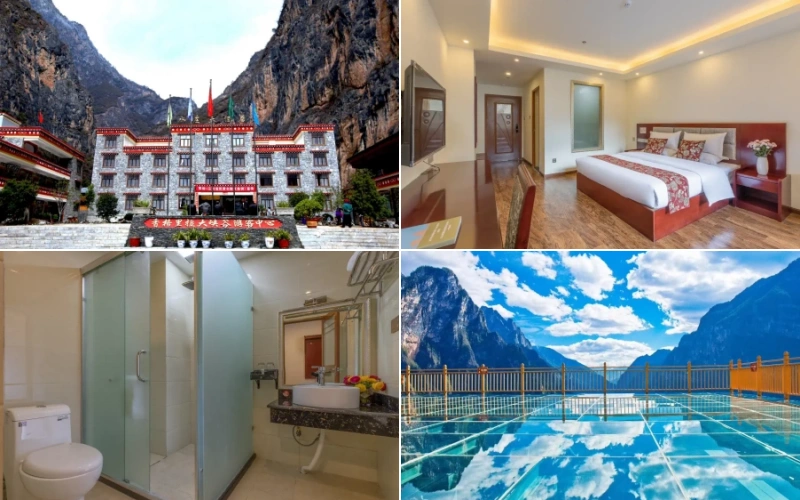
The hotel sits right next to the Balagezong ticket office, so it is almost a “step off the car and arrive” kind of location. Buying tickets and entering the scenic area feels very convenient. It works especially well for travelers planning a day trip or making a last-minute overnight decision, since there is no need to transfer or carry luggage around. The location is essentially the front row at the entrance, which makes it easy to return and rest after a full day. If you plan to go back into the park the next day, the route is straightforward.
Considering the price, this hotel offers great value. The room size is larger than expected, and even with luggage spread out for two people, it does not feel cramped. Falling asleep to the sound of running water at night feels relaxing. Cleanliness is acceptable overall, though the facilities show some age, and you may notice small imperfections in the bathroom or furniture. It is not luxurious, but it remains a solid and practical choice.
Balagezong Tibetan Ecological Hotel
- Location: Entrance of Balagezong Scenic Area
- Price per night: 314 CNY
- Check Rates:Trip.com Specials、Agoda Deals
- Rating: Trip 8.2 / Agoda 8.1
- Special Amenities: Gym
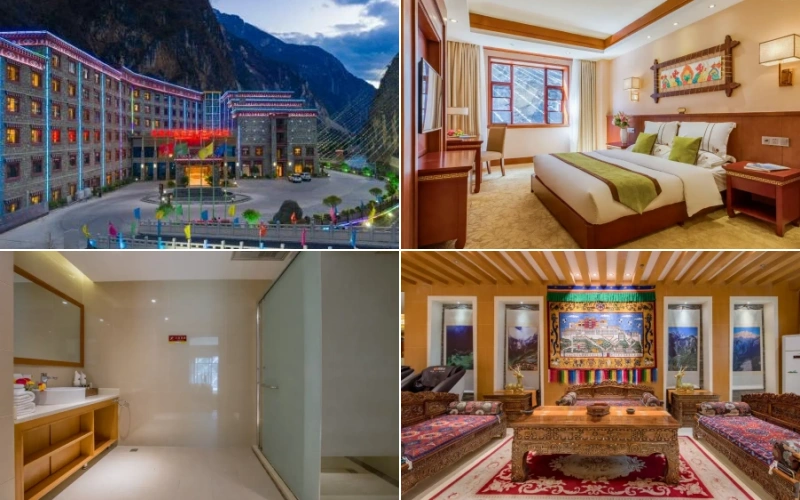
This hotel is located right next to the entrance of Balagezong. It takes only a short walk, about a few dozen meters, to reach the ticket office, which makes it feel like you are stepping directly into the scenic area. It is a great option if you want to start early or avoid dealing with extra transportation. You can park your car at the hotel and keep it there for the entire trip, which makes the overall flow of the journey very smooth and convenient.
The rooms feature a Tibetan-style design, with views of the surrounding valley and river. At night, the sound of water creates a calming, almost white-noise effect. The room size is decent, and the basic facilities are all in place. Cleanliness is acceptable, although some parts of the hotel feel slightly dated. If you want to stay near the entrance while enjoying a bit of local character, this hotel is worth considering.
Shangri-La Snow Mountain Hotel On the Iceberg
- Location: Inside Balagezong Scenic Area
- Price per night: 898 CNY
- Check Rates:Trip.com Specials
- Rating: Trip 9.6
- Special Amenities: Free tickets, gym, laundry room, triple rooms, family rooms
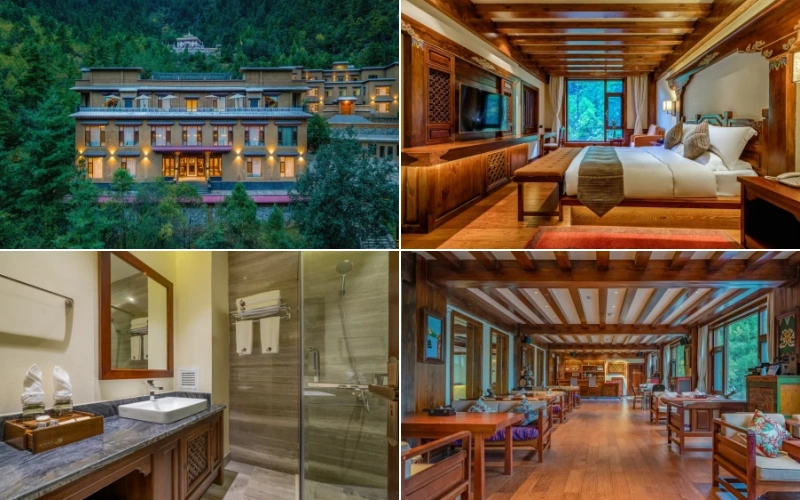
This hotel is located inside the Balagezong Scenic Area, positioned on higher ground near Bala Village. From the entrance, you need to register and then take about a 30-minute mountain drive to reach it. The biggest advantage of staying here is full immersion in the landscape. Transportation to major attractions such as the sacred mountains and the Shambhala Pagoda can be arranged directly by the hotel.
The rooms are spacious, and you can even enjoy a bath while looking out at the mountain scenery, which adds to the sense of relaxation. The design follows a Tibetan style, and the facilities are well equipped, including floor heating and air conditioning. The highlight is the view outside the window. On clear days, you can see snow mountains or canyon scenery, and occasionally even spot wild monkeys nearby.
Shangri-La Snow Mountain Hotel On the Cliff
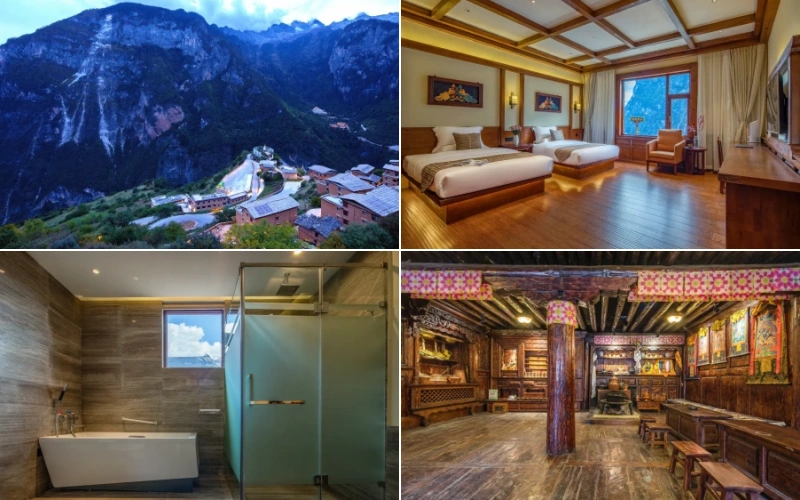
- Location: Bala Village, inside Balagezong Scenic Area
- Price per night: 898 CNY
- Check Rates:Trip.com Specials
- Rating: Trip 9.3
- Special Amenities: Free tickets, gym, laundry room, triple rooms
This hotel is located in Bala Village within the Balagezong Scenic Area, positioned at a higher elevation with wide-open views of the surrounding canyon and snow mountains. After check-in, private shuttle service is usually arranged, making it easy to reach the canyon, the pagoda, and other attractions without hassle. One of the biggest advantages is that you do not need to enter and exit the scenic area repeatedly. You can also enjoy quieter moments in the early morning or evening, and sometimes even watch the Golden Mountain sunrise directly from your room or courtyard.
The hotel is built from renovated structures in Bala Village, preserving a strong Tibetan architectural style. Rooms are spacious and equipped with essentials such as floor heating and heating systems, so they remain comfortable even in colder weather. The standout feature is the view. Opening the window reveals canyon or snow mountain scenery, creating a unique feeling of staying right on the edge of a cliff.
How to Get to Balagezong
From Dukezong Ancient Town
The most recommended option is the direct shuttle bus, which runs daily between Dukezong Ancient Town and Balagezong. It is the most convenient choice for independent travelers.
Shuttle Bus
There is a direct shuttle from Dukezong Ancient Town to Balagezong, costing 60 CNY round trip, with a one-way journey time of about 1.5 hours.
- Boarding Point: North Gate or East Gate of Dukezong Ancient Town
- Departure Times: 8:00 / 9:00 / 11:00
- Return Times: Starting from 15:00, last bus at 18:00
- Package Booking (shuttle + ticket):Trip.com Discounts
Private Car
Hiring a private car from Dukezong Ancient Town to Balagezong costs around 400 to 500 CNY per day. If you have not arranged a driver in advance, your hotel can usually help organize one.
From Deqin
Many travelers visit Balagezong after exploring Meili Snow Mountain in Deqin. Taking the scenic area bus is recommended. Although it requires a transfer, the journey remains relatively manageable.
Scenic Area Bus
Buses run daily from 8:00 to 16:30 to the Balagezong junction, with a ticket price of 45 CNY and a travel time of about 2 hours. From the junction, you can transfer to the scenic area shuttle bus to reach the entrance, which costs 20 CNY per person for a one-way ride.
- Boarding Point: Deqin County town or Feilai Temple
- Tickets: Official WeChat account “Diqing Transport” or on-site purchase
How to plan your Lijiang trip
Most travelers spend 2–3 days covering Lijiang and nearby highlights, while a 5–6 day itinerary is ideal if you want to combine Dali or Shangri-La and explore snow mountains, gorges and Tibetan culture at a relaxed pace. Here are our most popular private tour options:
- Lijiang, Dali and Shangri-La 6-Day Private Tour — Lijiang, Dali and Shangri-La combined with snow mountains, deep gorges and immersive Tibetan culture.
- Lijiang and Dali 5-Day Private Tour — Jade Dragon Snow Mountain, Erhai Lake and the old towns of Dali explored at a relaxed pace.
- Lijiang, Shangri-La and Meili Snow Mountain 3-Day Private Tour — Tiger Leaping Gorge, Shangri-La and sunrise views at Meili Snow Mountain.
- Lijiang and Shangri-La 2-Day Private Tour — Tiger Leaping Gorge, Pudacuo National Park and Shangri-La covered efficiently in two days.
FAQ
Balagezong is a large scenic area with many flat sections, but it also includes areas with stairs, so you will need to lift strollers or wheelchairs at times. Overall, it is still manageable, but you should consider the long travel time and winding mountain roads, especially for elderly visitors and young children.
Comment (0)