
 English (US)
 繁體中文
繁體中文  日本語
日本語  한국어
한국어  ไทย
ไทย  Русский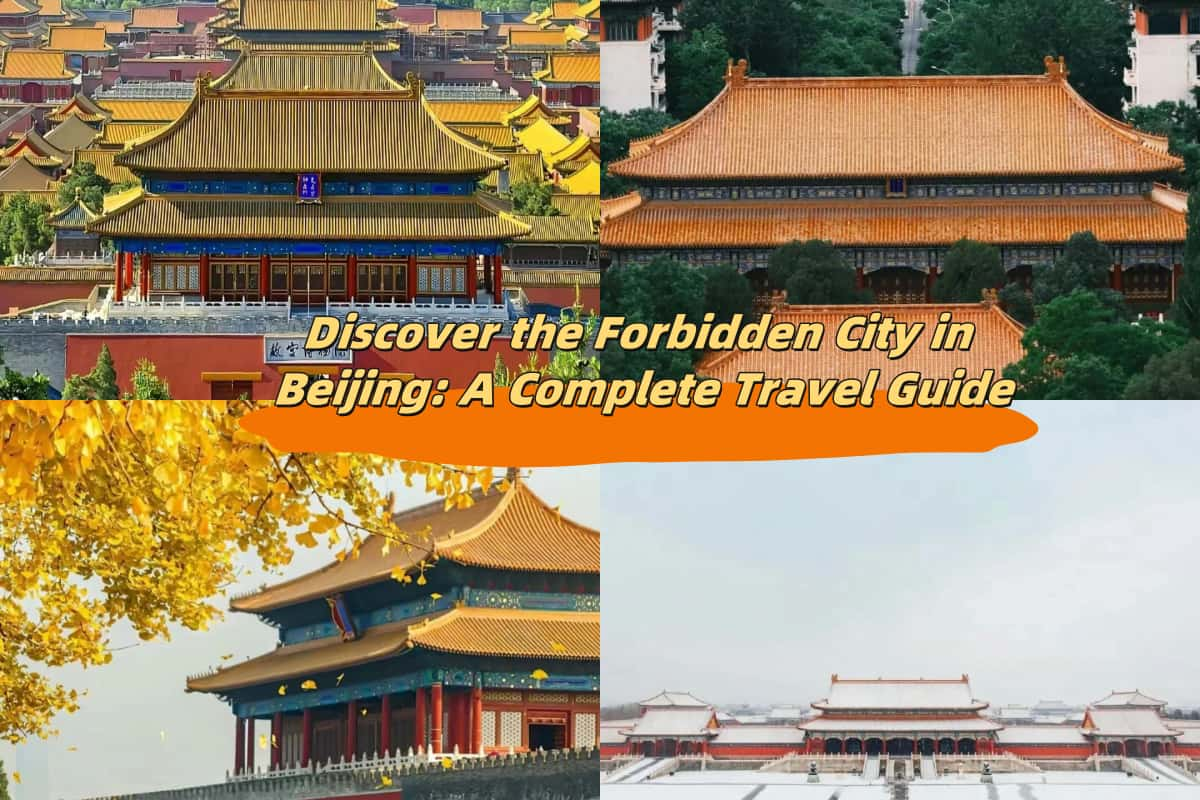
Hello everyone, I’m Michael Zhang, a travel enthusiast with a deep passion for history and culture, especially world heritage sites. With extensive international travel experience, I aim to take you on a journey through places filled with stories and charm. Today, I invite you to explore one of the most magnificent ancient buildings in China—the Forbidden City in Beijing, and immerse yourself in its rich history and culture.
Summary
Introduction to the Forbidden City
The Forbidden City, also known as the Palace Museum, is one of the largest and best-preserved wooden architectural complexes in the world. Recognized as a UNESCO World Heritage Site in 1987, it sits at the very center of Beijing and once served as the imperial palace of the Ming and Qing dynasties. Centered around the Three Great Halls, the complex covers 720,000 square meters with about 150,000 square meters of building space and more than seventy palatial structures.
A popular legend claims the palace contains 9,999.5 rooms, though a detailed survey conducted in 1973 confirmed the actual number to be 8,707.
- Address: No. 4 Jingshan Front Street, Dongcheng District, Beijing (Apple Maps / Amap)
- Opening Hours: Closed every Monday except on China’s public holidays
- Peak Season (Apr–Oct): 8:30–17:00 (last entry 16:00)
- Off-Season (Nov–Mar): 8:30–16:30 (last entry 15:30)
- Suggested Duration: 4–6 hours
- Best Season to Visit: All year
- Admission: 60 CNY
- Ticket Purchase: Trip.com Discounts, Klook Deals
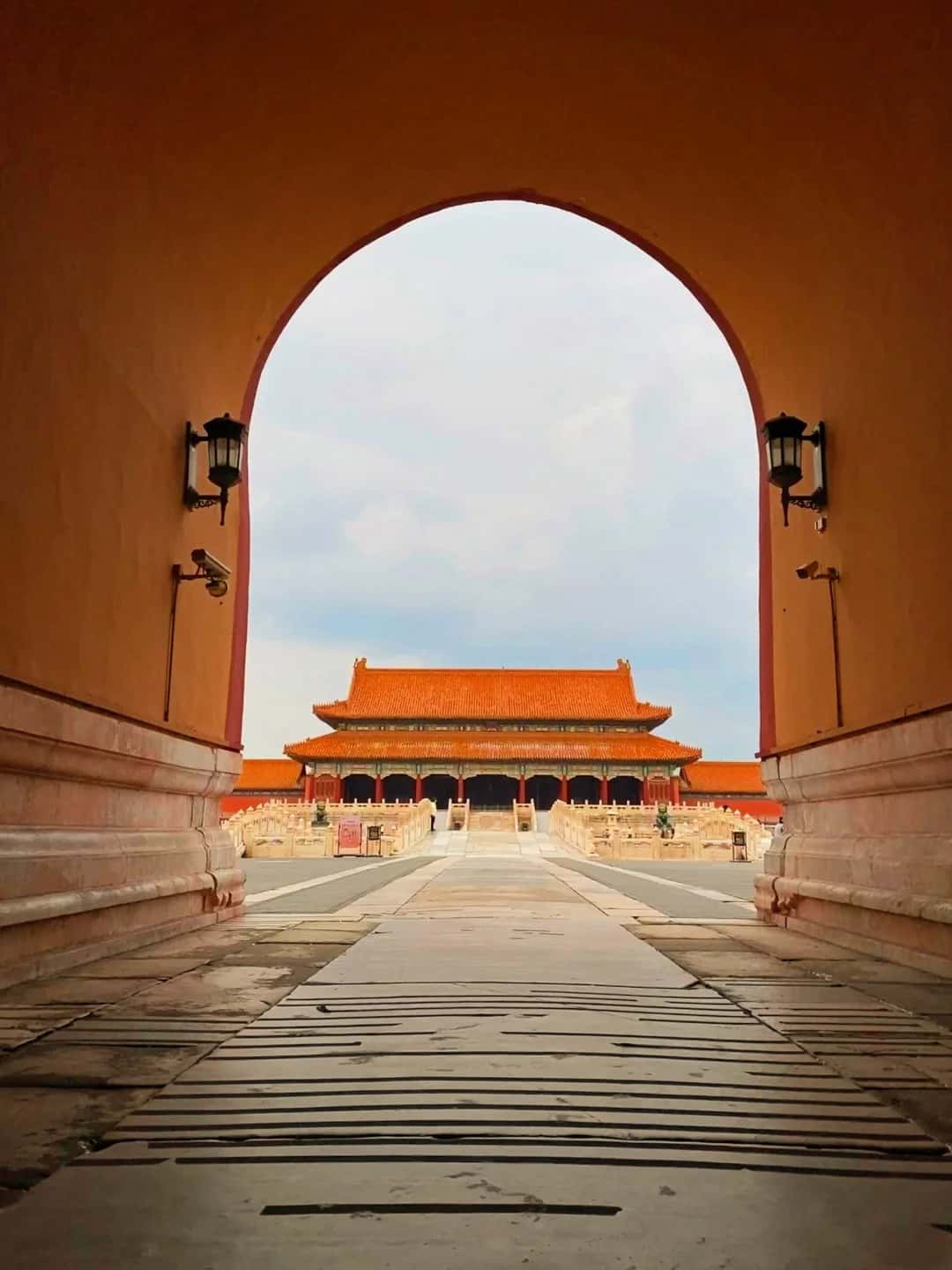
Palace Map
The unopen areas are marked in blue, while the main attractions of the Forbidden City are marked in red.
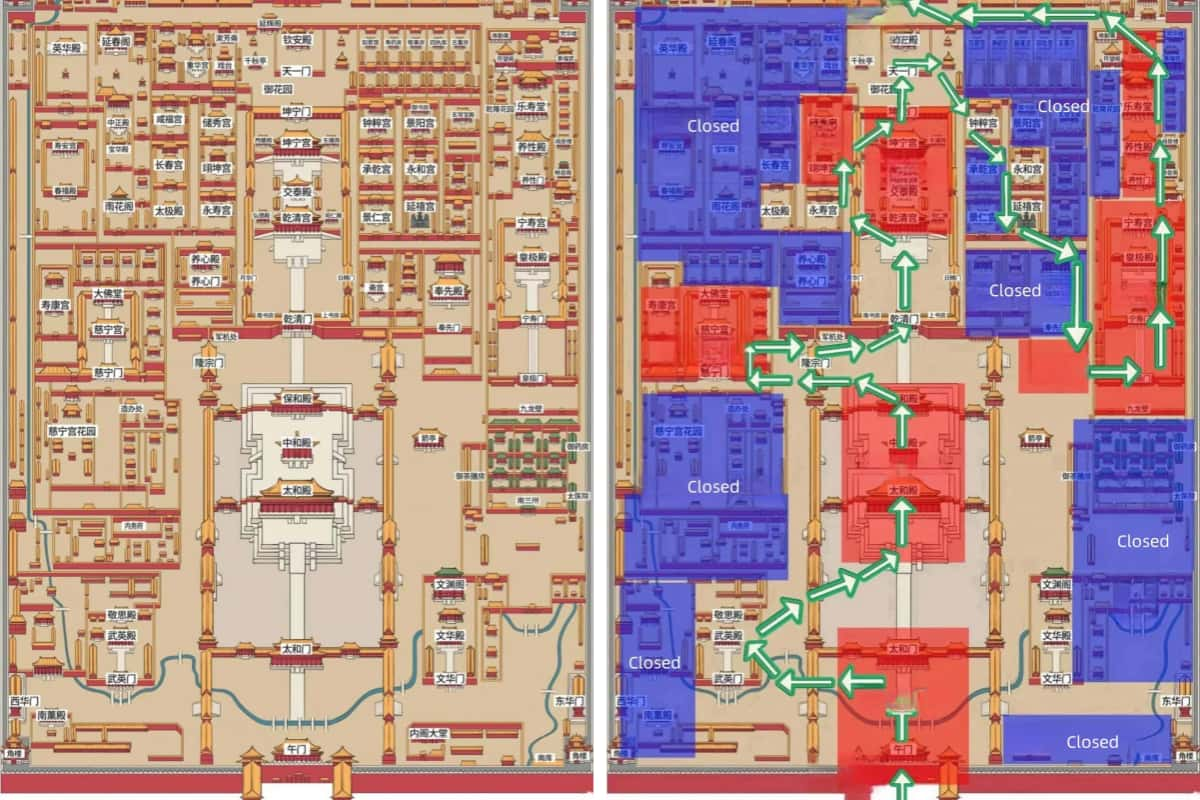
Why You Should Visit the Forbidden City
Historical and Cultural Heritage
Built during the Yongle reign of the Ming dynasty, the Forbidden City served as the imperial residence for 24 emperors. Listed as a UNESCO World Heritage Site in 1987, it represents the highest achievement of traditional Chinese palace architecture. For nearly six centuries, it witnessed the rise and fall of dynasties—from the flourishing Kangxi-Qianlong era to the turbulent final years of imperial rule. Walking through its courtyards feels like flipping through a three-dimensional history book of China’s imperial past.
The Palace Museum houses over 1.8 million artifacts, including calligraphy masterpieces, ceramics, jade carvings, and treasures linked to more than 8,000 years of Chinese civilization. Permanent galleries such as the Ceramic Gallery and the Historical Arts Hall showcase these collections, while newly restored areas—like the Qianlong Garden—are periodically opened to the public, giving visitors rare access to national treasures.
Architectural and Artistic Achievements
- Layout and Design: The palace follows a perfectly aligned central axis, representing balance and order in traditional philosophy. Major structures—such as the Hall of Supreme Harmony—were built at the highest imperial standard, distinguished by golden glazed tiles and grand white-marble terraces.
- Intricate Craftsmanship: Details like the ridge beasts (eleven on the Hall of Supreme Harmony) symbolize protection and good fortune. The palace also reflects ancient feng shui principles, while the beautifully engineered corner towers feature complex bracket sets inspired by astronomical symbolism, echoing the ancient belief in the unity of heaven and humanity.
Top Things to Do in the Forbidden City
Top 10 Must-See Attractions in the Forbidden City
1. Hall of Supreme Harmony
The Hall of Supreme Harmony, commonly known as the “Golden Throne Hall,” was constructed in the eighteenth year of the Yongle Emperor’s reign (1420). It was initially called the Hall of Heavenly Order, later renamed the Hall of Great Supremacy in the forty-first year of Emperor Jiajing’s reign (1562), and finally acquired its current name during Emperor Shunzhi’s reign (1645). It is the venue for important ceremonies such as the emperor’s ascension to the throne, royal weddings, and more. The current structure, which we see today, was rebuilt during the thirty-fourth year of Emperor Kangxi’s reign (1695) after a series of reconstructions due to multiple fires. The hall is the largest in the Forbidden City, covering 2,377 square meters, with an overall height of 35.05 meters (including the platform). Notably, ten mythical beasts are placed on the eaves of the hall, signifying its supreme status.
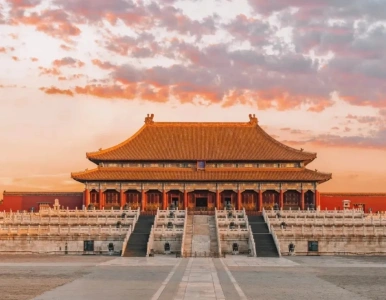
2. Palace of Heavenly Purity
The Palace of Heavenly Purity is one of the “Three Rear Palaces” of the Inner Court. It was initially built in the eighteenth year of the Yongle Emperor’s reign (1420) and later rebuilt during Emperor Jiaqing’s reign (1798). It was the residence of fourteen emperors during the Ming Dynasty. The palace features yellow glazed tile double-eave hipped roofs and sits on a single-layered white marble base, with a vast courtyard in front.

3. Hall of Martial Valor
The Hall of Martial Valor was built during the early Ming Dynasty and is located west of the Gate of Prosperous Harmony. It was initially used for imperial fasting and summoning ministers. During the early Qing Dynasty, it served as the office of Regent Dorgon. The hall’s unique architectural features and historical significance make it a key attraction.
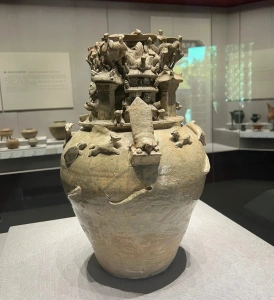
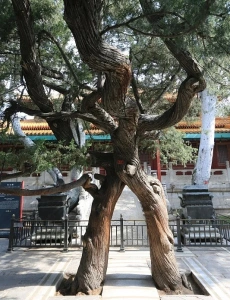
4. Imperial Garden
The Imperial Garden is located on the central axis of the Forbidden City, behind the Palace of Earthly Tranquility. Built during the eighteenth year of the Yongle Emperor’s reign (1420), it has retained its original layout. Covering 12,000 square meters, the garden includes pavilions, rockeries, and ancient trees that create a peaceful and scenic environment.
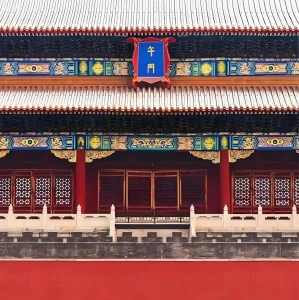
5. Meridian Gate
The Meridian Gate, also known as the “Five Phoenix Tower,” is the main gate of the Forbidden City. It features a grand structure that includes a central tower and four surrounding watchtowers. Only the emperor was allowed to use the central passage, while other officials used the side passages. The gate played a critical role in imperial ceremonies and commands.
6. East Glorious Gate
The East Glorious Gate mirrors the structure of the West Glorious Gate and features three arches topped with a tower. It was used for official passages and features a bridge over the Golden Water River, adding to its picturesque beauty.
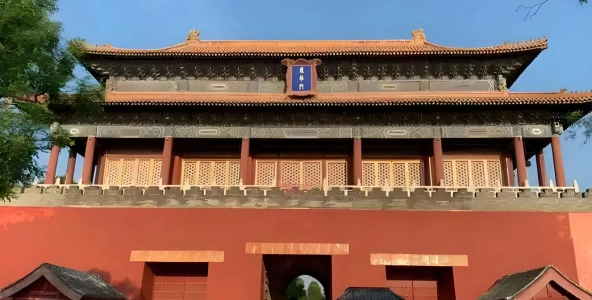
7. Gate of Divine Prowess
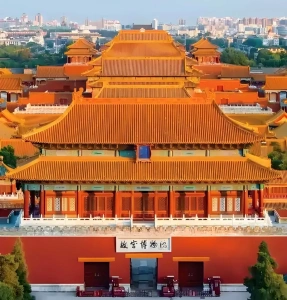
Originally named the “Gate of Dark Warrior,” the Gate of Divine Prowess is located at the northern end of the Forbidden City. It serves as the northern exit and is adorned with elaborate decorations. This gate is now the main entrance for visitors to the Palace Museum.
8. Palace of Tranquil Longevity
Located behind the Palace of Earthly Tranquility, the Palace of Tranquil Longevity was initially constructed as the emperor’s retirement residence. It later served as the residence of the Empress Dowager and hosted significant historical events during the late Qing Dynasty.

9. Palace of Earthly Tranquility
The Palace of Earthly Tranquility was originally the sleeping quarters of the empress. Later, it was converted into a sacred shamanic space for the Manchu rulers. It was the location for important events, including the royal weddings of several emperors.
10. Treasure Gallery
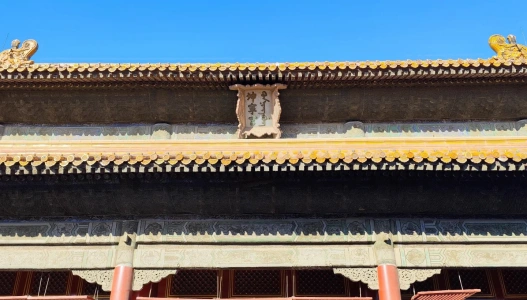
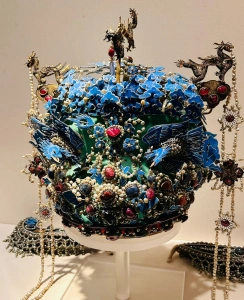
The Treasure Gallery is one of the most important exhibition halls in the Palace Museum. It holds various priceless artifacts, including jewelry, goldware, jade carvings, and other treasures, offering visitors a glimpse into the luxurious lifestyle of the imperial family.
Seasonal Highlights
Spring
In spring, the Forbidden City blooms with flowers, especially in the Imperial Garden, where peonies are in full bloom. This is one of the most beautiful seasons to visit.
Summer
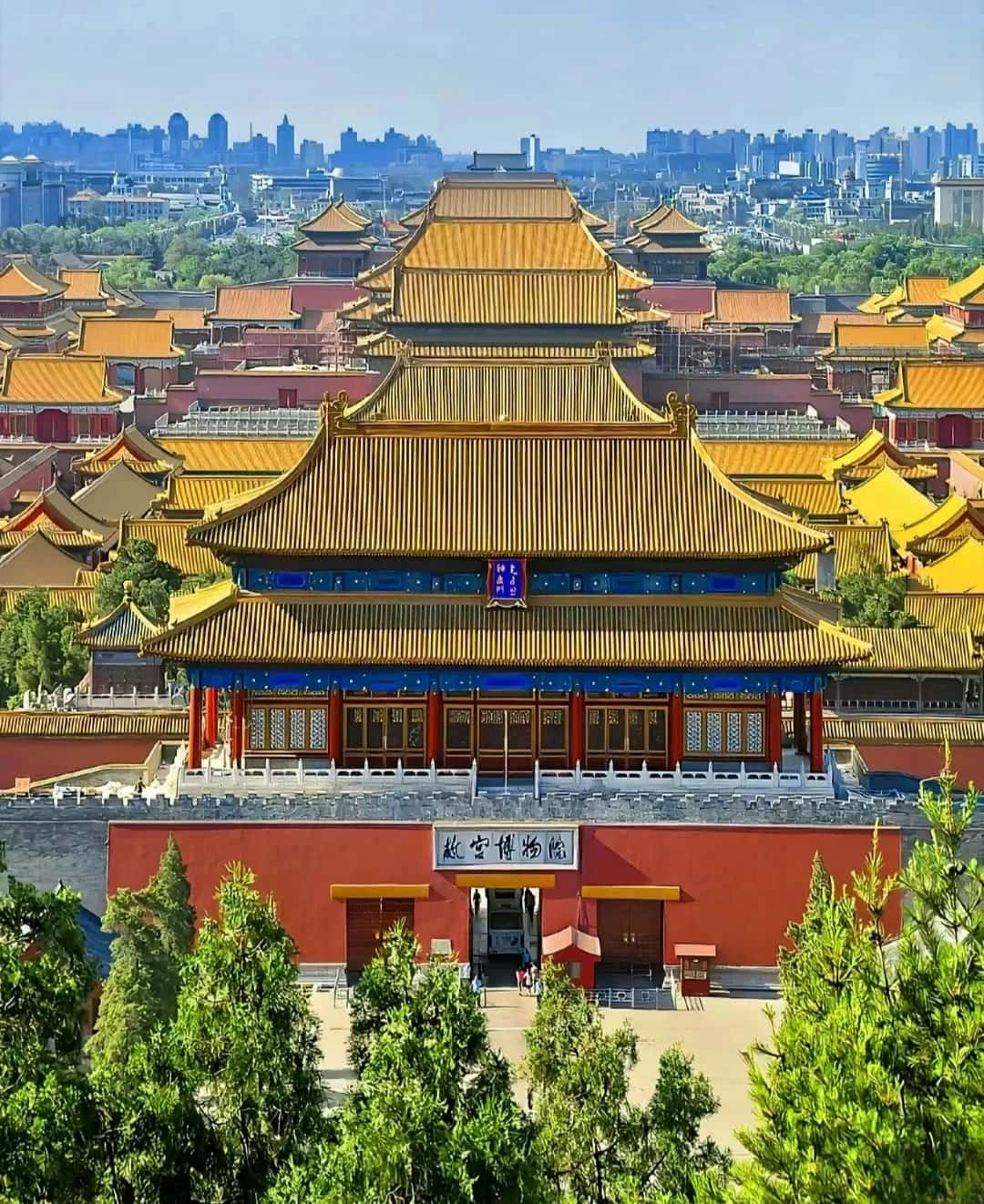
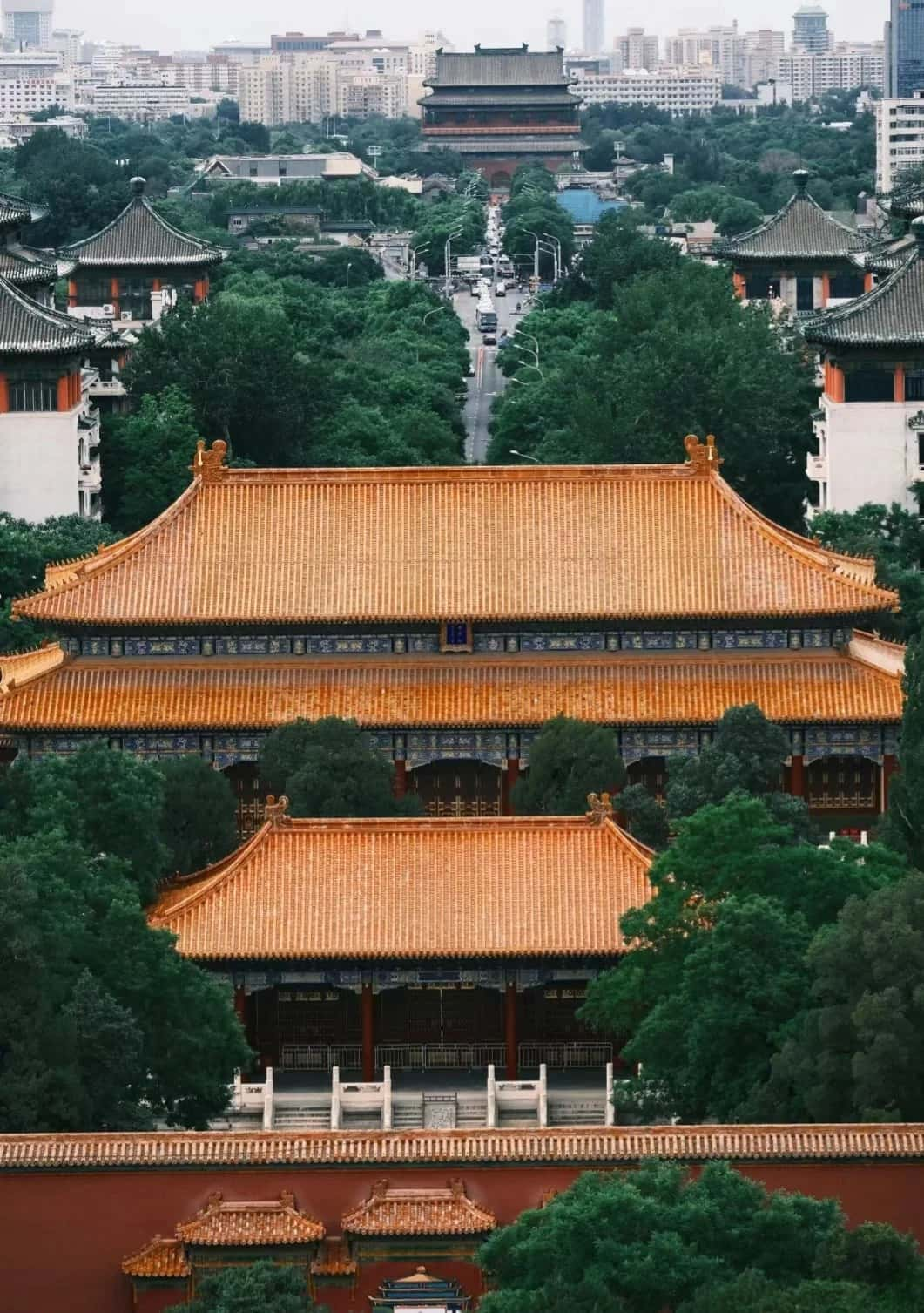
During summer, the Forbidden City shines brightly under the sunlight. Despite the heat, visitors flock to witness the grandeur of its architecture.
Autumn
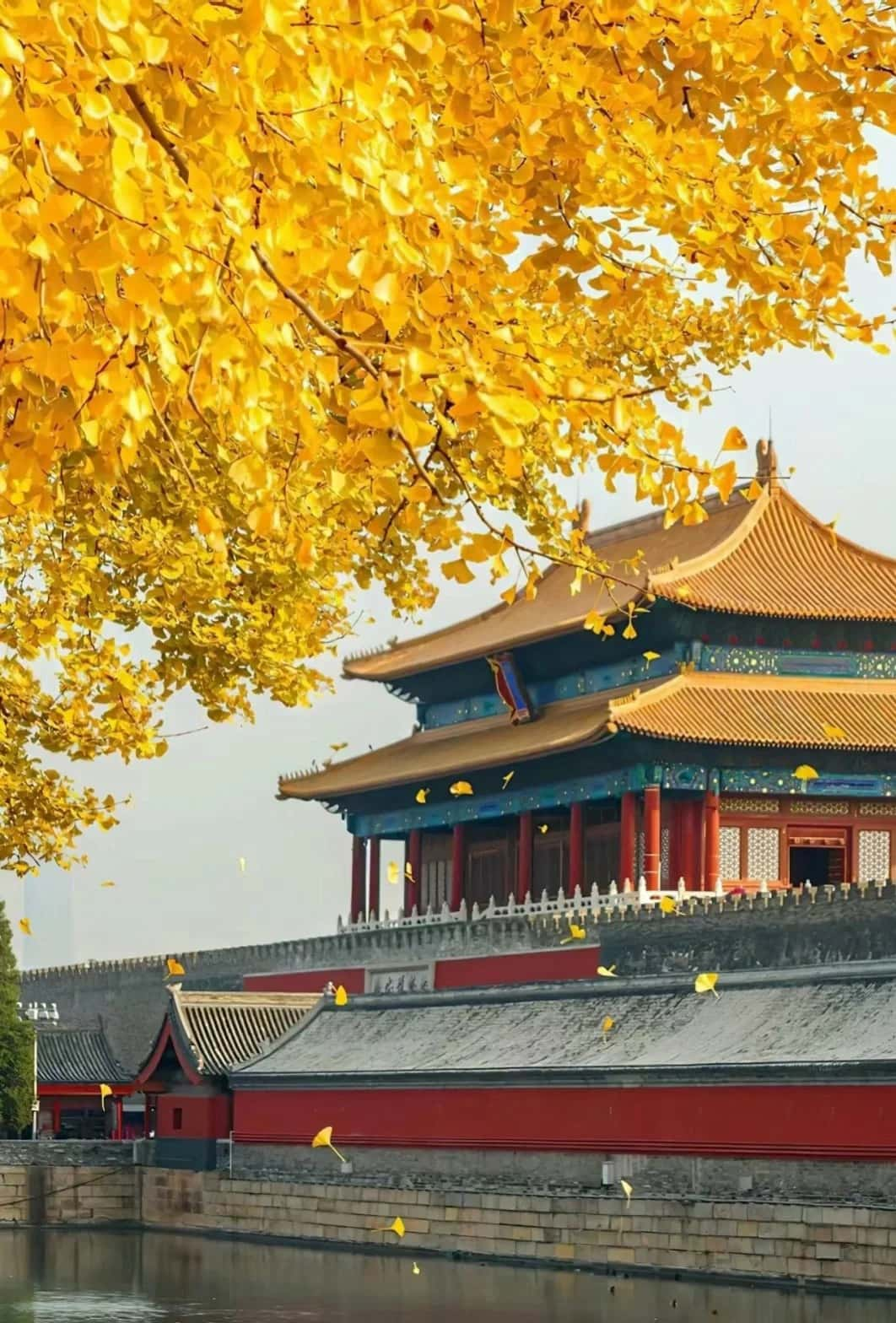
In fall, the Forbidden City is surrounded by golden leaves, creating an incredible contrast with the yellow tiles and red walls—a paradise for photographers.
Winter
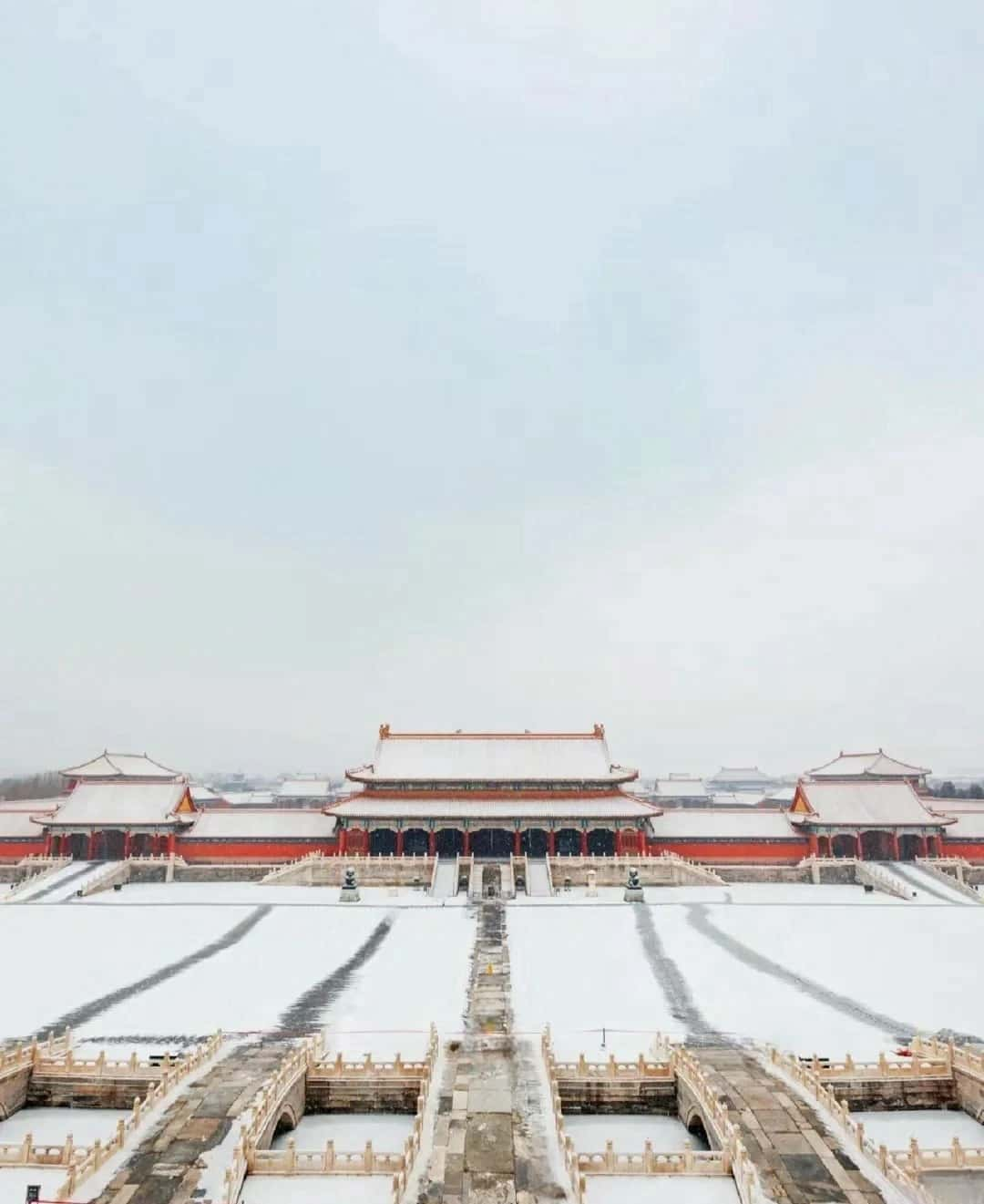
In winter, the Forbidden City is covered in snow, creating a serene and solemn atmosphere—a perfect time to experience its ancient tranquility.
Ticket Purchase Guide
Ticket Prices:
- Peak Season (April 1–October 31): Entrance ticket 60 RMB/person, Treasure Gallery 10 RMB/person, Clock Gallery 10 RMB/person
- Off-Season (November 1–March 31): Entrance ticket 40 RMB/person, combined Treasure and Clock Gallery 20 RMB/person
- Discount Tickets: 20 RMB/person for students aged 18+ (university level and below); 30 RMB/person for seniors aged 60+ during peak season, 20 RMB/person during off-season
Purchase Methods:
- Online: Via official WeChat accounts or other booking platforms
- Ticket Purchase: Trip.com Discounts, Klook Deals
- On-Site: Purchase tickets at the entrance with a passport.
- Tip: Tickets sell out quickly due to the Forbidden City’s popularity. Be sure to book in advance.
Guide Services
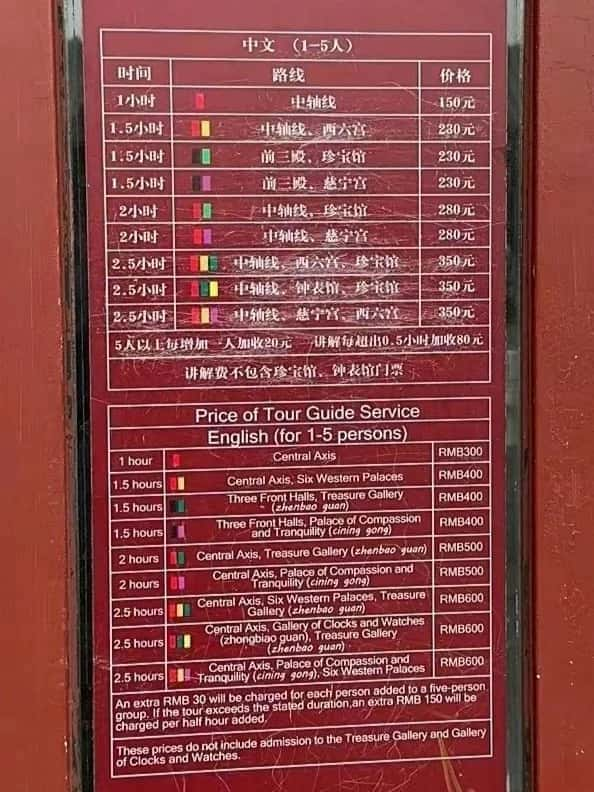
Guided tours can be booked at the Guest Service area at the entrance. If guides are not available upon arrival, you may need to wait until one returns from a completed tour.
- Languages available: English and Chinese
- Group size: 1-5 people; an additional fee of 30 RMB for each extra person
- Prices: English – 2 hours for 500 RMB; Chinese – 2 hours for 280 RMB; additional 150 RMB per extra half-hour
Transportation from Downtown
Take Subway Line 1 and get off at Tian’anmen East Station or Tian’anmen West Station, Exit B.
- Transportation Card Purchase: Klook Deals, KKday Offers
Recommended Touring Routes
1. 1.5-2 Hour Quick Central Axis Tour
Meridian Gate → Gate of Supreme Harmony → Hall of Supreme Harmony → Hall of Central Harmony → Hall of Preserving Harmony → Palace of Heavenly Purity → Hall of Union → Palace of Earthly Tranquility → Imperial Garden → Gate of Divine Prowess. This route covers the core area of the Forbidden City and is suitable for those on a tight schedule.
2. 3-4 Hour Regular Tour
Meridian Gate → Hall of Martial Valor → Gate of Supreme Harmony → Hall of Supreme Harmony → Hall of Central Harmony → Hall of Preserving Harmony → Palace of Heavenly Purity → Hall of Union → Palace of Earthly Tranquility → Imperial Garden → Six Eastern Palaces → Palace of Abstinence → Treasure Gallery → Palace of Tranquil Longevity → Gate of Divine Prowess. You can add or remove attractions based on the time available. For example, if you have more time, you can add the Clock Gallery; if short on time, you can skip the Palace of Abstinence.
3. 6-8 Hour Full Day In-Depth Tour
Meridian Gate → Hall of Martial Valor → Wenhua Hall → Gate of Supreme Harmony → Hall of Supreme Harmony → Hall of Central Harmony → Hall of Preserving Harmony → Palace of Heavenly Purity → Hall of Union → Palace of Earthly Tranquility → Palace of Tranquil Longevity → Six Western Palaces → Imperial Garden → Six Eastern Palaces → Clock Gallery → Treasure Gallery → Gate of Divine Prowess. This route is ideal for those who want to explore every part of the Forbidden City, covering almost all open sections.
Stamp Collection in the Forbidden City
There are a total of 34 stamps available for collection within the Forbidden City: 1 at the Meridian Gate souvenir store, 3 at the Wenhua Hall, 3 at the Hall of Martial Valor, 3 at the Icehouse Bookstore, 4 at the Chinese Characters Gallery, 5 at the Kunning Palace souvenir store, 3 at the Chongxiu Palace Telephone Bureau, 3 at the Imperial Garden Bookstore, 5 at the Treasure Gallery, and 4 outside the Gate of Divine Prowess (including souvenir shops and Corner Tower Cafe).
Visitors can bring their own notebooks or purchase postcards or journals at the souvenir stores for stamp collection.
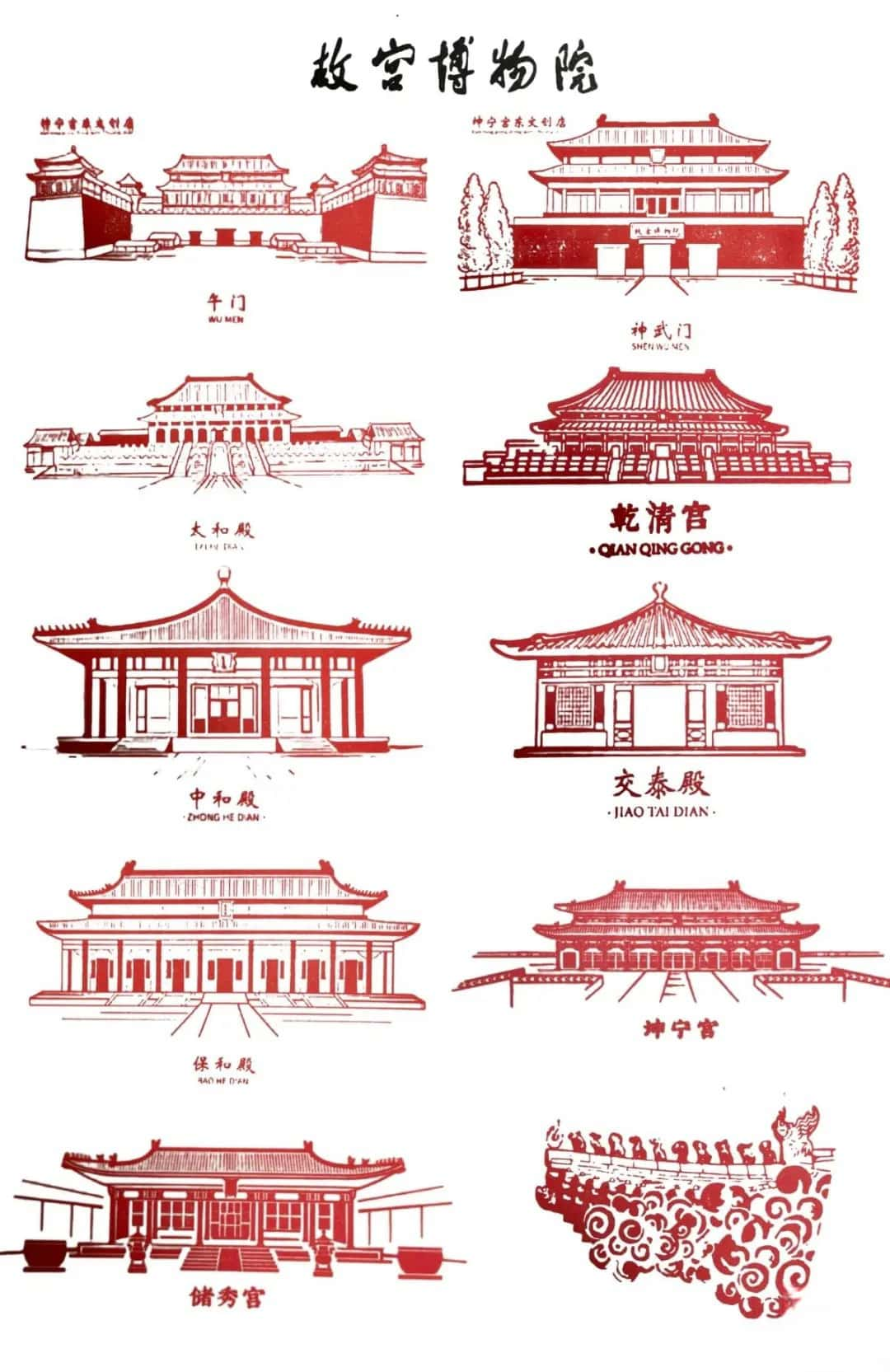
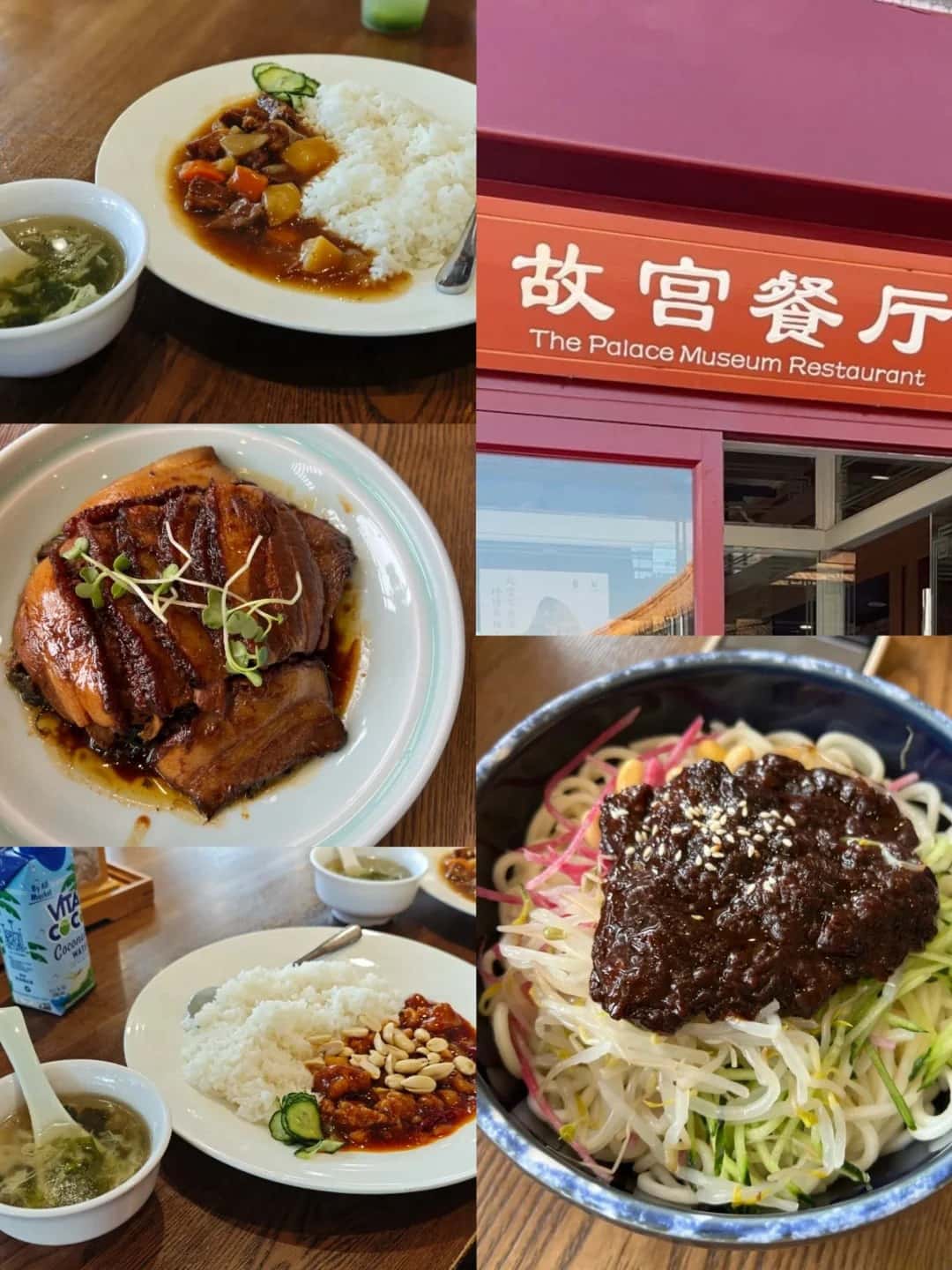
Restaurant Guide Inside the Forbidden City
Forbidden City Fast Food•Duanmen Store
Located east of the Hall of Preserving Harmony, near the Arrow Pavilion. Offers a variety of Chinese-style rice bowls, noodles, appetizers, dim sum, and Western desserts—a convenient option for visitors.
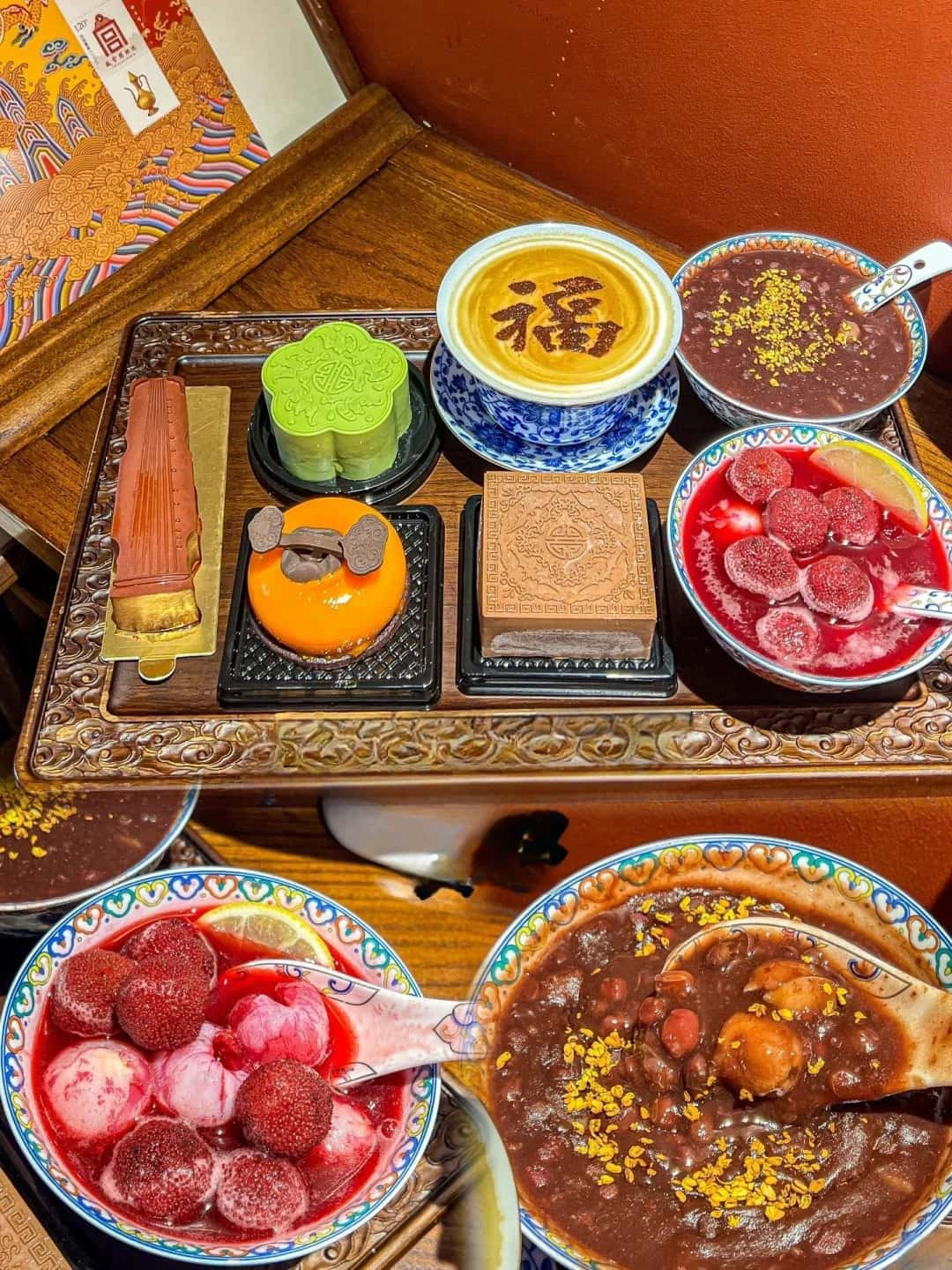
Wanchun Jinfo Afternoon Tea (Forbidden City Store)
Located east of the Palace of Earthly Tranquility. Signature dishes include “Everything Goes Well” cake, Wanfujinchun latte, Five Blessings dessert, lotus red bean porridge, and the Fragrant Mei Feizi drink.
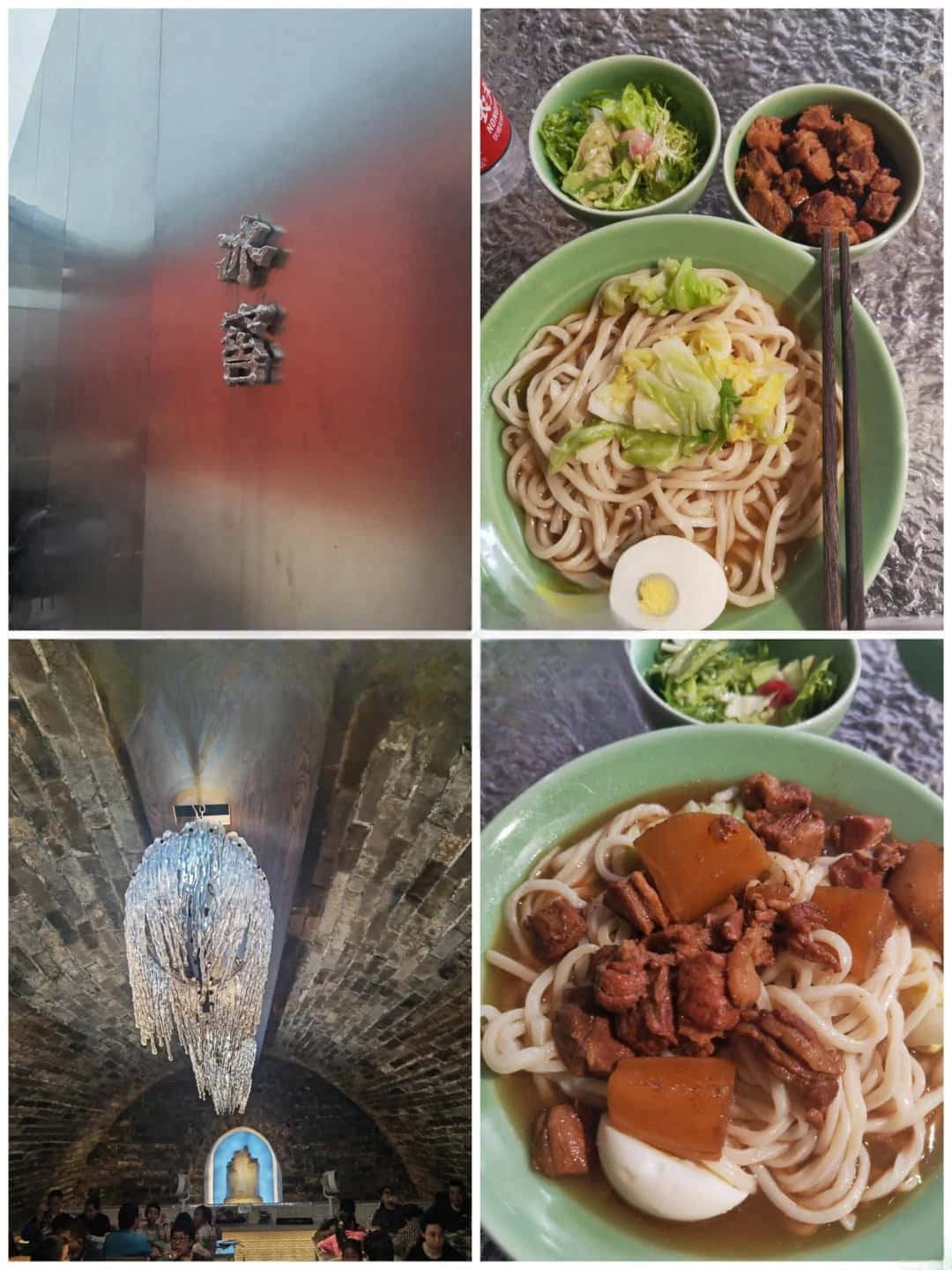
Icehouse Restaurant
Located south of Cining Palace. Includes a bookstore, cafe, restaurant, and outdoor shaded seating area. Serves palace-themed meals and creative afternoon tea. It also has a free stamp collection point.
How to plan your Beijing trip
Most first-timers spend 2–3 days in Beijing to cover the major highlights. If you’d like to add a theme park day, plan 5 days to include Universal Studios Beijing. Here are our most popular private tour options:
- Beijing 5-Day Private Tour (with Universal Studios Beijing) — 5-day private Beijing tour with Universal Studios and top landmarks like the Great Wall and Forbidden City.
- Beijing 4-Day Private Tour— 4-day private Beijing tour with the Great Wall and Forbidden City.
- Beijing 3-Day Private Tour — 3-day private Beijing tour with the Great Wall, Forbidden City, and more iconic sights.
- Beijing 2-Day Private Tour — 2-day private Beijing tour with the Great Wall, Forbidden City, and Summer Palace.
FAQ
Yes. Most areas provide accessible routes, making it convenient for visitors with strollers or wheelchairs.
Free luggage storage is available. You’ll find it right outside the Meridian Gate, next to the Visitor Service Center.
Essential Beijing Travel Resources
- Comprehensive Beijing Travel Guide 📖
- Beijing Travel Recommendations 🏙️
- Hotel Recommendations 🏨
- Transportation Guides ✈️ 🚇 🚄 🚆
- Essential Travel Tips & Tools 🗺️ 🍜 📱 💸 🌤️ 💊
- 🗺️ Beijing Maps
- 🍜 Beijing Food and Dining Guide
- 🍜 Peking Duck in Beijing Guide
- 📱 Essential Travel Apps
- 💸 China Tax Refund Guide
- 🌤️ Beijing Weather Guide
- 💊 Essential Medicines for Traveling
- 🛍️ Travel Deals China
- 🔌 China Plug Types and Power Adapter Guide
- 📶 How to Use eSIM China
- 🧳 Packing List and Travel Checklist
Comment (0)