
 English (US)
 繁體中文
 日本語
 한국어
 ไทย
 Русский
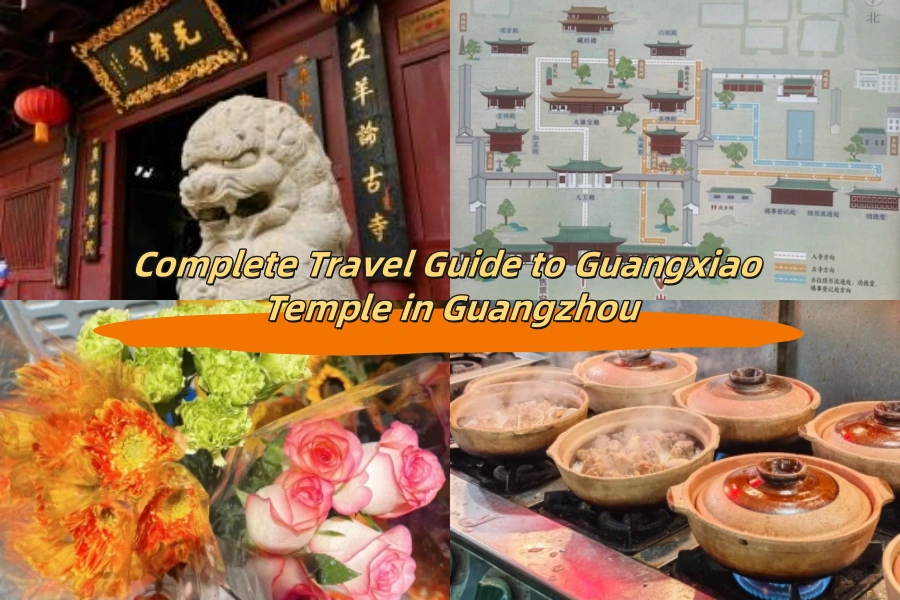
Hello, I’m Michael Zhang. I write about the history and culture behind China’s remarkable places. Guangxiao Temple, at 109 Guangxiao Road in Guangzhou’s Yuexiu District, is an active Buddhist temple with an important connection to Chan (Zen) Buddhism, historic halls, and centuries-old religious heritage. I recommend it not only for worship but also for its architecture and peaceful courtyards.
For a first visit, I recommend allowing 1–2 hours. Take Metro Line 1 to Ximenkou Station, Exit C, then walk along Guangxiao Road. If you have little time, focus on the main halls; for a longer cultural outing, pair the temple with the Temple of the Six Banyan Trees. This guide covers admission, visiting time, walking routes, flower offerings, and nearby food.
Summary
- Guangxiao Temple Overview
- Is Guangxiao Temple worth visiting?
- Guangxiao Temple Ticket Guide
- How Long Do You Need at Guangxiao Temple?
- Guangxiao Temple Map
- Top Things to Do in Guangxiao Temple
- Recommended Walking Route Inside Guangxiao Temple
- Blessing Guide at Guangxiao Temple
- Recommended Food Near Guangxiao Temple
- Where to Stay in Guangzhou for Guangxiao Temple
- How to Get to Guangxiao Temple from Downtown Guangzhou
- How to plan your Guangzhou trip
- FAQ
Guangxiao Temple Overview
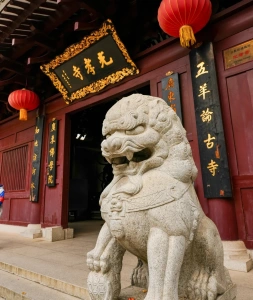
Guangxiao Temple is one of the most renowned ancient temple complexes in Guangdong Province. The site’s origins are traditionally traced to the residence of Zhao Jiande, the king of Nanyue, in the 2nd century BCE. During the Three Kingdoms period, the exiled Eastern Wu scholar Yu Fan lived here and transformed it into a private garden, which later became known as “Yu Garden.”
The temple is known for its precise architectural layout and grand, dignified halls. Most notably, it is home to an impressive array of historic relics, such as the Main Hall (Mahavira Hall) built during the Eastern Jin dynasty, the Bowl-Washing Spring carved by Bodhidharma in the Southern Dynasties, the Hair-Burial Pagoda and Stone Sutra Pillar from the Tang dynasty, the Iron Pagoda of a Thousand Buddhas from the Southern Han, and the Six Patriarch Hall and Reclining Buddha Hall from the Song and Ming dynasties. You’ll also find ancient inscriptions, statues, terminalia trees, and bodhi trees, all of which are invaluable relics of Buddhist history.
- Address: 109 Guangxiao Road, Yuexiu District, Guangzhou (Apple Maps/Amap)
- Opening hours: Daily, 8:30 AM–4:30 PM
- Ticket price: 5 CNY for adult admission
- Recommended visiting time: 1–2 hours
- Best time to visit: Year-round
- Nearest metro: Ximenkou Station, Line 1, Exit C; walk along Guangxiao Road
Is Guangxiao Temple worth visiting?
I recommend Guangxiao Temple to travelers interested in Lingnan history, Chan Buddhism, historic Chinese architecture, and an unhurried cultural walk. The Mahavira Hall, ancient pagodas, traditions associated with the Sixth Patriarch Huineng, and quiet courtyards make it worthwhile even if you do not take part in worship. If your Guangzhou schedule is so tight that you cannot spare an hour, or temples hold no interest for you, I would skip it rather than rush through.
- Best for: History buffs, Chan Buddhism enthusiasts, and travelers who enjoy traditional architecture and courtyard photography.
- Why it’s worth visiting: Historic halls, pagodas, and a living Buddhist tradition are all part of one compact site.
- Best combined with: The Temple of the Six Banyan Trees for a deeper look at old Guangzhou’s Buddhist heritage.
- You may skip it if: You have no time for even a one-hour visit, or do not enjoy religious and historic sites.
Guangxiao Temple Ticket Guide
Ticket Prices at Guangxiao Temple
- Adult admission: 5 CNY.
- Free admission: Children aged 6 or younger or no taller than 1.3 meters, and seniors aged 60 or over.
- Proof of eligibility: Bring valid identification if you are using a free-admission category.
Where to Buy Tickets
- Online: Via the official WeChat account or designated booking platforms.
- Offline: At the on-site ticket office or by scanning a QR code at the entrance.
How Long Do You Need at Guangxiao Temple?
For a first visit to Guangxiao Temple, I recommend allowing around 1–2 hours. A quick visit covers the main halls; more time lets you see its pagodas, courtyards, and nearby old-city sights.
- Quick visit (45–60 minutes): See the Hall of Heavenly Kings and Mahavira Hall, then leave time for a brief look around the central courtyard.
- Recommended visit (1–2 hours): Explore the main halls, Sixth Patriarch Hall, Hair-Burial Pagoda, and courtyards at a comfortable pace, adding a personal flower offering if you wish.
- Extended visit (2–3 hours): After the temple, continue to the Temple of the Six Banyan Trees or another nearby old-city cultural site. This longer total is not time spent only inside Guangxiao Temple.
For a first visit, I recommend allowing around 1–2 hours.
Guangxiao Temple Map
Top Things to Do in Guangxiao Temple
Hall of Heavenly Kings
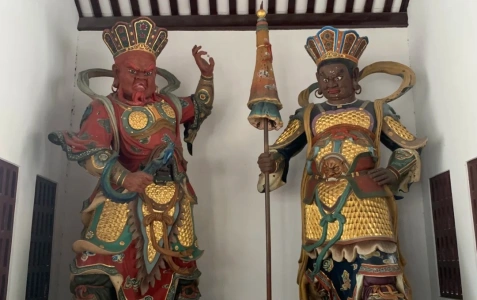
The Hall of Heavenly Kings is the first hall visitors encounter when entering Guangxiao Temple. It’s a commanding structure that serves as the temple’s welcoming gateway. Inside, the central figure is the smiling Maitreya Buddha, whose open arms and round belly represent joy and acceptance. Flanking him are the Four Heavenly Kings, each holding symbolic objects and displaying stern expressions—guardians of balance, order, and protection.
Behind them stands Skanda Bodhisattva (Weituo), a protector of the temple wielding a vajra staff. Many visitors come here to pray for family harmony, good health, and joy. It is considered the go-to spot for blessings related to domestic well-being.
Mahavira Hall (Main Hall)
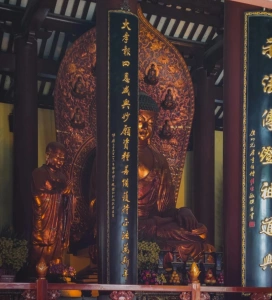
The Mahavira Hall is the spiritual core of Guangxiao Temple and one of its most sacred spaces. At its center stands Shakyamuni Buddha, flanked by Manjusri and Samantabhadra, along with the ever-compassionate Guanyin Bodhisattva. Together, they represent wisdom, action, and mercy.
In Chinese Buddhism, Manjusri embodies wisdom, Samantabhadra represents virtuous practice, and Guanyin symbolizes boundless compassion. Worshippers often visit this hall to pray for success in official careers, financial prosperity, academic achievement, and professional growth. As incense fills the air, each bow and prayer becomes a step toward fulfilling heartfelt wishes.
Hair-Burial Pagoda
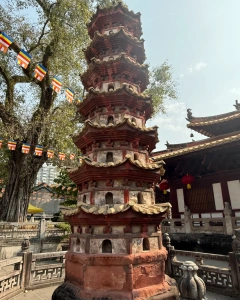
The Hair-Burial Pagoda carries deep spiritual symbolism and adds a layer of mystique to Guangxiao Temple. Legend says it is linked to the Buddhist rite of shaving one’s head as a symbol of renouncing worldly life. The pagoda is believed to honor disciples who buried their hair here as a vow to leave behind secular ties and fully devote themselves to the Buddhist path.
Visitors often perform a simple but solemn ritual: bow before the pagoda, then walk clockwise around it three times (some people choose five or seven; the number of circuits is a personal choice), and end with a final bow. This practice is considered a symbolic form of spiritual purification and a meaningful way to align oneself with Buddhist teachings.
Sixth Patriarch Hall and the Bodhi Tree
The temple’s connection with Huineng, the Sixth Patriarch of Chan Buddhism, is a key reason to include this stop. Look for the Sixth Patriarch Hall and the bodhi tree nearby, which tradition associates with Huineng. I recommend taking a few minutes here to connect the buildings with the history of Chan Buddhism.

Red Walls, Old Trees, and Courtyard Photography
The red walls, traditional rooflines, mature trees, and covered walkways make Guangxiao Temple rewarding for outdoor architectural photography. I would focus on quiet exterior details and the courtyard rather than pointing a camera at Buddha images or ongoing worship. Leave space for worshippers and avoid blocking hall entrances.

Recommended Walking Route Inside Guangxiao Temple
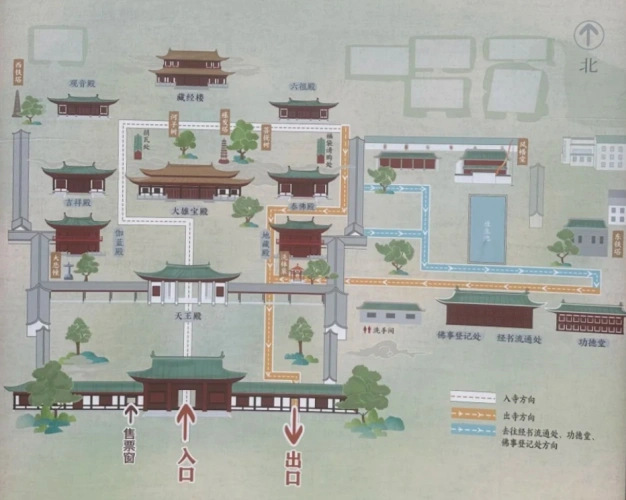
I would choose one of these routes based on time and energy instead of trying to visit every shrine in a single long circuit. Both start at Ximenkou Metro Exit C and use the temple map for the way out.
- Short route (45–60 minutes): Walk along Guangxiao Road and buy flowers only if you want to make an offering. Enter the temple, visit the Hall of Heavenly Kings and Mahavira Hall, then see the Sixth Patriarch Hall and nearby bodhi tree. Follow the public paths and temple map to the exit. You do not need to visit every side hall.
- Fuller route (1–2 hours): Keep the main-hall stops, then add Ksitigarbha Hall, Guanyin Hall, the Hair-Burial Pagoda, and the gardens. If you enjoy the history, also explore Jialan Hall, other side halls, and the lotus pond before heading to the available temple exit. This is my suggested route, not a mandatory one-way circuit.
- With children or limited stamina: Start with the central halls, then decide whether you have energy for the pagoda and side courtyards. Walk slowly and pause in the open courtyard areas rather than forcing a complete loop. After leaving, return toward Ximenkou Metro Station or continue to the Temple of the Six Banyan Trees.
Blessing Guide at Guangxiao Temple
If you want to worship at Guangxiao Temple, I recommend a simple, respectful visit. You can bring flowers as an offering, but joining a prayer ritual is entirely optional; the architecture and history are worth visiting on their own.
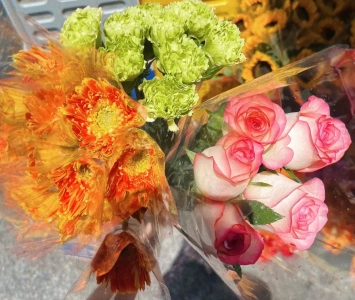
- Buying flowers: Along Guangxiao Road between Ximenkou Metro Exit C and the temple, you can choose a fresh bouquet from the flower stalls. Pick flowers you like; different halls do not require a special variety for a more effective prayer.
- Inside the halls: Wear neat, modest clothing that covers your shoulders and knees. Speak quietly and give worshippers space. I recommend keeping cameras focused on outdoor buildings and courtyards rather than Buddha statues or active worship.
- Making a personal wish: Keep your wish short and personal. You do not need to recite or reveal your passport number, national ID number, or other sensitive personal details.
- At the Hair-Burial Pagoda: If you want to bow or circle the pagoda clockwise, treat it as a voluntary practice. Walking three, five, or seven circuits is not a compulsory rule for visitors.
- Flowers shared inside the temple: Plan your own offering with flowers bought beforehand instead of scheduling your route around a particular collection time or distribution point.
- Unsolicited fortune-telling outside: I would decline approaches that demand money for readings or blessings without a clear price. Do not hand over personal details to strangers.
Recommended Food Near Guangxiao Temple
A visit to Guangxiao Temple usually takes about 1–2 hours, so I would plan a meal after leaving rather than interrupt the walk through the temple. Head back along Guangxiao Road toward Ximenkou Station and the Xihua Road area for simple Guangzhou snacks.
For something light, consider wonton noodles, rice noodle rolls, or congee. If you would rather sit down for a full meal, the two restaurant recommendations below offer a starting point.
Rongsheng (Guangxiao Road Branch)
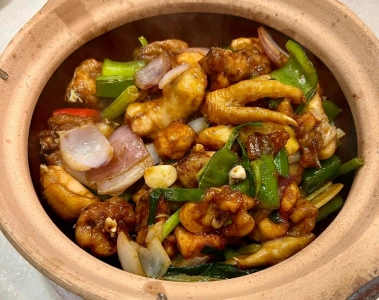
- Why we recommend it: A beloved spot among local Guangzhou residents, known for its sizzling clay pot dishes. It’s always busy—expect a line—but the aroma and flavor are unbeatable. The crackling sounds from the hot pot add to the lively atmosphere, making it a must-try every time I visit Guangxiao Temple.
- Address: 62 Guangxiao Road, Yuexiu District, Guangzhou (Apple Maps/Amap)
- Hours: Daily, 11:00–14:00 and 17:00–22:00
- Average cost: 58 CNY per person
Deji Shunde Cuisine (Guangxiao Road Branch)
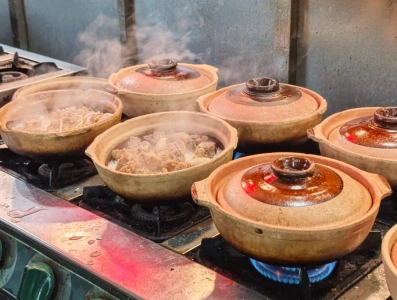
- Why we recommend it: Fresh ingredients, generous portions, and rich flavors. The rice crust at the bottom of the clay pot is a highlight, especially when drizzled with soy sauce. The sizzling iron-plate dishes are also worth a try—a delightful combo of carbs and aroma.
- Address: 51 Guangxiao Road, Yuexiu District, Guangzhou (Apple Maps/Amap)
- Hours: Daily, 10:00–22:00
- Average cost: 30 CNY per person
Where to Stay in Guangzhou for Guangxiao Temple
I recommend using the Gongyuanqian Metro Station area in old Yuexiu as a base for sightseeing across Guangzhou, not just for the temple. Lines 1 and 2 meet here; take Line 1 to Ximenkou and walk to Guangxiao Temple. These four hotels were selected for convenient city touring and an easy trip to the temple, not because every property is next door or within walking distance.
From this base, you can organize visits to Chen Clan Ancestral Hall, Beijing Road Pedestrian Street, the Sacred Heart Cathedral, and a Pearl River Night Cruise. Other city highlights include Canton Tower, Guangzhou Opera House, the Guangdong Museum, and Baiyun Mountain. You can also plan transfers to Guangzhou Baiyun Airport without limiting your hotel choice to the streets immediately around Guangxiao Temple.
CityNote Hotel (Guangzhou Beijing Road ,Sun Yatsen Memorial Hall Metro Station)
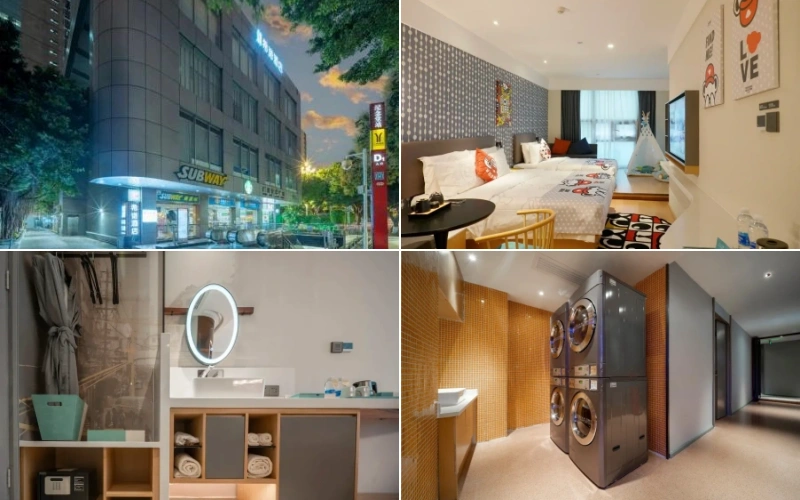
- Location: 5-minute walk to Sun Yat-sen Memorial Hall Metro Station and 10-minute walk to Gongyuanqian Metro Station.
- Price per night: 349 CNY
- Check Rates: Trip.com Specials
- Rating: Trip 9.5
- Special Amenities: Gym, laundry room, triple rooms
The hotel is located on the 5th floor of Exchange Plaza, near Sun Yat-sen Memorial Hall Station on Metro Line 2. Both Sun Yat-sen Memorial Hall and the Museum of the Nanyue King (King’s Tomb) are within walking distance, and Metro Line 2 provides convenient access to Guangzhou South Railway Station. There is a McDonald’s and a convenience store downstairs, along with plenty of local restaurants nearby, making this a practical base for exploring historic Yuexiu and the Beijing Road area. The building is shared with offices and commercial businesses, so elevator waits can be long during morning and evening rush hours, especially when traveling with large suitcases.
Guest rooms are clean and well-maintained, with comfortable bedding and smart room controls, although the rooms are relatively compact. The hotel offers breakfast with extended serving hours, freshly brewed coffee, laundry and drying facilities, and light evening meals, making it convenient for travelers with flexible schedules. The front desk staff are friendly, and the spacious common lounge provides a comfortable place to relax. Overall, this is a good choice for travelers who prioritize easy transportation, nearby dining options, and value for money.
Insail Hotels (Beijing Road Pedestrian Gongyuanqian station Branch Guangzhou)
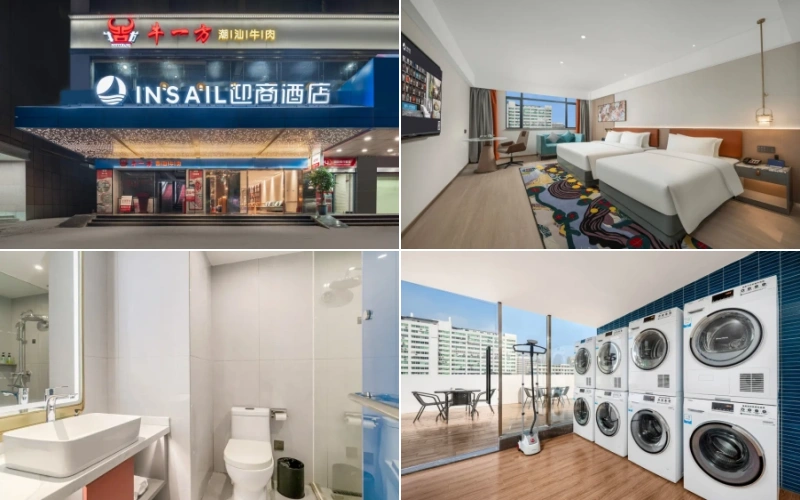
- Location: 9-minute walk to Gongyuanqian Metro Station.
- Price per night: 350 CNY
- Check Rates: Trip.com Specials, Agoda Deals
- Rating: Trip 9.4 / Agoda 9.2
- Special Amenities: Gym, laundry room, robot room service
The hotel is located near the Guangzhou Municipal Government, within walking distance of Beijing Road Pedestrian Street, Sun Yat-sen Memorial Hall, and several historic attractions, making it a convenient choice for travelers who want to stay downtown while exploring Guangzhou’s old neighborhoods. Metro Lines 1 and 2 are nearby, with Line 2 providing direct connections to Guangzhou Railway Station and Guangzhou South Railway Station, as well as easy access to other parts of the city. The surrounding area has plenty of restaurants, shops, and shopping destinations, offering a wide range of dining and retail options.
Guest rooms are clean and comfortable, with cozy bedding and a generally quiet atmosphere, although some of the decor is relatively simple and functional. Rooms feature smart controls, and the hotel offers robot food delivery, a gym, a self-service laundry room, and a restaurant with an outdoor seating area on the top floor. Breakfast includes hot dishes and everyday breakfast options, while the friendly front desk staff add to the overall experience. This is a practical choice for families and travelers looking to balance affordable accommodations with a convenient downtown location.
Yingbin Hotel
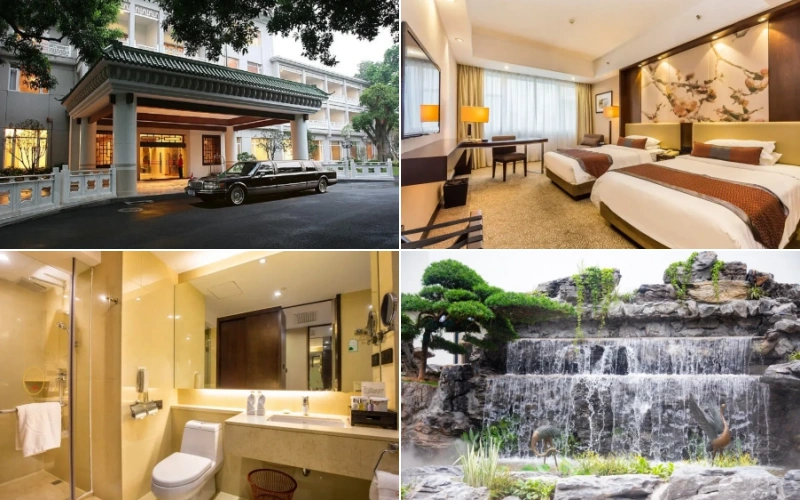
- Location: 8-minute walk to Gongyuanqian Metro Station and 12-minute walk to Sun Yat-sen Memorial Hall Metro Station.
- Price per night: 591 CNY
- Check Rates: Trip.com Specials, Agoda Deals
- Rating: Trip 9.6 / Agoda 9.4
- Special Amenities: Gym, paid indoor swimming pool, triple rooms, family rooms
Located in Guangzhou’s historic Yuexiu district, this garden-style hotel features traditional Lingnan architecture, mature trees, landscaped courtyards, and lush greenery, creating a peaceful atmosphere that contrasts with the busy downtown streets outside. Liurong Temple, Sun Yat-sen Memorial Hall, and Beijing Road Pedestrian Street are within walking distance, while Guangxiao Temple and other historic attractions are also easy to reach. The property consists of several accommodation buildings, with electric shuttle carts available for transportation around the grounds. It is an excellent choice for travelers who want to experience traditional Lingnan architecture while staying close to Guangzhou’s cultural and historical attractions.
Guest rooms are generally clean, spacious, and comfortable, with good-quality bedding, although the decor and facilities vary between buildings. Renovated rooms feature more modern amenities, while older rooms retain a traditional hotel style. Dining is a major highlight, with a buffet breakfast serving Cantonese dim sum, rice noodle rolls, and other local dishes, as well as the Hongmian Restaurant, which specializes in traditional Cantonese cuisine and dim sum. Attentive service, a gym, and a paid indoor swimming pool make this property particularly appealing to families, travelers accompanying older relatives, and guests who value peaceful surroundings and quality hotel dining.
Mercure Guangzhou Beijing Road Pedestrian Street Hotel
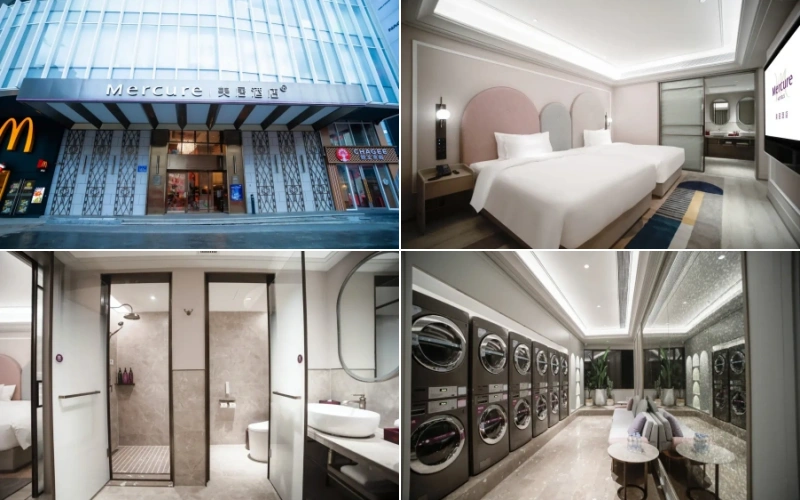
- Location: 4-minute walk to Beijing Road Metro Station, 12-minute walk to Haizhu Square Metro Station, and 14-minute walk to Gongyuanqian Metro Station.
- Price per night: 790 CNY
- Check Rates: Trip.com Specials
- Rating: Trip 9.6
- Special Amenities: Gym, laundry room, robot room service
The hotel is located in the heart of the Beijing Road Pedestrian Street shopping district, just a 4-minute walk from Beijing Road Metro Station, with shopping, restaurants, and local Guangzhou specialties right outside the door. The surrounding streets are filled with longstanding local eateries, traditional Cantonese dim sum restaurants, and shopping malls, making it easy to return to the hotel after an evening exploring the pedestrian street. Other attractions are also accessible by metro or taxi, making this an excellent base for first-time visitors who plan to spend much of their time around Beijing Road.
The hotel’s interior design combines French-inspired styling with traditional Lingnan elements, while the guest rooms feature relatively new facilities, clean interiors, and soft, comfortable bedding. Rooms include smart toilets and electric curtains, and despite the lively shopping district outside, good soundproofing helps keep the rooms relatively quiet at night. The hotel offers a buffet breakfast, self-service washing and drying facilities, a gym, and robot food delivery, along with attentive front desk and housekeeping services. It is well suited to travelers who value comfortable accommodations, convenient shopping, and modern amenities.
How to Get to Guangxiao Temple from Downtown Guangzhou
The easiest way is by metro. Guangxiao Temple is within a 10-minute walk from Line 1. Most visitors also walk here after exploring nearby attractions like the Temple of the Six Banyan Trees.
By Metro
Take Line 1 to Ximenkou Station, Exit C. Walk 500 meters. You’ll see a McDonald’s outside the station, then flower stalls ahead. Keep going, and the temple will come into view.
By Taxi or Ride-Hailing App
A taxi ride from downtown Guangzhou to Guangxiao Temple usually takes under 15 minutes and costs between 15 to 20 CNY.
How to plan your Guangzhou trip
Guangzhou works well as a short city break (2–3 days) or as the start of a longer Lingnan / Greater Bay Area journey (5–7 days) that links nearby cities. Here are our most popular private tour options:
- Guangzhou, Foshan, Zhuhai, Shenzhen, Huidong, Shantou and Chaozhou 7-Day Private Tour — A full journey across GBA cities—Guangzhou, Foshan, Zhuhai, Shenzhen, Huidong—ending in charming Chaozhou.
- Guangzhou, Foshan, Shunde, Shantou, Chaozhou and Nan’ao Island 6-Day Private Tour — From Guangzhou’s Xiguan streets to Foshan temples and Chaoshan’s ancient towns, explore culture + food.
- Guangzhou, Foshan and Shunde 5-Day Private Tour — A deep Lingnan cultural journey with Qinghui Garden, Ancestral Temple, Chen Clan Academy, and more.
- Guangzhou, Foshan and Shunde 3-Day Private Tour — Seamless private transfers through Guangzhou, Foshan, and Shunde with top Lingnan landmarks.
- Guangzhou and Zhuhai 2-Day Private Tour — Private transfers + Guangzhou’s cultural icons in one day, from Canton Tower to old alleys.
FAQ
Strollers are manageable, but wheelchairs may not be ideal. Although the steps are shallow, there are quite a few of them and they appear frequently.
Guangxiao Temple itself doesn’t offer luggage storage. However, shops between the metro station and the temple entrance often provide storage services.
Essential Guangzhou Travel Resources
- Comprehensive Guangzhou Travel Guide 📖
- Guangzhou Travel Recommendations 🏙️
- Hotel Recommendations 🏨
- Transportation Guides ✈️ 🚇 🚄 🚆
- Essential Travel Tips & Tools 🗺️ 🍜 📱 💸 🌤️ 💊