
 English (US)
 繁體中文
 日本語
 한국어
 ไทย
 Русский

Hello! I’m Michael Zhang. I enjoy exploring Beijing through its history and architecture. The Ming Tombs in Changping District are the burial grounds of 13 Ming emperors—not 13 sites you can freely enter on one ordinary ticket. For a first visit, I recommend choosing among the Sacred Way for its ceremonial stone statues, Dingling for its underground palace, Changling for its imperial halls, and Zhaoling for the layout of a restored mausoleum. If time is limited, focus on the Sacred Way and Dingling. For three or four sites, allow additional time to travel between their separate entrances and return to Beijing. Below, I’ll help you compare tickets, routes, subway and bus connections, and the return trip.
Summary
- Introduction to the Ming Tombs
- Are the Ming Tombs Worth Visiting?
- Ming Tombs Ticket Guide
- Map of the Ming Tombs
- Things to Do at the Ming Tombs
- Ming Tombs Guided Tours
- Recommended Ming Tombs Tour Route
- Recommended Nearby Restaurant
- Where to Stay in Beijing for a Ming Tombs Day Trip
- How to Get to the Ming Tombs from Beijing
- How to plan your Beijing trip
- FAQ
Introduction to the Ming Tombs
If you want stone carvings, choose the Sacred Way; for an underground burial chamber, choose Dingling; for above-ground imperial architecture, choose Changling; and for a closer look at a mausoleum’s overall layout, consider Zhaoling. My shorter route pairs the Sacred Way with Dingling. The 4–5 hours listed below describe sightseeing time, not travel to and from central Beijing.
The Ming Tombs are the final resting place of 13 emperors from the Ming Dynasty, a historical treasure located in Beijing’s northern Changping District at the foot of Tianshou Mountain. Following Emperor Yongle’s decision to move the capital to Beijing, the site was chosen for its political and strategic advantages. This carefully selected location played a crucial role in consolidating imperial power and eradicating the lingering influence of the Mongol Yuan Dynasty. Construction of the tombs began in 1409 (the 7th year of Emperor Yongle’s reign) and continued until the early Qing Dynasty, spanning over 230 years.
The Ming Tombs include 13 lavish imperial mausoleums, each built with remarkable grandeur and artistry. These tombs house 13 emperors, 23 empresses, one imperial concubine, and dozens of other high-ranking figures. In 2003, the Ming Tombs were inscribed on the UNESCO World Heritage List, recognizing their global cultural significance.
- Location: Changping District, Beijing, at the northern foot of Tianshou Mountain (Apple Maps/Amap)
- Area: 40 square kilometers
- Opening Hours:
- April 1–October 7: 8:30 AM–6:00 PM; ticket sales end at 5:30 PM
- October 8–March 31: 8:30 AM–5:00 PM; ticket sales end at 4:30 PM
- Recommended Visit Duration: 4–5 hours
- Best Seasons to Visit: The Ming Tombs are accessible year-round, but spring (April–May) and autumn (September–October) offer the most pleasant weather and picturesque scenery.
- Compare ticket prices and find the best deals: Click Here

Are the Ming Tombs Worth Visiting?
Yes, I recommend the Ming Tombs if you’re interested in Chinese imperial history, ancient architecture, and stone carvings. The Sacred Way’s stone statues, Dingling’s underground palace, and Changling’s grand ceremonial hall offer three very different perspectives on Ming Dynasty history. However, the main sightseeing areas are spread across a large area, so this is not a quick stop. I recommend choosing two or three sites and allowing 4–5 hours for sightseeing, plus travel time from central Beijing.
- Best for: History enthusiasts, architecture lovers, and travelers interested in imperial tombs and traditional Chinese stone carving.
- Why it’s worth visiting: The combination of the Sacred Way’s monumental stone sculptures and Dingling’s underground palace offers an experience you won’t find at most of Beijing’s historic attractions.
- Best combined with: Juyongguan Great Wall. Visit the Great Wall in the morning, then choose one or two Ming Tombs sites for the afternoon.
- You may skip it if: You have only one or two days in Beijing and want to prioritize attractions in the city center. The journey to the tombs and transfers between sites require a substantial amount of time.
Ming Tombs Ticket Guide
The Ming Tombs in Beijing’s Changping District comprise the burial grounds of 13 Ming emperors, but the 13 tombs are not all regular walk-in attractions. The four standard sightseeing areas are the Sacred Way, Changling, Dingling, and Zhaoling. Kangling, Yongling, Siling, and Jingling have separate reservation-based guided visits at designated times; they are not covered by ordinary independent admission to the four standard sites. For a first visit, I recommend choosing among the four standard sites. The Sacred Way and Dingling make a focused shorter trip, while adding Changling gives you an imperial hall as well as the underground palace. The existing ticket prices below apply to the four standard areas.
Ticket Prices for the Ming Tombs
Sacred Way (Shen Dao)
- Adults: ¥30 (peak season), ¥20 (off-season)
- Children: ¥15 (peak season), ¥10 (off-season). Discounted admission applies to children older than 6 and up to 18 years old (inclusive), and eligible full-time students in undergraduate programs or below.
- Free Entry: children aged 6 or younger or no taller than 1.2 meters, and adults aged 60 or older.
Dingling Tomb
- Adults: ¥60 (peak season), ¥40 (off-season)
- Children: ¥30 (peak season), ¥20 (off-season). Discounted admission applies to children older than 6 and up to 18 years old (inclusive), and eligible full-time students in undergraduate programs or below.
- Free Entry: children aged 6 or younger or no taller than 1.2 meters, and adults aged 60 or older.
Changling Tomb
- Adults: ¥45 (peak season), ¥30 (off-season)
- Children: ¥22 (peak season), ¥15 (off-season). Discounted admission applies to children older than 6 and up to 18 years old (inclusive), and eligible full-time students in undergraduate programs or below.
- Free Entry: children aged 6 or younger or no taller than 1.2 meters, and adults aged 60 or older.
Zhaoling Tomb
- Adults: ¥30 (peak season), ¥20 (off-season)
- Children: ¥15 (peak season), ¥10 (off-season). Discounted admission applies to children older than 6 and up to 18 years old (inclusive), and eligible full-time students in undergraduate programs or below.
- Free Entry: children aged 6 or younger or no taller than 1.2 meters, and adults aged 60 or older.
Ticket Purchase Options
- Online: Through the official WeChat account or popular travel platforms.
- Third-party online platforms: Trip.com Discounts
- On-site: Tickets can be purchased at the ticket offices located at the Ming Tombs scenic area.
Map of the Ming Tombs

The Sacred Way, Dingling, Changling, and Zhaoling are separate places, not four entrances to one continuous walking site. Use the map to mark your first stop, last stop, bus connection between the tomb areas, and return to central Beijing. For a shorter visit, I recommend mapping the Sacred Way and Dingling only; add Changling and Zhaoling for an extended route. The locations of all 13 imperial tombs on a map do not mean that all 13 can be freely entered: four additional tombs have separate reservation-based guided visits.
Things to Do at the Ming Tombs
The four standard sightseeing areas are the Sacred Way, Changling, Dingling, and Zhaoling. The additional tombs Kangling, Yongling, Siling, and Jingling follow a separate reservation-based guided-visit arrangement rather than ordinary independent admission. Choose your stops by the experience you want, then plan transport between the separate entrances.
Choose what interests you most instead of rushing through all four standard areas:
- Sacred Way — monumental stone statues and the ceremonial approach; the best first stop for stone-carving and architecture photos.
- Dingling — the only regularly visited imperial tomb on this route with a public underground palace; choose it for the burial chamber, not an assumption that original imperial crowns are permanently on display.
- Changling — the Ling’en Hall and above-ground imperial architecture, ideal for studying historic wooden halls.
- Zhaoling — the arrangement of an imperial mausoleum complex; add it if you want to compare the above-ground tomb layouts. Do not build your visit around access to the enclosure walls.
The Sacred Way (Shen Dao)
The Sacred Way, also known as the “Divine Path,” is a shared ceremonial walkway leading to all 13 tombs. Stretching 7,000 meters from the Stone Archway in the south to Changling Tomb in the north, the Sacred Way is an iconic feature of the site. It includes notable structures such as stone statues, the Lingxing Gate, the Five-Arch Bridge, and the Seven-Arch Bridge. Beyond the Seven-Arch Bridge, the path branches off to the individual tombs.

Dingling Tomb
The Dingling Tomb is the final resting place of Emperor Wanli (Zhu Yijun), the 13th emperor of the Ming Dynasty, and his two empresses. Located southwest of Changling at the base of Dayu Mountain, the tomb was constructed between 1584 and 1590. Key features include the Ling’en Gate, the Ling’en Hall, the Treasure City, the Ming Tower, and the Underground Palace, which is open to visitors. Covering 182,000 square meters, it is the only excavated and accessible tomb in the complex, offering a rare glimpse into the burial practices of the Ming Dynasty.

Changling Tomb
Located beneath the central peak of Tianshou Mountain, Changling is the largest and most impressive of the Ming Tombs. It houses the remains of Emperor Yongle (Zhu Di), the third Ming emperor, and his empress, Xu. Often referred to as the “Longevity Palace,” it was built during Emperor Yongle’s reign (starting in 1409). Its enormous scale and meticulous craftsmanship reflect the architectural brilliance of the era. Construction of its underground palace alone took four years to complete.

Zhaoling Tomb
Zhaoling is the tomb of Emperor Longqing (Zhu Zaihou), the 12th Ming emperor, and his three empresses. Situated on the eastern slope of Dayu Mountain, Zhaoling is notable for being the first Ming Tomb to undergo large-scale restoration. It is now a prominent tourist attraction within the complex. The tomb covers 35,000 square meters and includes the Ling’en Gate, the Ling’en Hall with east and west annexes, and the Treasure City, Ming Tower, and Mound of Treasure. These structures showcase the restoration efforts and enduring grandeur of the Ming era.

The Stone Archway
The Stone Archway serves as the monumental southern entrance to the Ming Tombs and is one of the most iconic landmarks of the site. Built in 1540 during the reign of Emperor Jiajing, it was constructed to honor the ancestors of the Ming Dynasty and is also known as the “Arch of Sacred Virtue.” Made entirely of white marble, the archway spans 28.86 meters in width and reaches a height of 12 meters. Intricate carvings of dragons, lions, and floral patterns showcase the exquisite craftsmanship of the Ming Dynasty, making it a must-see for visitors.

The Great Red Gate (Da Gong Men)
The Great Red Gate, also known as the Main Gate, marks the official entrance to the Ming Tombs. Its triple-arched structure is topped with yellow-glazed tiles and features a red-painted brick facade, symbolizing the imperial status of the site. Flanking the gate are “Dismount Stele” inscriptions carved into white marble, reminding visitors to show reverence when entering the tomb complex.

The Stele Pavilion
Located at the front section of the Sacred Way, the Stele Pavilion houses a monumental stone stele inscribed with the words “The Sacred Virtues of the Great Ming Changling.” Built in 1436, the pavilion features a square base, double-eave gable roof with yellow-glazed tiles, and open doorways on all sides. Inside, a massive white jade stele stands over 7 meters tall, with inscriptions written by Emperor Hongxi and calligraphy by the renowned scholar Cheng Nanyun. Four intricately carved Hua Biao (ornamental columns) stand at each corner, adding an air of solemnity to the pavilion.

Stone Statues (Shixiangsheng)
The Stone Statues are a collection of meticulously carved stone sculptures along the Sacred Way, depicting imperial guards, officials, and mythical animals. These carvings, known collectively as Shixiangsheng, were designed to protect the tombs and symbolize imperial authority. The 24 animal statues, divided into six types, are arranged in pairs, with two standing and two kneeling for each type. The 12 human figures include ministers and military officers, each portrayed with lifelike expressions and intricate details. This sculpture collection is a testament to the artistic excellence of the Ming Dynasty.

Ming Tombs Guided Tours
You can explore the four standard sites—the Sacred Way, Changling, Dingling, and Zhaoling—on your own. Kangling, Yongling, Siling, and Jingling follow a different format: entry is by separate reservation at an assigned time with a guide. I recommend choosing a private guide for the standard sites if you want more historical explanation. A combined Ming Tombs and Juyongguan Great Wall day tour is another option; a private tour is not the required booking channel for the four reservation-only tombs.
Recommended Ming Tombs Tour Route
I choose a Ming Tombs route by walking stamina and where I want to finish the day. The four standard areas are spread apart, so each additional site adds transport time as well as sightseeing time.
Short Route: Sacred Way and Dingling
For a focused half-day of sightseeing, I recommend starting with the stone-statue section of the Sacred Way, then taking a connecting local bus or licensed ride-hailing service to Dingling for the underground palace. You do not need to walk the entire ceremonial road as one uninterrupted seven-kilometer hike. Allow additional time for the return to Beijing.
Classic Three-Site Route and Four-Site Extension
The classic route is Sacred Way → Changling → Dingling: stone carvings, imperial halls, then an underground burial chamber. Transfer between sites rather than assuming they adjoin on foot. For all four sites, I would choose between Sacred Way → Changling → Dingling → Zhaoling (ending at Zhaoling) and Sacred Way → Dingling → Zhaoling → Changling (ending at Changling, with Bus 872 back toward Madianqiao South). Between Dingling and Zhaoling, use a connecting bus to save walking; the walking connection suits travelers comfortable with the extra distance. An extra tomb means another transfer, not just more sightseeing time.
Older Visitors, Limited Stamina and Families
I would choose two areas rather than four for older travelers or anyone who tires easily. Dingling’s underground palace requires negotiating stairs; if that is unsuitable, skip it and choose the Sacred Way’s stone statues and Changling’s above-ground architecture instead. For children, plan around resting and moving between sites rather than attempting to walk the entire tomb district.
Return Transport and Great Wall Combinations
If you finish at Changling, Bus 872 runs toward Madianqiao South. For routes ending around Dingling or Zhaoling, plan a connecting bus journey using Chang 78 and the Changping subway line via Shisanling Scenic Area Station. The published 4–5 hours of visiting time does not include the city round trip or waiting for buses. Bus 879 links Dingling and Badaling Great Wall, but combining a Great Wall climb with the tombs is tiring; I would choose only one or two tomb areas that day. For the Juyongguan Great Wall combination, visit Juyongguan in the morning and selected Ming Tombs in the afternoon. Juyongguan and Badaling are different Great Wall sites.
At the Sacred Way, the onward bus stop is by the parking lot opposite the Dragon-Phoenix Gate; Dingling has a bus stop near its entrance.
Before leaving Beijing, decide your furthest stop and the site where your visit will end. Include bus waits and transfers in your schedule, wear shoes with good traction for the steps at Dingling, and use public transit or licensed ride-hailing rather than accepting an unverified roadside driving offer.
Recommended Nearby Restaurant
I recommend planning food and water around the trips between the tombs. For the Sacred Way and Dingling, carry drinking water and a portable snack rather than relying on a food stall along every walking stretch. If you visit three or four sites, plan a proper lunch around a transfer or after leaving one area; do not schedule the entire day as nonstop walking. The existing Changling-area restaurant below is a meal option for that part of the route, not a restaurant beside every tomb. With children or older companions, build in time to sit, drink water, and rest.
Changshun Maji (Changling Main Branch)

- Address: Northeast of the Health Service Center’s North Gate, Yan Shou Community, Changping District, Beijing
- Average Cost: 25 RMB per person
- Why Visit: This local favorite is renowned for its signature 坛子肉 (Braised Meat), generously portioned and perfectly paired with a flavorful bowl of 羊杂汤 (Lamb Tripe Soup). The hearty flavors make it a must-try for food enthusiasts.
Where to Stay in Beijing for a Ming Tombs Day Trip
I recommend choosing accommodation for your whole Beijing itinerary, not just by its distance from the Ming Tombs. The five hotels below are city-base options that work for exploring Beijing and planning a day trip to the Ming Tombs in Changping; they are not walkable hotels beside the tomb entrances. From your city hotel, plan the subway-and-bus journey or a licensed ride-hailing trip to the sights.
CitiGO Hotel Beijing Qianmen Street
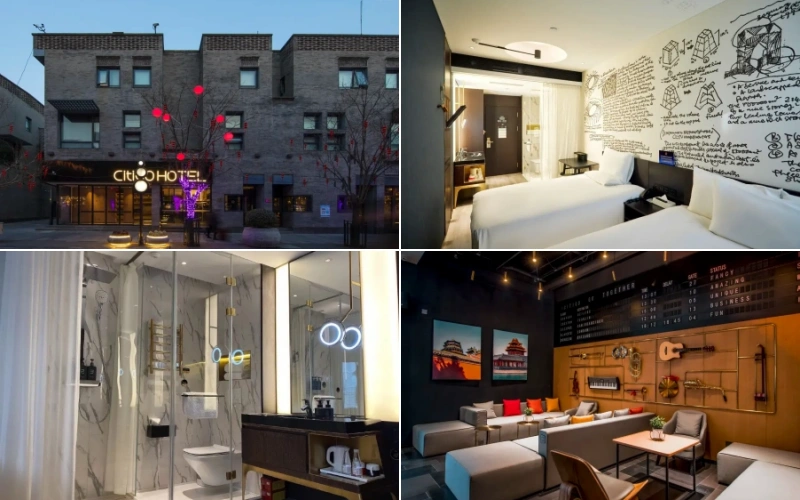
- Location: 2-minute walk to Zhushikou Subway Station
- Price per night: 430 CNY
- Check Rates:Trip.com Specials, Agoda Deals
- Rating: Trip 9.6 / Agoda 9.6
- Special Amenities: Laundry room, robot room service, family rooms
The hotel sits in the core section of Qianmen Street, about a two-minute walk from Zhushikou Subway Station, which makes getting around very efficient. From here, walking or taking the subway to Tiananmen Square and the Forbidden City feels straightforward. Qianmen Street and Dashilan are right nearby, so you can stroll, shop, and try local snacks well into the evening. There are also convenience stores and coffee shops downstairs, which makes grabbing drinks or quick supplies easy.
Rooms are clean and well-organized, with new facilities and comfortable latex mattresses. Toiletries are good quality. Free laundry and drying are especially practical during a trip. Breakfast runs for long hours, with rotating options each day, and the freshly cooked wontons stand out. In the evening, there is also a simple late-night snack, which feels like a nice bonus when returning to the hotel.
THE YARD HOTEL BEIJING, Qianmen Avenue

- Location: 3-minute walk to Zhushikou Subway Station
- Price per night: 434 CNY
- Check Rates:Trip.com Specials, Agoda Deals
- Rating: Trip 9.2 / Agoda 9.1
- Special Amenities: Laundry room
The hotel is located directly on Qianmen pedestrian street, just a short walk from Zhushikou Subway Station. Staying here saves a lot of walking time. Qianmen, Dashilan, and many time-honored local restaurants are either downstairs or within easy walking distance, so you can shop and eat late without rushing. Taking the subway to Tiananmen Square or the Forbidden City is also smooth, without the need for repeated transfers.
Rooms are tidy and clean, with a Republic-era design style that gives the space some character. The rooms are not large, but good natural light and acceptable soundproofing keep them comfortable. Bedding feels good, hot water comes quickly, and resting after a full day of sightseeing is easy. Service is friendly, check-in and extended stays run smoothly, and the laundry room is practical for stays of several days.
Manxin Hotel Beijing Tiananmen Qianmen Street
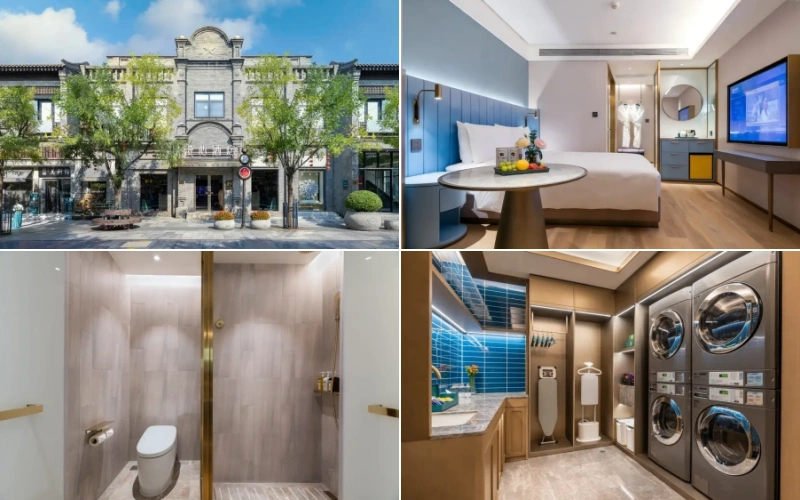
- Location: 7-minute walk to Zhushikou Subway Station, 10-minute walk to Qianmen Subway Station
- Price per night: 591 CNY
- Check Rates:Trip.com Specials, Agoda Deals
- Rating: Trip 9.8
- Special Amenities: Robot room service, laundry room, family rooms
The hotel sits in the middle section of Qianmen Street. Once you step outside, you are already in the Dashilan and Xianyukou area, where food options and traditional restaurants are densely packed. You can walk to Tiananmen Square, and both Zhushikou and Qianmen subway stations are within reasonable distance. Taking the subway to other parts of the city or planning longer day trips is convenient. Even though the hotel is in a popular tourist area, it feels quiet once inside, thanks to well-designed internal layout.
Rooms are clean and neatly maintained, with a practical layout and intuitive smart features that make the stay feel relaxed. Overall cleanliness is well controlled, with no unpleasant odors on entry. The bed and linens support good rest. Service is a strong point here, as the front desk responds quickly and stays friendly, including when handling requests from families with children. Daily housekeeping and request handling are both timely.
Crystal Orange Beijing Qianmen
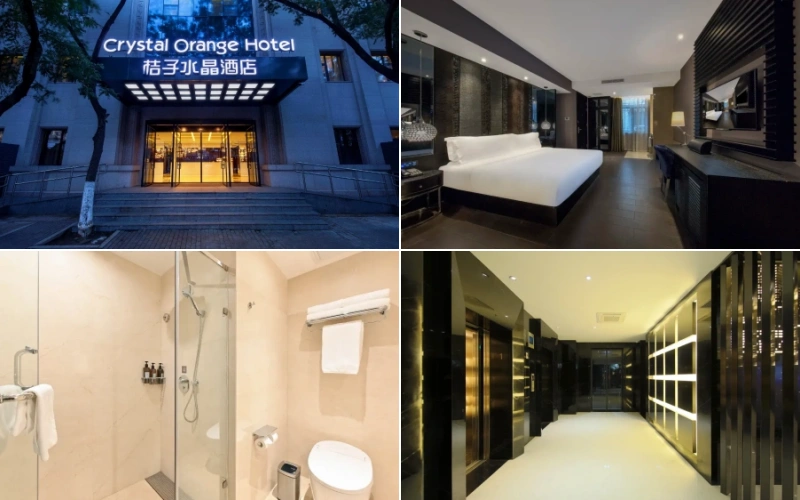
- Location: 10-minute walk to Zhushikou Subway Station
- Price per night: 617 CNY
- Check Rates:Trip.com Specials, Agoda Deals
- Rating: Trip 9.7 / Agoda 9.6
- Special Amenities: Robot room service, laundry room, family rooms
The hotel is located within the first ring road around Qianmen, yet the immediate surroundings feel relatively quiet. It takes about ten minutes to walk from Zhushikou Subway Station. This area is not the most crowded part of Qianmen, but it has a strong local feel. Turning into nearby lanes leads you to many old Beijing snack spots. Moving toward Qianmen, Dashilan, or Tiananmen Square is also smooth, whether you walk, cycle, or take the subway.
For a central location, the rooms feel fairly spacious, with good natural light and ventilation. Soundproofing adds to a sense of comfort, and the beds and linens support solid sleep. Food delivery can be sent upstairs by robot, which makes daily routines easier. Service leans toward detail-oriented, responses are quick, and housekeeping stays consistent during longer stays.
Beijing Wanda Moments Hotel
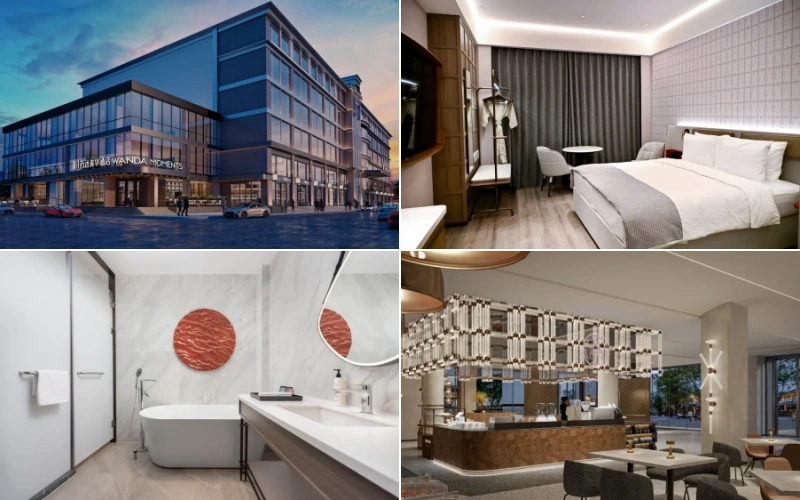
- Location: 3-minute walk to Zhushikou Subway Station
- Price per night: 677 CNY
- Check Rates:Trip.com Specials, Agoda Deals
- Rating: Trip 9.4 / Agoda 8.6
- Special Amenities: Robot room service, laundry room, gym
The hotel sits in the core Qianmen area, with Zhushikou Subway Station right outside. Both Line 7 and Line 8 are directly accessible, which makes moving around very efficient. You can walk to Qianmen Street and Dashilan, and heading toward Tiananmen Square or the Forbidden City also feels manageable on foot. Taking the subway to Wangfujing, Xidan, the Temple of Heaven, or other attractions stays straightforward, without unnecessary detours.
Rooms feel relatively spacious for the Second Ring Road area, with good light and a comfortable sense of space. Beds and bedding feel supportive, making it easy to rest well. Cleanliness is well maintained, facilities are complete, and daily use feels smooth. Communication before and after check-in runs efficiently, and staff actively help when needed. Breakfast offers stable quality with good variety, while the laundry room and gym add practical value. Food delivery can also be sent upstairs by robot.
How to Get to the Ming Tombs from Beijing
By Subway and Bus
Take the Changping subway line to Shisanling Scenic Area Station (十三陵景区站). From there, Bus Chang 78 (昌78) connects the station with the regular Ming Tombs sightseeing areas. The subway exit is not the entrance to Dingling’s underground palace or Changling’s imperial halls. Decide which tomb area you want to visit first and which one you will leave last, then choose the right bus direction and include the transfer in your total travel time. If you use a BEIJING PASS transportation card on Beijing city buses, tap it when boarding and again when getting off. A taxi or licensed ride-hailing service remains another option for the separate entrances.
By Bus
- Bus 872 from Madianqiao South: Board Bus 872 toward Changling at Madianqiao South (马甸桥南). Changling is the route’s other terminus. Do not go to Deshengmen looking for its former starting stop.
- Alternative Options: Take Express Bus 345 from Deshengmen West to Xihuan South Road Station. From there, transfer to Buses 872, 878, or Chang 67 to reach the tombs.
By Taxi or Ride-Sharing
Taking a taxi or ride-sharing service from central Beijing to the Ming Tombs covers approximately 50 kilometers and typically takes 1–1.5 hours, depending on traffic. Standard taxi fares average around 150 RMB, while ride-sharing services like DiDi may vary slightly based on demand.
How to plan your Beijing trip
Most first-timers spend 2–3 days in Beijing to cover the major highlights. If you’d like to add a theme park day, plan 5 days to include Universal Studios Beijing. Here are our most popular private tour options:
- Beijing 5-Day Private Tour (with Universal Studios Beijing) — 5-day private Beijing tour with Universal Studios and top landmarks like the Great Wall and Forbidden City.
- Beijing 4-Day Private Tour— 4-day private Beijing tour with the Great Wall and Forbidden City.
- Beijing 3-Day Private Tour — 3-day private Beijing tour with the Great Wall, Forbidden City, and more iconic sights.
- Beijing 2-Day Private Tour — 2-day private Beijing tour with the Great Wall, Forbidden City, and Summer Palace.
FAQ
The suitability of strollers varies by area:
Sacred Way: Ideal for strollers due to flat, paved walkways, making navigation smooth and comfortable.
Changling and Dingling: Some sections include stairs and slopes, which may pose challenges for strollers. Lightweight or foldable strollers are recommended for easier handling in these areas.
Changling and Dingling: Both offer free luggage storage services at their visitor centers, allowing you to securely store your belongings.
Sacred Way: No dedicated luggage storage facilities are available. However, the smooth and spacious pathways make it easy to bring along a small suitcase or backpack. To enhance your experience, consider traveling light.
Essential Beijing Travel Resources
- Comprehensive Beijing Travel Guide 📖
- Beijing Travel Recommendations 🏙️
- Hotel Recommendations 🏨
- Transportation Guides ✈️ 🚇 🚄 🚆
- Essential Travel Tips & Tools 🗺️ 🍜 📱 💸 🌤️ 💊
- 🗺️ Beijing Maps
- 🍜 Beijing Food and Dining Guide
- 🍜 Peking Duck in Beijing Guide
- 📱 Essential Travel Apps
- 💸 China Tax Refund Guide
- 🌤️ Beijing Weather Guide
- 💊 Essential Medicines for Traveling
- 🛍️ Travel Deals China
- 🔌 China Plug Types and Power Adapter Guide
- 📶 How to Use eSIM China
- 🧳 Packing List and Travel Checklist