
 English (US)
 繁體中文
 日本語
 한국어
 ไทย
 Русский
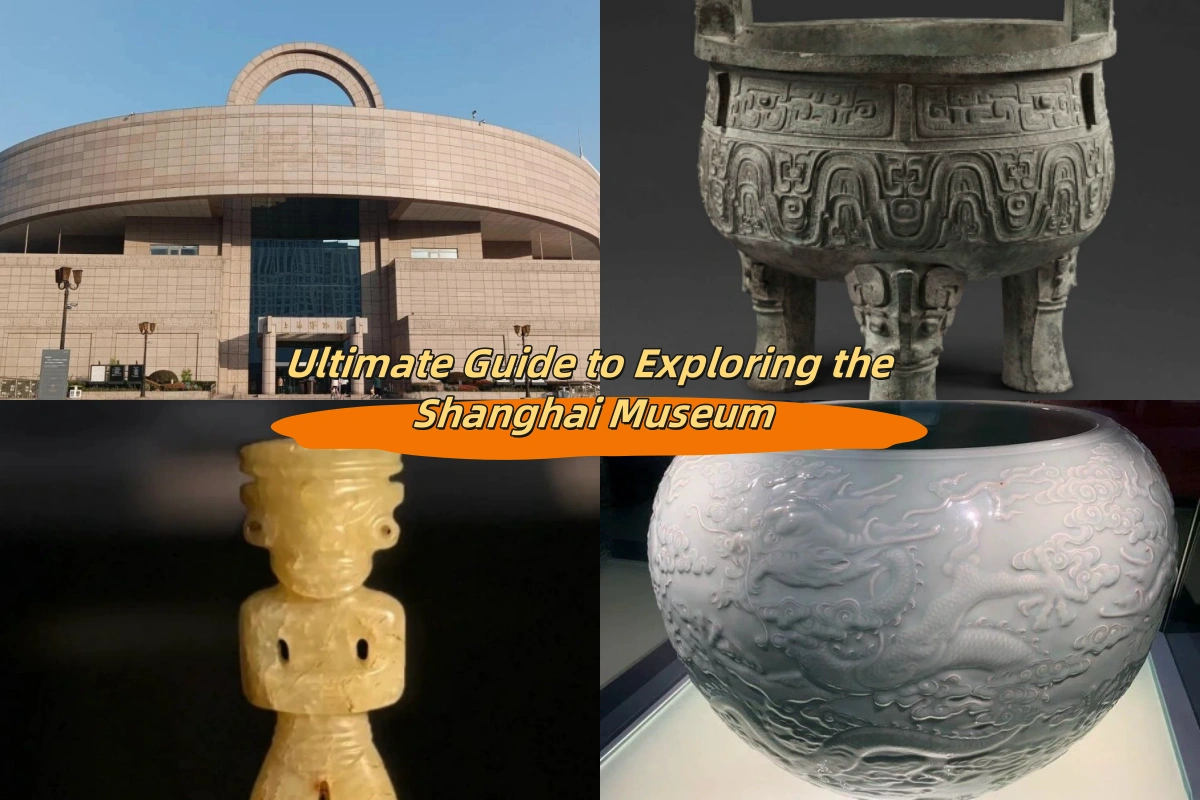
Hi, I’m Michael Zhang, a traveler who enjoys learning about Chinese culture through museums, historic sites, and artifacts. The Shanghai Museum today is very different from what it used to be. It now mainly consists of Shanghai Museum on People’s Square and Shanghai Museum East, and the two locations serve clearly different purposes. If this is your first visit and you mainly want to see ancient Chinese bronzes, ceramics, calligraphy, paintings, jade, and other highlights from the museum’s collection, I recommend going directly to Shanghai Museum East. The People’s Square location is now primarily used for major international special exhibitions.
Summary
- Introduction to the Shanghai Museum
- The Logo of the Shanghai Museum
- Is Shanghai Museum Worth Visiting?
- Shanghai Museum Ticket Guide
- How Long Do You Need at Shanghai Museum?
- Top Things to Do at Shanghai Museum East
- Top Things to Do at Shanghai Museum on People’s Square
- Shanghai Museum Audio Guide
- Recommended Route for Shanghai Museum East
- Practical Tips for Visiting Shanghai Museum
- Hotels Near Shanghai Museum
- How to Get to Shanghai Museum on People’s Square from Downtown Shanghai
- How to Get to Shanghai Museum East from Downtown Shanghai
- How to plan your Shanghai trip
- FAQ
Introduction to the Shanghai Museum
Founded in 1952, the Shanghai Museum is one of China’s most important museums of ancient art. Its collection contains more than 1.02 million objects, including over 145,000 precious cultural relics, covering bronzes, ceramics, calligraphy and painting, jade, coins, seals, sculpture, and many other categories. Today, visitors will mainly encounter two locations: Shanghai Museum on People’s Square and Shanghai Museum East. These are no longer simply an old building and a new building. Each now has a clearly defined role. If this is your first trip to Shanghai and you only have time for one location, I recommend Shanghai Museum East.
Shanghai Museum on People’s Square: Located at People’s Square in central Shanghai, this location now primarily hosts major exhibitions on world civilizations. From July 9, 2026, to November 14, 2027, the entire building is dedicated to Atop the World Tree: Ancient Civilizations of the Americas, with no other exhibitions on display during this period.
- Shanghai Museum on People’s Square Opening Hours: 09:00–17:00, last admission at 15:00. Closed on Mondays except for national public holidays.
- Shanghai Museum on People’s Square Address: 201 Renmin Avenue, Huangpu District, Shanghai (Apple Maps/Amap)
Shanghai Museum East: Located on Century Avenue in Pudong, this is now the main location for exploring the Shanghai Museum’s collection of ancient Chinese art. Its permanent galleries include bronzes, calligraphy, painting, seals, ceramics, coins, sculpture, and jade, along with themed exhibitions, temporary exhibitions, and interactive spaces.
- Shanghai Museum East Opening Hours: 10:00–18:00, last admission at 17:00. Closed on Tuesdays except for national public holidays.
- Shanghai Museum East Address: 1952 Century Avenue, Pudong New Area, Shanghai (Apple Maps/Amap)
The Logo of the Shanghai Museum
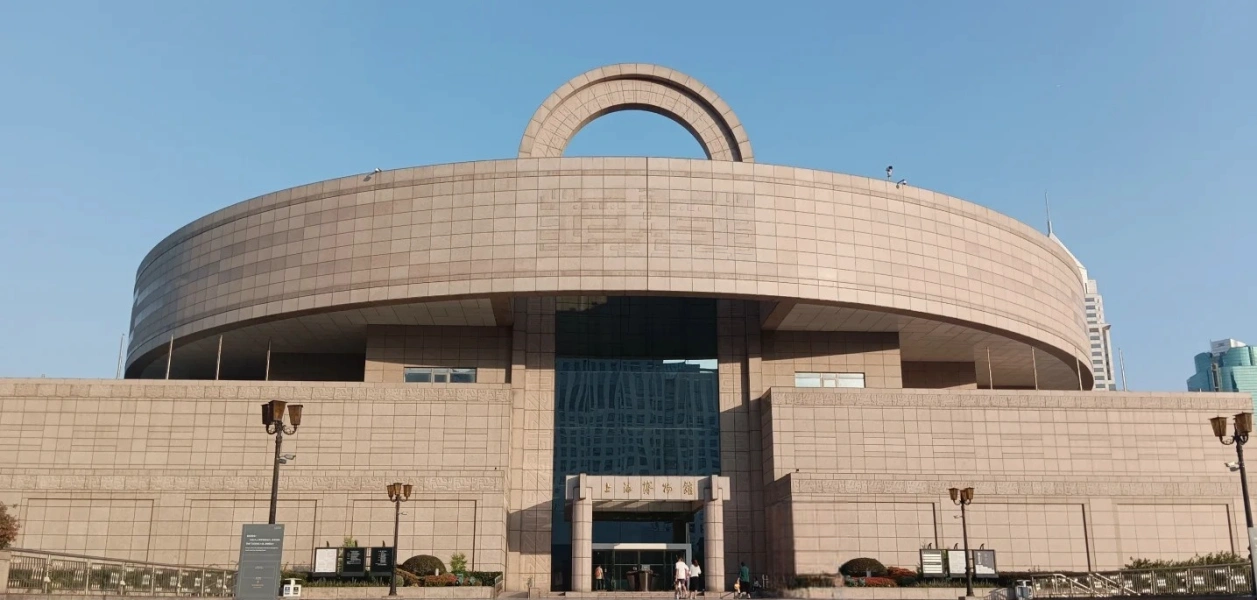
The Shanghai Museum’s logo reflects the essence of its identity. Inspired by the tripod-like structure of the People’s Square building and the museum’s iconic artifact, the “Da Ke Ding” (Great Ke Tripod), the logo merges tradition with modernity. Additionally, it incorporates the initials “H” (for Hai, as in Shanghai) and “M” (for Museum), symbolizing its regional roots and global outlook. Its sleek design, infused with traditional Chinese patterns, embodies the museum’s cultural richness and international relevance.
Is Shanghai Museum Worth Visiting?
Yes, especially if you are interested in Chinese history, ancient Chinese art, or museums. Shanghai Museum is well worth setting aside half a day to visit.
If this is your first visit and you want to see the museum’s most representative collections of ancient Chinese art, I recommend Shanghai Museum East. Its major permanent exhibitions cover ancient Chinese bronzes, ceramics, calligraphy, painting, jade, sculpture, seals, and coins. Rather than simply displaying objects together, the galleries are organized systematically by art form and historical development, making it relatively easy to build an overall understanding even if you do not have much background knowledge of Chinese art.
Shanghai Museum on People’s Square offers a completely different experience. From July 9, 2026, to November 14, 2027, the entire building is dedicated to Atop the World Tree: Ancient Civilizations of the Americas, and there are no permanent exhibitions of ancient Chinese art during this period. So if your main goal is to see the Shanghai Museum’s classic Chinese collections, there is no need to visit this location simply because it is more centrally located. You can go directly to Shanghai Museum East instead.
If you are particularly interested in the Maya, Aztec, Olmec, Inca, and other ancient civilizations of Mesoamerica and South America, however, the current major exhibition at the People’s Square location is worth planning a separate visit around.
In short:
- First visit to Shanghai Museum and want to see ancient Chinese art: Prioritize Shanghai Museum East.
- Mainly interested in the current Ancient Civilizations of the Americas exhibition: Visit Shanghai Museum on People’s Square.
- Have enough time and are interested in both themes: Visit the two locations separately.
Shanghai Museum Ticket Guide
Shanghai Museum East Tickets
The permanent exhibitions at Shanghai Museum East are free, and individual visitors currently do not need to make an advance reservation. Visitors can enter through the B1 East Entrance near Dingxiang Road after passing through security with an original valid ID document.
Shanghai Museum on People’s Square Tickets
Shanghai Museum on People’s Square currently hosts temporary exhibitions only. From July 9, 2026, to November 14, 2027, the entire building is dedicated to Atop the World Tree: Ancient Civilizations of the Americas. During this period, there are no other free permanent exhibitions, and all visitors must purchase a ticket for this exhibition to enter the museum.
Ticket Prices
- Full-Price Ticket: 148 CNY
- Designated-Date Ticket: 135 CNY
- Discounted Ticket: 74 CNY, for minors older than 6 through age 18 inclusive, visitors aged 60 or above, full-time undergraduate students and below with valid proof, and other officially eligible groups listed for the exhibition.
- Family Ticket A, One Adult + One Child: 200 CNY. The child must be age 6 to under 14.
- Family Ticket B, Two Adults + One Child: 320 CNY. The child must be age 6 to under 14.
- Free Admission for Children: Children age 6 and under. One adult may bring up to two children eligible for free admission.
- Free Admission for Visitors with Disabilities: Free with valid proof of eligibility.
Ticket Purchase
- Online: Shanghai Museum’s official WeChat Mini Program or third-party booking platforms.
- Third-party online platforms:Trip.com Discounts
- On-Site: Tickets can be purchased at the museum ticket office, but same-day availability is not guaranteed.
Shanghai Museum WeChat Mini Program Reservation Guide
Shanghai Museum currently uses its WeChat Mini Program to handle tickets for the People’s Square location, reservations for selected experiences at Shanghai Museum East, and reservations for some paid exhibitions.

How Long Do You Need at Shanghai Museum?
If you are visiting Shanghai Museum East, I recommend allowing at least 3 to 4 hours. The museum is large, and its core permanent exhibitions alone include eight galleries dedicated to bronzes, ceramics, calligraphy, painting, seals, coins, sculpture, and jade. If you only want to see the main highlights, around three hours can be enough. If you want to read the exhibit descriptions carefully, spend more time with the bronzes and ceramics, and include other themed or temporary exhibitions, allow 4 to 5 hours. If you are especially interested in Chinese history and art and also plan to visit the Digital Gallery, Ancient Civilizations Discovery Center, or other interactive experiences, spending 5 to 6 hours or even most of the day is completely reasonable.
If you are visiting Shanghai Museum on People’s Square, I currently recommend allowing 2 to 3 hours. The entire building is being used for Atop the World Tree: Ancient Civilizations of the Americas, which occupies the first through third floors, covers more than 7,000 square meters of exhibition space, and includes nearly 3,000 artifacts. Following the main route usually takes around two to three hours. If you want to examine the exhibits more carefully and add VR or other immersive experiences, allow three to four hours or longer.
If your time in Shanghai is limited, I do not recommend rushing between both museums on the same day just to check them off your list. One is at People’s Square and the other is in Pudong, and their exhibitions focus on completely different themes. For a first visit, setting aside half a day for Shanghai Museum East is usually enough.
Top Things to Do at Shanghai Museum East
If this is your first visit to Shanghai Museum, I recommend spending most of your time at Shanghai Museum East. It is now the museum’s main venue for ancient Chinese art, with core permanent exhibitions including the Gallery of Ancient Chinese Bronze, Gallery of Chinese Calligraphy Through the Ages, Gallery of Chinese Painting Through the Ages, Gallery of Chinese Seals Through the Ages, Gallery of Ancient Chinese Ceramics, Gallery of Chinese Currency Through the Ages, Gallery of Ancient Chinese Sculpture, and Gallery of Ancient Chinese Jade. If your time is limited, you do not need to force yourself to examine every gallery in detail. I recommend prioritizing the sections that interest you most.
Bronze Gallery
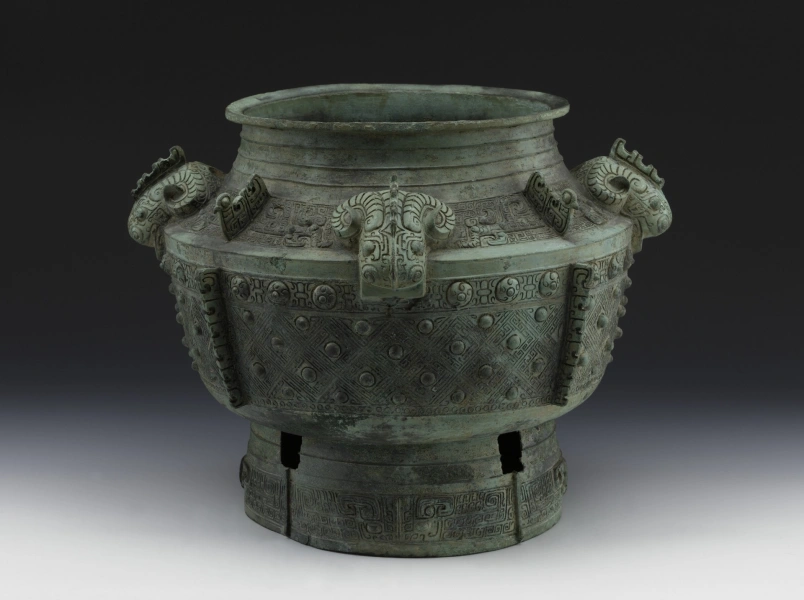
The Bronze Gallery traces the development of ancient Chinese bronze artifacts, ranging from ceremonial vessels to musical instruments and weapons. These exhibits not only highlight the artistic elegance of bronze craftsmanship but also vividly depict the ritualistic and societal structures of ancient China.
Calligraphy Gallery
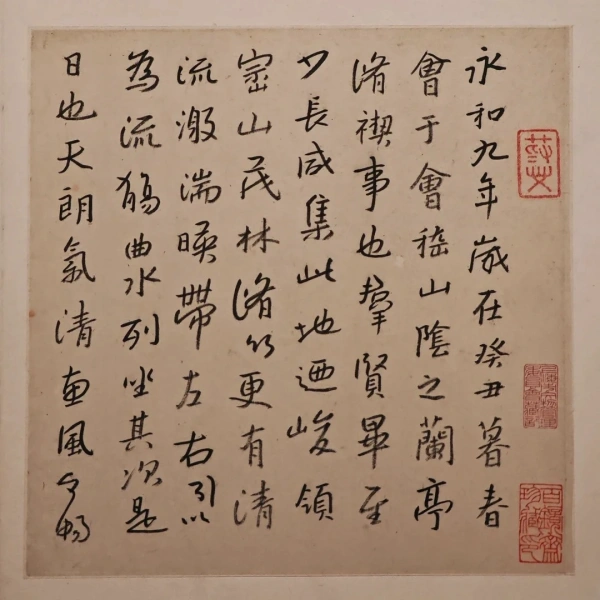
The Calligraphy Gallery celebrates the history and artistry of Chinese calligraphy, presenting masterpieces from the Han to Qing dynasties. Visitors can explore various styles, including cursive, regular, and seal scripts. Highlights include a reproduction of Wang Xizhi’s “Preface to the Orchid Pavilion”, which showcases the unparalleled beauty and cultural depth of Chinese calligraphy.
Ceramics Gallery
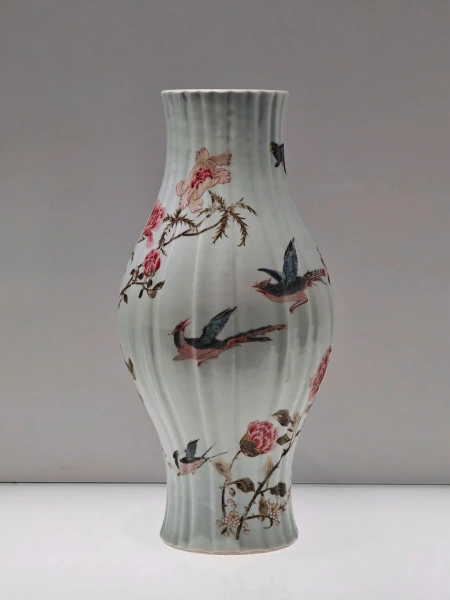
This gallery offers a comprehensive view of the development of Chinese ceramics. Featured pieces include Tang Dynasty tri-colored pottery, Song Dynasty ceramics from the Five Great Kilns, and the iconic blue-and-white porcelain of the Ming and Qing dynasties. These treasures demonstrate the technological advancements and artistic aesthetics across different historical periods.
Jade Gallery
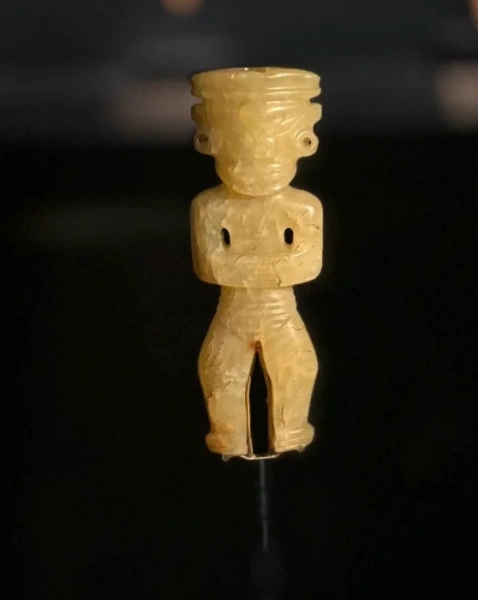
The Jade Gallery focuses on the cultural heritage of jade, exhibiting pieces from the Neolithic period to the Qing Dynasty. The collection includes ceremonial artifacts, jade ornaments, and decorative items, each showcasing the exquisite craftsmanship of ancient artisans. Interactive exhibits in the East Pavilion provide a unique opportunity to delve deeper into the fascinating world of Chinese jade culture.
Top Things to Do at Shanghai Museum on People’s Square
Shanghai Museum on People’s Square was once the museum’s main venue for ancient Chinese art, but what you see here today is completely different. From July 9, 2026, to November 14, 2027, the entire building is dedicated to Atop the World Tree: Ancient Civilizations of the Americas. The exhibition occupies the first through third floors, and the museum’s former permanent exhibitions of ancient Chinese art are not on display during this period. For now, the main reason to visit the People’s Square location is to experience this large-scale exhibition in full.
Atop the World Tree: Ancient Civilizations of the Americas
This is currently one of the Shanghai Museum’s largest exhibitions devoted to world civilizations. It brings together 1,129 groups of objects totaling nearly 3,000 artifacts from museums and cultural institutions in Mexico, Peru, and China. The exhibits span from around 1200 BC through the 16th century and cover major ancient civilizations of Mesoamerica and South America, including the Olmec, Maya, Teotihuacan, Aztec, Moche, Chimú, and Inca.
Sacred Space-Time: Ancient Civilizations of Mesoamerica
The first and second floors of the People’s Square building are mainly devoted to Sacred Space-Time: Ancient Civilizations of Mesoamerica. This section focuses on ancient civilizations in Mexico and Mesoamerica and brings together more than 2,600 artifacts from 13 Mexican cultural institutions. It provides a systematic look at the development of the Olmec, Maya, Teotihuacan, Aztec, and other civilizations. If most of what you know about Mesoamerica comes from Maya pyramids or the Aztecs, this section is especially interesting because it goes beyond major artifacts to explain religion, calendars, agriculture, animal worship, and the connections among different civilizations.

Empire of Gold: Treasures of Machu Picchu
The third floor of the People’s Square building is devoted to Empire of Gold: Treasures of Machu Picchu. Here, the focus shifts to the civilizations of the Andes in South America, with 325 objects from Peru’s Larco Museum, including artifacts related to the Moche, Chimú, and Inca civilizations. While the first and second floors focus more on Mesoamerican cultures such as the Maya and Aztec, the third floor introduces the very different cultural traditions of Peru and the Andes.

World Tree Atrium and Immersive Experiences
This exhibition goes beyond traditional artifact displays. After entering the People’s Square building, you will see a huge World Tree installation in the atrium, inspired by the ceiba tree and the World Tree cosmology of Mesoamerican civilizations. Visual elements inspired by corn, tropical rainforests, animals of the Americas, and ancient calendars also appear throughout the museum.
The exhibition also includes immersive experiences such as Fly Over Machu Picchu: A Cloud Journey Through the Inca Empire and Maya Adventure: A New VR Exploration. These experiences are not essential if your main interest is the artifacts themselves, but they can be worth allowing extra time for if you are traveling with children or want a more immersive visit.

Shanghai Museum Audio Guide
Shanghai Museum East
Shanghai Museum East offers a free WeChat guide. Its current smart audio guide is available in Chinese and English; French, Japanese, German, Korean, Spanish, and Italian are being rolled out gradually.
- Permanent exhibitions: 20 CNY per set in Chinese and 40 CNY per set for foreign-language audio guides.
- Special exhibitions: Audio-guide fees are charged separately when a special exhibition provides the service.
- Deposit: No deposit is required for the East Museum smart audio guide.
Shanghai Museum on People’s Square
For permanent-collection audio-guide service at Shanghai Museum on People’s Square, devices support Chinese, English, French, Japanese, German, Korean, Spanish, and Italian. The venue is currently hosting the Atop the World Tree: Ancient Civilizations of the Americas special exhibition, so the permanent-collection device rules below do not mean the current temporary exhibition necessarily offers the same guide service.
- Chinese: Adult set 20 CNY, parent-child set 20 CNY, and child set 10 CNY. No deposit is required, but a mobile phone number and valid ID are needed.
- Other languages: 40 CNY per set, with a deposit of 400 CNY or USD 50; a passport may also be used as collateral.
- Temporary exhibitions: Some exhibitions rent separate guide devices, and availability depends on the specific exhibition.
Recommended Route for Shanghai Museum East
For a first visit to Shanghai Museum East, start at the B1 East Entrance and use a floor-by-floor route to avoid unnecessary backtracking.
3-hour highlights route: 1F Bronze Gallery, with the Sculpture Gallery if time allows → 2F Jade Gallery and Seal Gallery → 3F Ceramics Gallery and Currency Gallery. This covers the core ancient-art collections without trying to see every room.
4–5-hour standard route: Follow the same core route, then add any calligraphy, painting, themed, or temporary galleries that are open on the day of your visit and any 4F gallery that interests you. Do not build your plan around a specific calligraphy or painting gallery, because gallery rotations and temporary closures can change.
The Bronze Gallery is one of the areas that multiple recent visitors describe as comparatively crowded. If it is busy when you arrive, go first to Ceramics, Jade, or Currency and return to Bronze later. Weekdays can still have school groups, so they are not guaranteed to be quiet. Free scheduled talks may also be available; check the day’s museum notice rather than planning around a fixed time.
If you want to visit both museum locations in one day, Metro Line 2 provides the stable connection between Shanghai Science and Technology Museum Station and People’s Square Station. If your time is limited, I would not rush between both locations just to check them off; prioritize Shanghai Museum East for the ancient Chinese collections.
Practical Tips for Visiting Shanghai Museum
Visiting with Children, Seniors, or Low-Stamina Travelers
Children under 12 must be accompanied by an adult throughout the visit. At Shanghai Museum East, the Digital Gallery and Curio-City / Ancient Civilizations Discovery Center require separate reservations. If these interactive spaces are part of your family plan, allow about 5–6 hours or most of a day rather than treating the museum as a short stop.
Visitors aged 65 and above, along with other eligible groups, can use the 1F North Gate green channel for priority security and venue entry at Shanghai Museum East. This priority channel does not cover paid special exhibitions, the Digital Gallery, or Curio-City. The East Museum has accessible elevators, rest areas, and wheelchairs or strollers that can be borrowed free by leaving a valid ID or a 300 CNY deposit.
Entry for Foreign Visitors
For individual foreign visitors, Shanghai Museum East does not currently require a general advance reservation. Bring the original valid ID document and enter through the B1 East Gate.
Luggage, Rest, Water, and Food
At Shanghai Museum East, luggage can be stored on 1F using self-service or staffed storage, including large luggage. The museum also has drinking-water points, places to sit, and food and drink options, so a long visit does not require leaving the building for every break.
At Shanghai Museum on People’s Square, cloakrooms are available at the North and South Gates. The museum also has on-site food and tea/drink options.
Shopping and Photos
Shanghai Museum East has museum-collection and Shanghai-themed cultural products, while the People’s Square location currently focuses more on merchandise tied to the special exhibition.
For photos, recent visitors repeatedly recommend the East Museum atrium, its flowing interior spaces, and the rooftop area when it is open. Evening light can be especially good, but the result depends on weather and season.
Hotels Near Shanghai Museum
It’s recommended to stay around Nanjing West Road. From this area, getting to different parts of the city is very convenient, including the Bund, Yu Garden, Jing’an Temple, People’s Square, Tianzifang, and the former site of the Provisional Government of the Republic of Korea. Nanjing West Road Metro Station is served by Line 2, which provides direct access to most popular attractions and all major transportation hubs. The surrounding area also offers a wide range of restaurants and dining options. More detailed hotel recommendations can be found at <Shanghai Hotel Recommendations>.
CitiGO Hotel Jing’an Shanghai
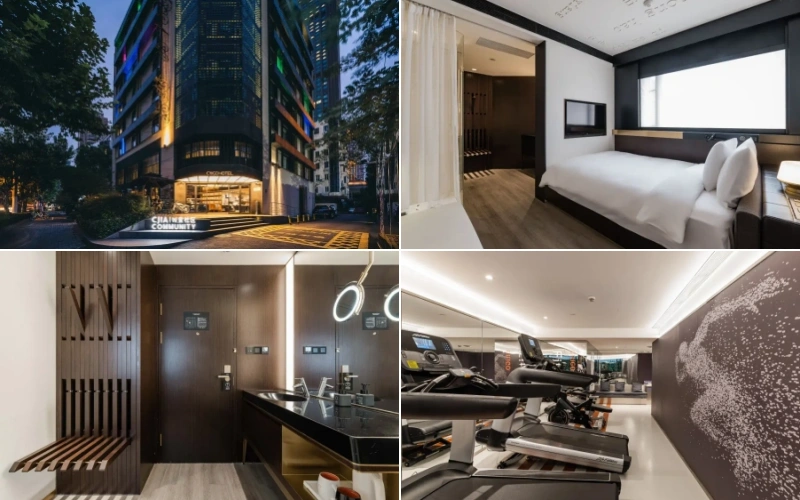
- Location: 12-minute walk from Nanjing West Road Metro Station, 14-minute walk from Shanghai Natural History Museum Metro Station
- Price Range: 422 CNY
- Check Rates: Trip.com Specials, Agoda Deals
- Rating: Trip 9.5 / Agoda 9.4
- Special Amenities: Gym, laundry, robot room service
The hotel is located near the West Nanjing Road shopping district in Jing’an, within walking distance of shopping and dining areas such as HKRI Taikoo Hui, making it convenient for combining shopping, dining, and central Shanghai sightseeing. It is also close to locations related to U.S. Consulate visa services, while West Nanjing Road and the Shanghai Natural History Museum area are easy to reach. Overall, it is best suited to travelers who prioritize a central location, short stays, or business trips.
Rooms are generally compact and better suited to solo travelers or short stays, but cleanliness is consistent, the bedding is soft, and the shower water pressure is good. Breakfast is served until noon, and late-night snacks are also available, which is convenient for late arrivals or travelers with later schedules. The hotel also has a shared workspace, self-service laundry room, gym, and robot delivery, making it especially practical for business travelers and solo trips.
Ji Hotel (Shanghai People’s Square Nanjing Road)
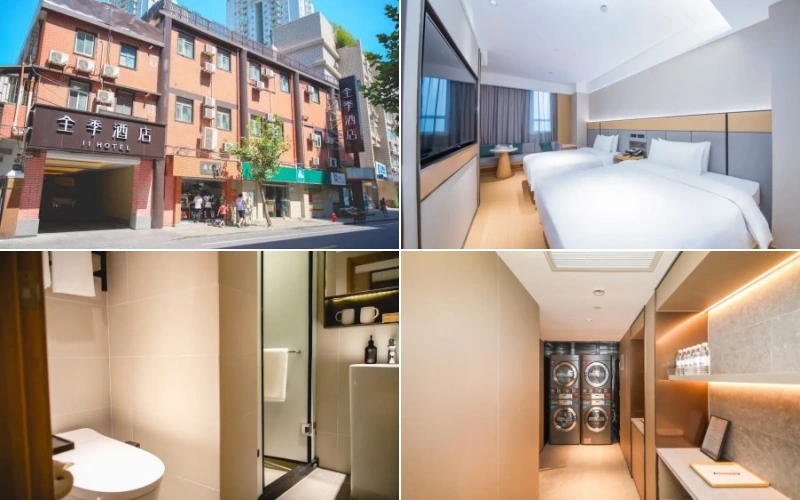
- Location: 9-minute walk from Huangpi South Road Metro Station, 10-minute walk from Nanjing West Road Metro Station
- Price Range: 487 CNY
- Check Rates: Trip.com Specials, Agoda Deals
- Rating: Trip 9.3 / Agoda 9.2
- Special Amenities: Laundry, robot room service, triple rooms
The hotel is located around People’s Square and Nanjing Road, with Shanghai Grand Theatre, Shanghai Museum, and People’s Park all within walking distance, while Nanjing Road Pedestrian Street is also easy to reach. There are plenty of restaurants, convenience stores, and other everyday amenities nearby, making it a practical base for museums, theater performances, and sightseeing around central Shanghai. Both South Huangpi Road and West Nanjing Road metro stations are within walking distance, providing convenient connections to other parts of the city.
Rooms are generally compact and practical, with limited space but all the basic amenities needed for a comfortable stay. Cleanliness and bedding are consistently reliable. Free washing and drying facilities are useful for longer stays or extended trips, and the hotel also offers robot delivery. With plenty of dining options nearby, it suits travelers who value location, transportation, and everyday convenience, while triple rooms are available for groups traveling together.
Taikoo Hui Atour X Hotel, Nanjing West Road, Shanghai
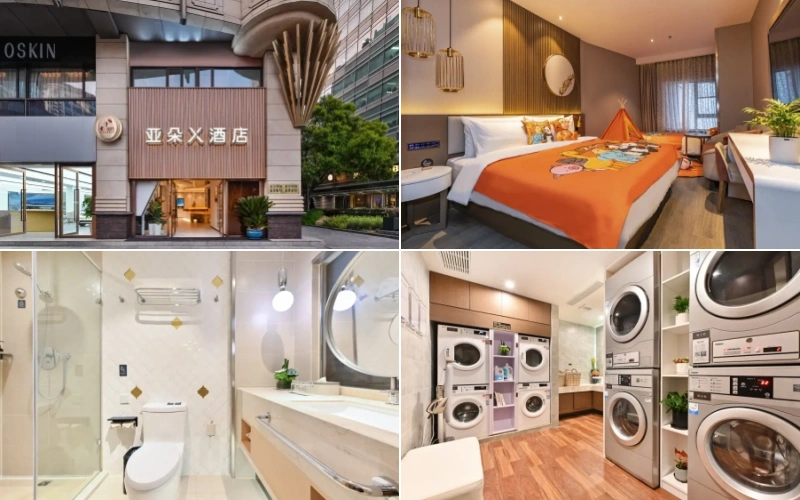
- Location: 7-minute walk from Nanjing West Road Metro Station, 9-minute walk from the Shanghai Natural History Museum Metro Station
- Price Range: 649 CNY
- Check Rates: Trip.com Specials, Agoda Deals
- Rating: Trip 9.5 / Agoda 9.4
- Special Amenities: Laundry, robot room service, triple rooms, family rooms
The hotel is located in the heart of the West Nanjing Road shopping district, with shopping and dining destinations such as HKRI Taikoo Hui, Wujiang Road Food Street, and the Shanghai Starbucks Reserve Roastery nearby, making it especially convenient for travelers interested in shopping and food. West Nanjing Road Metro Station is a 7-minute walk away, and several metro lines provide easy connections to other parts of central Shanghai, including attractions such as the Shanghai Natural History Museum. The surrounding area is packed with shops and restaurants, making the hotel suitable for both family trips and itineraries focused on central Shanghai sightseeing.
Rooms are generally clean, with comfortable bedding and pillows, while the bathrooms and in-room facilities feel relatively well maintained and up to date. Breakfast offers a good range of choices, and evening snacks include congee, xiaolongbao, and side dishes. The hotel has a laundry room and robot delivery, as well as triple rooms and family rooms, making it a convenient choice for families or groups traveling together.
Okura Garden Hotel Shanghai
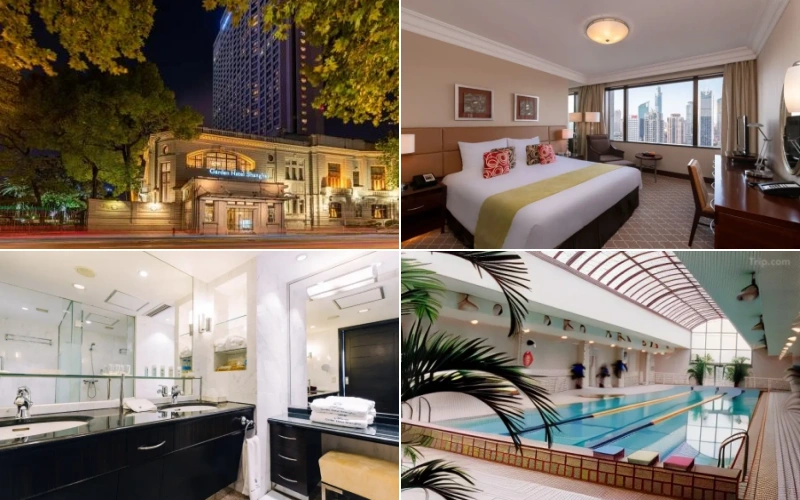
- Location: 5-minute walk from Shaanxi South Road Metro Station, 12-minute walk from Nanjing West Road Metro Station
- Price Range: 885 CNY
- Check Rates: Trip.com Specials, Agoda Deals
- Rating: Trip 9.4 / Agoda 9.1
- Special Amenities: Triple rooms, family rooms, connecting rooms
The hotel is located near Huaihai Road, a 5-minute walk from South Shaanxi Road Metro Station, with Changle Road and numerous restaurants and small shops within easy walking distance. It features a large garden and historic architectural spaces, providing a relatively peaceful environment despite its central location. It is well suited to travelers who enjoy the atmosphere of old Shanghai, walking around the Huaihai Road area, and combining convenient transportation with a quieter setting.
The hotel’s public areas and garden are major highlights, with distinctive historic architecture, a spiral staircase, and landscaped grounds that also give families space to walk around within the property. Mattresses, pillows, and bedding are comfortable, and room cleanliness is consistently maintained, although the in-room facilities show their age more noticeably. Breakfast has a distinct Japanese influence, while the overall service style is attentive and traditional.
The St. Regis Shanghai Jingan
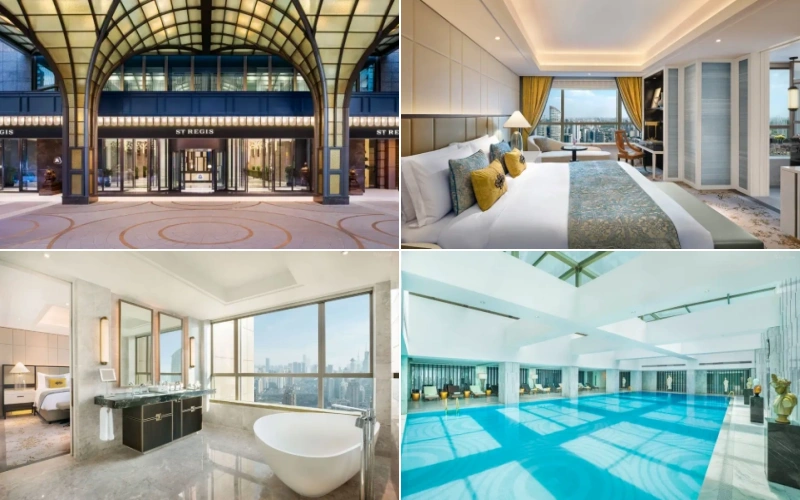
- Location: 7-minute walk from Nanjing West Road Metro Station
- Price Range: 1,639 CNY
- Check Rates: Trip.com Specials, Agoda Deals
- Rating: Trip 9.4 / Agoda 9.3
- Special Amenities: Gym, swimming pool
The hotel is located in a prime area of Jing’an near West Nanjing Road, surrounded by a wide selection of shopping and dining options. Jing’an Temple, the West Nanjing Road shopping district, Shanghai Natural History Museum, and other central Shanghai destinations are convenient to reach. West Nanjing Road Metro Station is a 7-minute walk away, making the hotel a good choice for travelers who want to stay in central Shanghai while combining shopping, family travel, and city sightseeing.
Rooms are spacious and commonly feature walk-in closets, double vanities, and bathtubs. Higher floors offer better views, while the bedding is comfortable and soundproofing is generally reliable. The hotel has a more traditional luxury style, and although some facilities have been in use for some time, they are well maintained. Butler service is one of its key features, and the hotel also has a swimming pool and gym, along with a wide breakfast selection.
How to Get to Shanghai Museum on People’s Square from Downtown Shanghai
Shanghai Museum on People’s Square is located right in the heart of central Shanghai, close to Nanjing Road, Shanghai Grand Theatre, and People’s Park. It is easy to reach from most of Shanghai’s major tourist areas. Individual visitors enter through the South Entrance on Wusheng Road.
By Metro
The easiest option is to take Metro Line 1, 2, or 8 to People’s Square Station and use Exit 1. Alternatively, take Metro Line 14 to Dashijie Station and use Exit 4. From People’s Square Station, it is a short walk to the museum. If you are staying around East Nanjing Road, West Nanjing Road, Jing’an Temple, or Lujiazui, Metro Line 2 is usually the most convenient option.
By Taxi or Ride-Hailing
A taxi or ride-hailing trip from central Shanghai to Shanghai Museum on People’s Square generally takes less than 20 minutes and costs around 20 CNY.
How to Get to Shanghai Museum East from Downtown Shanghai
Shanghai Museum East is located at 1952 Century Avenue in Pudong New Area, close to the Shanghai Science and Technology Museum, Century Park, and several other cultural attractions in Pudong. Individual visitors currently enter through the B1 East Entrance near Dingxiang Road.
By Metro
There are three main metro options. You can take Metro Line 2 to Shanghai Science and Technology Museum Station and use Exit 8. Alternatively, take Metro Line 4 to Xiangcheng Road Station and use Exit 2, or take Metro Line 6 to Pudian Road Station and use Exit 1. If you are traveling from People’s Square, East Nanjing Road, Jing’an Temple, Lujiazui, or the direction of Pudong Airport, Metro Line 2 is usually the easiest choice because the route is straightforward and often requires fewer transfers.
By Bus
Several bus routes stop near Shanghai Museum East. You can take Bus 638 or 975 to Yanggao South Road/Century Avenue, or Bus 987 or Pudong 36 to Century Avenue/Dingxiang Road.
By Taxi or Ride-Hailing
A taxi or ride-hailing trip from central Shanghai to Shanghai Museum East usually takes around 20 to 30 minutes and costs approximately 20 to 30 CNY.
How to plan your Shanghai trip
Most first-timers spend 2–3 days in Shanghai for the highlights. Add a 3rd day for Shanghai Disneyland or a nearby water town. If you want the classic Jiangnan loop, plan 4–5 days to include Suzhou and Hangzhou. Here are our most popular private tour options:
- 5-Day Shanghai, Suzhou & Hangzhou Private Tour (with Shanghai Disneyland) — Disneyland, Suzhou gardens and West Lake in one trip.
- 4-Day Shanghai Private Tour (with Shanghai Disneyland & Oriental Pearl Tower) — Disneyland and Shanghai’s iconic landmarks in one trip.
- Shanghai 3-Day Private Tour (with Disneyland) — Disneyland fun with private comfort and flexible pace.
- Shanghai 2-Day Private Tour — Private 2-day tour of Shanghai’s top sights.
FAQ
Yes. Shanghai Museum East has accessible elevators, and wheelchairs or strollers can be borrowed free by leaving a valid ID or a 300 CNY deposit. At Shanghai Museum on People’s Square, wheelchair and stroller service is available at the South Gate. Children under 12 must be accompanied by an adult throughout the visit.
At Shanghai Museum East, use the 1F self-service or staffed storage, which can also handle large luggage. At Shanghai Museum on People’s Square, cloakrooms are available at both the North and South Gates.
Essential Shanghai Travel Resources
- Comprehensive Shanghai Travel Guide 📖
- Shanghai Travel Recommendations 🏙️
- Hotel Recommendations 🏨
- Transportation Guides ✈️ 🚇 🚄 🚆
- Essential Travel Tips and Tools 🗺️ 🍜 📱 💸 🌤️ 💊🛍️🔌📶🧳
- 🗺️ Shanghai Maps
- 🍜 Shanghai Food and Dining Guide
- 🎁 Shanghai Souvenirs Guide
- 📱 Essential Travel Apps
- 💸 China Tax Refund Guide
- 🌤️ Shanghai Weather Guide
- 💊 Essential Medicines for Traveling
- 🛍️ Travel Deals China
- 🔌 China Plug Types and Power Adapter Guide
- 📶 How to Use eSIM China
- 🧳 Packing List and Travel Checklist