
Changsha Travel Guide

Changsha is one of China’s most distinctive destinations for Hunan-Chu culture and viral food experiences, known for Orange Isle, Yuelu Mountain, and the Hunan Museum. This guide covers Changsha’s top attractions, recommended itineraries, best areas to stay, transportation options, local food, best times to visit, map information, and practical travel tips to help you plan a smoother trip.

At a Glance

  • Known for: Orange Isle, Yuelu Mountain, Hunan Museum, Wuyi Square commercial district, Hunan cuisine and tea-drink culture
  • Recommended stay: 3–4 days
  • Best time to visit: Spring and fall, typically March to May and September to November
  • Local food: Stir-fried pork with chili peppers, stinky tofu, Changsha rice noodles, sugar-oil baba, Sexy Tea
  • Best for: Food check-ins, city night tours, museum travel, university-area walks, weekend getaways, and younger travelers

Things to Do in Changsha

Changsha’s travel experiences usually center on Xiang River scenery, Hunan culture, viral neighborhoods, and local food. For a first visit, prioritize the city’s most representative attractions and experiences, then add neighborhood walks, museums, food, night views, or nearby day trips depending on your schedule.

Orange Isle

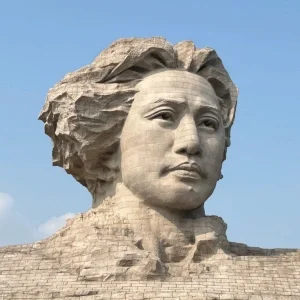
A signature Changsha attraction in the middle of the Xiang River, ideal for walking, river views, and seeing the Young Mao Zedong Art Sculpture.
Hunan Museum

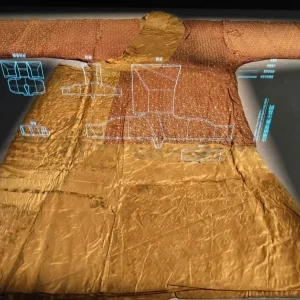
One of Changsha’s most important museums, with the Mawangdui Han Tomb artifacts as its core highlight.
Yuelu Mountain

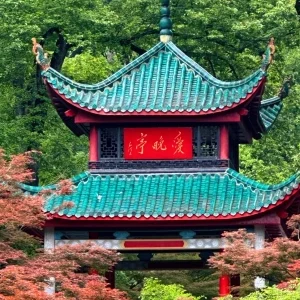
A classic mountain scenic area in Changsha, good for hiking, views, and combining with Yuelu Academy and Aiwan Pavilion.

Wuyi Square

The core commercial district in downtown Changsha, good for shopping, food, nightlife, and city check-ins.

Wenheyou

A retro local-market-style dining destination, suitable for photos and experiencing the atmosphere of Changsha snacks.

Good for buying local snacks, souvenirs, and viral treats, and useful for food-walk supplies.
Pozi Street

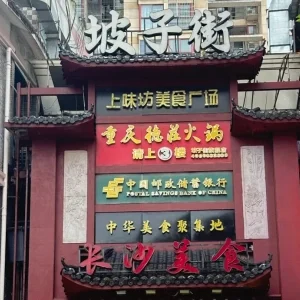
One of Changsha’s classic food districts, with concentrated snacks, restaurants, and nighttime crowds.

A famous mountain destination in Hunan that can be reached from Changsha by high-speed rail, suitable for a day trip or short hike.
Suggested Changsha Itinerary

Changsha itineraries can be arranged as quick highlights, classic sightseeing routes, or deeper travel experiences depending on how long you stay. For first-time visitors, it is best to start with Wuyi Square, Orange Isle, Yuelu Mountain, and the Hunan Museum, then add Chaozong Street, Kaifu Temple, night-market food walks, or a Mount Heng day trip if time allows.

The following Changsha itineraries are suitable for first-time visitors. You can adjust the order based on your flight schedule, high-speed rail timing, hotel location, and interests. During public holidays or when popular attractions require reservations, allow extra flexibility.

3 Days / 2 Nights Route

Suitable for first-time visitors to Changsha. This route covers the Wuyi commercial district, Xiang River night views, Orange Isle, Yuelu Mountain, the Hunan Museum, and local night markets, offering a complete experience of Changsha’s food, culture, and city energy.

  • Day 1: Wuyi Square → Taiping Street → Wenheyou → Pozi Street → Huangxing Road Pedestrian Street → Nanmenkou → Du Fu Pavilion
  • Day 2: Orange Isle → Yuelu Mountain → Yuelu Academy → Aiwan Pavilion → Lushan South Road → Houhu
  • Day 3: Ancient Kaifu Temple → Lotus Pond → Chaozong Street → Hunan Museum → Yangfan Night Market

4 Days / 3 Nights Route

Suitable for travelers who want to combine downtown Changsha with a short trip to Mount Heng. Day 1 is reserved for hiking Mount Heng, followed by Changsha’s core commercial districts, Yuelu Mountain, museums, and creative neighborhoods for a richer itinerary.

  • Day 1: Changsha South → Hengshan West → Mount Heng hike → Return to Changsha
  • Day 2: Wuyi Square → IFS Tower → Taiping Street → Huangxing Road Pedestrian Street → Wenheyou → Du Fu Pavilion
  • Day 3: Orange Isle → Yuelu Mountain → Yuelu Academy → Aiwan Pavilion → Hunan University → Lushan South Road → Houhu
  • Day 4: Ancient Kaifu Temple → Dongfeng Road Creative Park → Hunan Museum → Chaozong Street → Fengying Xili

Where to Stay in Changsha

For first-time visitors, staying near Wuyi Square Metro Station is usually the most recommended choice, thanks to convenient transportation, easy access to major attractions, and a relatively wide range of hotels. If you care more about nightlife, food, shopping, a quieter environment, or airport/train station access, you can also choose areas around Furong Square, Houjiatang, Peiyuanqiao, Changsha South Railway Station, or Yuelu Mountain depending on your itinerary.

  • Wuyi Square Metro Station: Best for first-time visitors who enjoy food walks, shopping, and nightlife. This area concentrates commercial districts and offers convenient metro transfers, with easy access to Huangxing Road Pedestrian Street, Pozi Street, Taiping Street, Orange Isle, and Du Fu Pavilion. It is ideal for travelers who want to prioritize Changsha nightlife and popular attractions.
  • Furong Square, Houjiatang, and Peiyuanqiao Metro Stations: Best for travelers who want to stay in the city center while avoiding the heaviest crowds around Wuyi Square. These areas offer convenient metro access and plenty of accommodations, with easy connections to the Wuyi commercial district, Hunan Museum, Kaifu Temple, Orange Isle, and Changsha Railway Station. They suit travelers who want a balance of quiet and convenience.

How to Get to and Around Changsha

Most travelers reach Changsha by plane or high-speed rail. The city is mainly served by Changsha Huanghua International Airport, and major railway stations include Changsha South Railway Station, Changsha Railway Station, and Changsha West Railway Station. If you are traveling from nearby cities such as Wuhan, Guangzhou, Shenzhen, Nanchang, Hengyang, or Zhangjiajie, high-speed rail is usually the most convenient and time-efficient option.

From Changsha Huanghua International Airport to downtown, you can take the maglev express, transfer to the metro, use an airport bus, take a taxi, or use a ride-hailing service. The best option depends on your arrival time, luggage, hotel location, and budget. Changsha mainly uses Changsha Huanghua International Airport as its air gateway. If your hotel is near Changsha South Railway Station, consider the maglev first. If you are staying around Wuyi Square, Furong Square, or Houjiatang, you can combine the maglev, metro, airport bus, or ride-hailing service.

Changsha has several railway stations, and different stations may serve different high-speed rail, bullet train, or regular train routes. Before buying tickets, carefully confirm both your departure and arrival stations, as travel times between Changsha South Railway Station, Changsha Railway Station, and Changsha West Railway Station can vary significantly. Changsha South mainly serves high-speed rail, Changsha Railway Station is more useful for some regular trains and downtown transfers, and Changsha West serves some intercity and regional routes.

Within Changsha, the metro is usually the most convenient and reliable way to get around. Taxis and ride-hailing services are useful at night, when carrying large luggage, or when visiting places not directly served by the metro. For suburban attractions or day trips to Mount Heng, Shaoshan, Tongguanyao, Jinggang Ancient Town, and other destinations, you can combine high-speed rail, intercity rail, buses, chartered vehicles, transfer services, or local tours depending on the destination.

What to Eat in Changsha

Changsha is a great place to try Hunan cuisine, street snacks, and modern tea drinks. From classic regional dishes and street food to neighborhood restaurants, the city offers plenty of representative dining experiences. First-time visitors should start with signature foods such as stir-fried pork with chili peppers, stinky tofu, and Changsha rice noodles. Some foods are easy to find near popular attractions and commercial areas, while others are best experienced in local neighborhoods, long-running restaurants, or traditional markets.

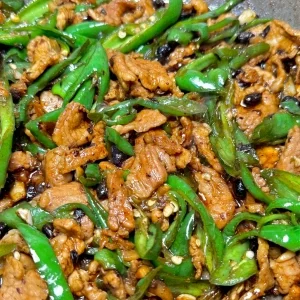
Stir-Fried Pork with Chili Peppers

One of the most representative Hunan dishes, spicy, aromatic, and perfect with rice. Best shared at a local Hunan restaurant.
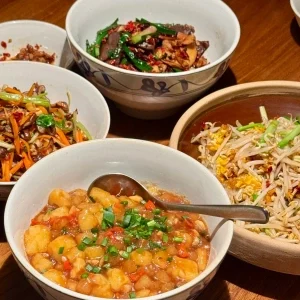
Hunan Cuisine

Known for bold spice, freshness, and strong wok flavor, ideal for group dining and experiencing the local table.
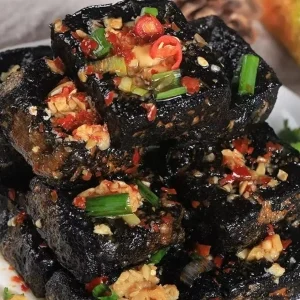
Stinky Tofu

A signature Changsha street snack, crispy outside and tender inside, often served with chili sauce and cilantro.
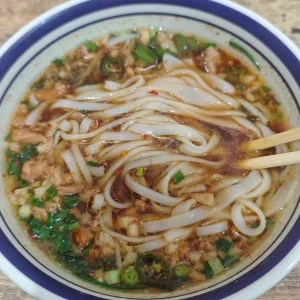
Changsha Rice Noodles

A common Changsha breakfast choice, with plenty of soup, dry-mixed, and topping options.

Sexy Tea

Changsha’s iconic modern tea-drink brand, great for a local check-in, though popular locations may have lines.
Best Time to Visit Changsha

The best time to visit Changsha is usually spring and fall, especially March to May and September to November. During these months, the weather is relatively mild, making outdoor sightseeing and city walks more comfortable. Early winter can also be a good option, while July and August may be less comfortable due to heat, humidity, and rainfall.

  • January: Average temperature around 2°C to 8°C (36°F to 46°F). Damp and cold. Good for museums, food trips, and short city outings, but dress warmly and be prepared for damp conditions.
  • February: Average temperature around 4°C to 11°C (39°F to 52°F). Still cool but gradually warming. Good for city food walks and indoor attractions, though mornings and evenings can feel chilly.
  • March: Average temperature around 8°C to 16°C (46°F to 61°F). Warming up with early spring scenery. Good for Yuelu Mountain, Orange Isle, and neighborhood walks, but bring rain gear.
  • April: Average temperature around 14°C to 23°C (57°F to 73°F). Mild and humid. Good for Yuelu Mountain, Hunan University, Chaozong Street, and museums, though popular weekends can be busy.
  • May: Average temperature around 19°C to 28°C (66°F to 82°F). Warm and sometimes hot. Good for city night tours and Xiang River walks, but use sun protection around midday.
  • June: Average temperature around 23°C to 31°C (73°F to 88°F). Muggy with more rainfall. Better for indoor exhibitions and evening food walks, but watch for thunderstorms.
  • July: Average temperature around 26°C to 34°C (79°F to 93°F). Hot and humid. Better for nightlife, food, and indoor activities; avoid too much daytime heat.
  • August: Average temperature around 25°C to 34°C (77°F to 93°F). Still hot. Good for early-morning or evening outings and short city trips, but avoid packing outdoor plans too tightly.
  • September: Average temperature around 21°C to 30°C (70°F to 86°F). Gradually becoming more comfortable. Good for Orange Isle, Yuelu Mountain, and neighborhood walks, though midday can still be warm.
  • October: Average temperature around 15°C to 24°C (59°F to 75°F). Crisp and comfortable. Good for city sightseeing, a Mount Heng day trip, and nighttime food walks, but book hotels early for the National Day holiday period.
  • November: Average temperature around 9°C to 17°C (48°F to 63°F). Cooler but still pleasant for walking. Good for museums, Yuelu Mountain, and creative districts, but bring a jacket for mornings and evenings.
  • December: Average temperature around 4°C to 11°C (39°F to 52°F). Cool and damp. Good for indoor exhibitions, food, and short shopping trips, but bring a thick coat.

Essential Changsha Travel Tips

Before traveling to Changsha, plan a few practical details in advance, including attraction reservations, payment methods, mobile internet, transportation apps, and seasonal packing. Some popular attractions may require reservations or tickets, and certain services may work differently from what overseas travelers are used to.

  • Attraction Reservations: Popular places such as the Hunan Museum, Orange Isle, Yuelu Mountain, Yuelu Academy, and Ancient Kaifu Temple may require advance reservations during holidays and peak seasons. Check opening hours and ticket rules before departure.
  • Payment Methods: Mobile payment is widely used in mainland China. Set up a usable payment method in advance, and keep a small amount of cash or a bank card as backup.
  • Mobile Internet: If you need maps, translation, ride-hailing, or ticket-booking services, prepare an eSIM, SIM card, or another stable internet option in advance.
  • Transportation Apps: Maps, metro, ride-hailing, train-ticketing, and translation apps are very useful in Changsha, especially when transferring trains, using airport transportation, or visiting suburban attractions.
  • Travel Timing: Rush hours and public holidays can be busy. Popular areas such as Wuyi Square, Huangxing Road, Pozi Street, and Orange Isle are especially crowded on weekends and holidays. Try to visit popular attractions in the morning and allow extra time for cross-area transfers.
  • Packing and Clothing: Changsha is humid. Layering works well in spring and fall; in summer, bring sun protection, heat protection, and rain gear; in winter, be prepared for damp cold. Comfortable walking shoes are recommended.

Changsha Maps

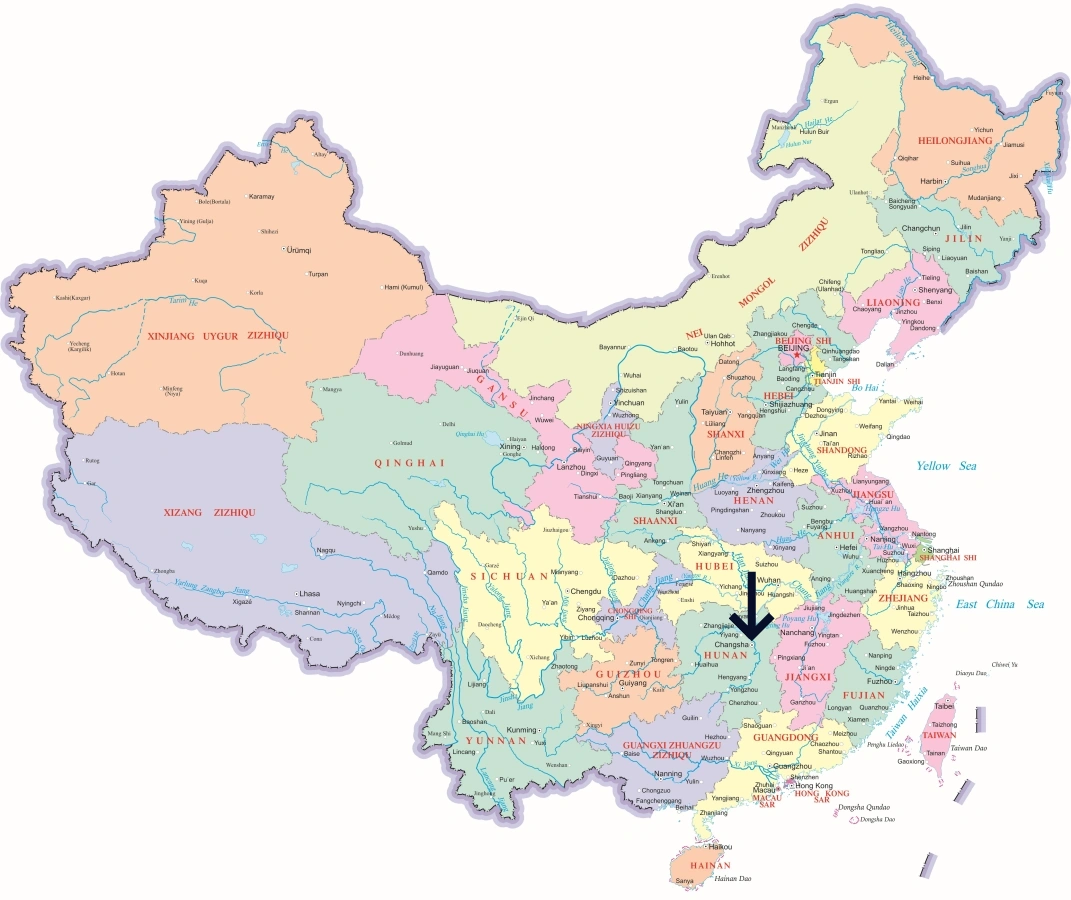
Understanding Changsha’s city layout can make trip planning easier. This section gives a quick overview of where Changsha is located in China and how its main administrative areas are arranged. For travelers, the most important areas are usually the city center, major transportation hubs, and the urban or suburban areas connected to popular attractions.

Where is Changsha in China?

Changsha is located in Central China and is the capital of Hunan Province. It is near Xiangtan, Zhuzhou, Yueyang, Yiyang, Hengyang, and Shaoshan, and is connected to other major Chinese cities by air, high-speed rail, intercity rail, and expressways. Thanks to its location and transportation links, Changsha also works well as a starting point for trips to Mount Heng, Shaoshan, Zhangjiajie, Fenghuang Ancient Town, and other nearby destinations in Hunan.

Changsha Location Map in China

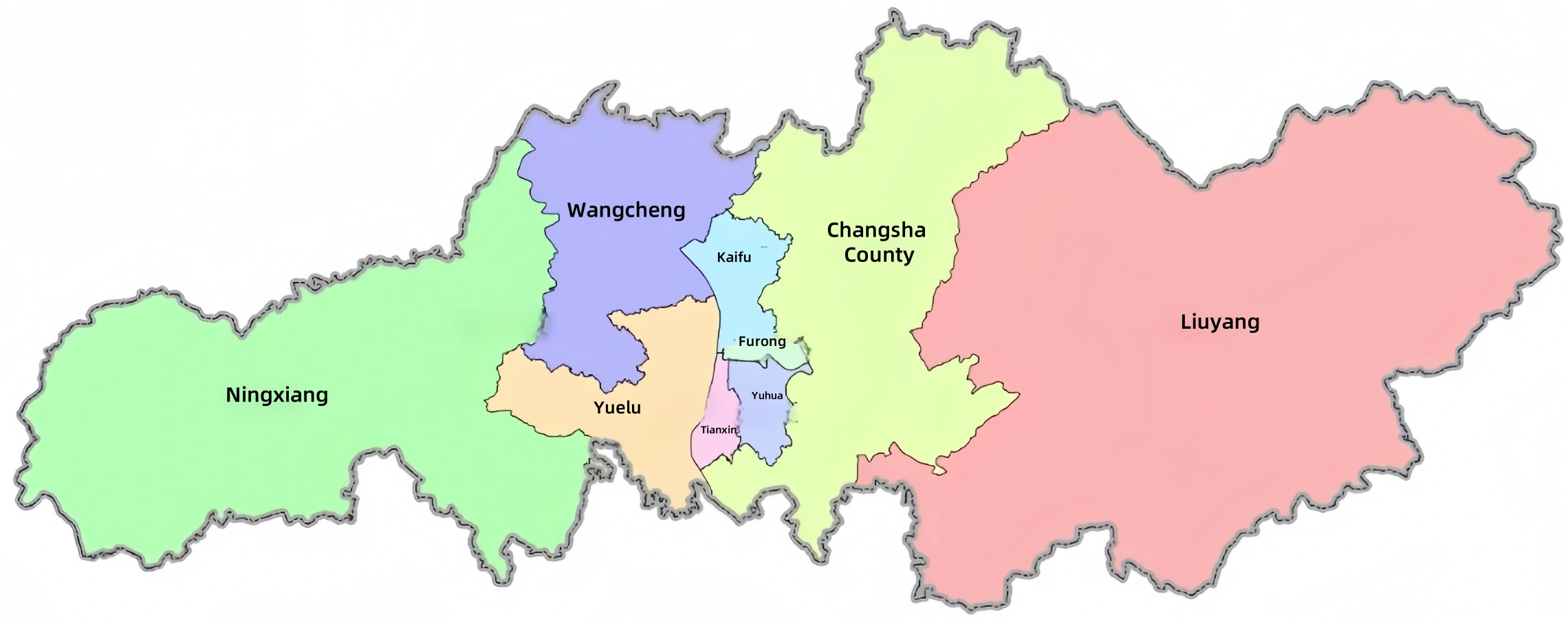
Changsha District Map

Changsha has several administrative districts, but travelers do not need to know every one in detail. For most itineraries, it is more useful to focus on the areas where major attractions, hotels, restaurants, shopping streets, the airport, and railway stations are located.

Key areas for travelers include:

  • Furong District: Good for Wuyi Square, Changsha Railway Station, commercial shopping, and downtown stays.
  • Tianxin District: Good for Pozi Street, Huangxing Road Pedestrian Street, Du Fu Pavilion, Nanmenkou, and Xiang River night views.
  • Yuelu District: Good for Yuelu Mountain, Yuelu Academy, Hunan University, Houhu, and university-area walks.
  • Kaifu District: Good for the Hunan Museum, Ancient Kaifu Temple, Chaozong Street, and relatively quieter city stays.
  • Yuhua District: Good for Changsha South Railway Station, high-speed rail travel, maglev airport connections, and business transfers.
Changsha District Map

Basic Information About Changsha

Area and Population

Changsha covers about 11,800 square kilometers and has a permanent population of around 10.6165 million. Because the city includes central urban districts, suburbs, counties, county-level cities, and some township areas, travelers should focus on the distances between the city center, major transportation hubs, and popular attractions when planning hotels and transportation.

Approximate population by major area:

  • Yuelu District: About 1.5266 million people. This district concentrates Yuelu Mountain, Yuelu Academy, Hunan University, and university-town resources.
  • Yuhua District: About 1.26 million people. This district includes Changsha South Railway Station, high-speed rail access, and southeastern commercial areas.
  • Changsha County: About 1.37 million people. This area concentrates Huanghua Airport, Xingsha, and eastern industrial and transportation resources.
  • Tianxin District: About 830,000 people. This district includes Pozi Street, Huangxing Road Pedestrian Street, Du Fu Pavilion, and Xiang River night-view resources.
  • Kaifu District: About 820,000 people. This district includes the Hunan Museum, Ancient Kaifu Temple, Chaozong Street, and northern residential neighborhoods.

Changsha’s postal code and telephone area code are commonly used for mailing documents, filling in hotel information, food delivery, local contact details, and some online forms. Changsha’s telephone area code is generally 0731, and its general postal code is 410000.

If you need an exact postal code for sending documents, receiving items at a hotel, or online shopping, check the specific street address rather than relying only on the city-level postal code.

Changsha Travel Guide FAQ

Is Changsha worth visiting?

Yes. Changsha is known for Orange Isle, Yuelu Mountain, and the Hunan Museum, making it a good choice for food lovers, city-nightlife travelers, and history-and-culture visitors. If this is your first trip to China, or if you want to experience Hunan-Chu culture, viral neighborhoods, and spicy Hunan cuisine, Changsha is usually well worth adding to your itinerary.

A stay of 3–4 days is generally recommended. If you are short on time, 2 days and 1 night can cover the core highlights. If you want a more relaxed experience with local food and nearby day trips, plan for 3–4 days. If you plan to add Mount Heng, Shaoshan, or Zhangjiajie, add another 1–3 days.

Changsha is best known for Orange Isle, Yuelu Mountain, the Hunan Museum, and Hunan cuisine. For travelers, the most representative experiences usually include seeing the Xiang River from Orange Isle, walking Yuelu Mountain and Yuelu Academy, eating around Wuyi Square, and viewing Mawangdui artifacts at the Hunan Museum.

The top experiences in Changsha include Orange Isle, the Hunan Museum, Yuelu Mountain, Wuyi Square, and Changsha food night walks. For a first visit, start with the most iconic attractions, then add neighborhood walks, food experiences, or nearby day trips depending on your schedule.

For a first trip to Changsha, it is usually best to stay near Wuyi Square Metro Station, because transportation is convenient and major attractions and restaurants are easier to reach. If nightlife, shopping, airport access, or a quieter environment matters more to you, consider Furong Square, Houjiatang, Peiyuanqiao, or areas around Changsha South Railway Station.

The best times to visit Changsha are usually March to May and September to November, when the weather is relatively mild and better for outdoor sightseeing and city walks. Early winter can also be considered, but July and August may be less comfortable due to heat, humidity, and rainfall.

Within Changsha, the easiest way to get around is usually a combination of metro, buses, and ride-hailing services. For airport transfers, railway stations, nighttime travel, or large luggage, taxis and ride-hailing are convenient. For suburban attractions, you may need to combine metro, buses, high-speed rail, intercity rail, chartered vehicles, or local tours.

In Changsha, try stir-fried pork with chili peppers, stinky tofu, Changsha rice noodles, and Sexy Tea. These foods represent the local dining culture. Some are best enjoyed at long-running restaurants, while others are better experienced in local neighborhoods, snack streets, or traditional markets.

Changsha is generally suitable for first-time visitors to China, especially if you are interested in Chinese city nightlife, regional food, or Hunan culture. Before you go, prepare payment methods, mobile internet, maps, and translation tools, and check whether popular attractions require reservations.

Some popular attractions in Changsha may require advance reservations or ticket purchases, especially on weekends, public holidays, and during peak travel seasons. For popular sites such as the Hunan Museum, Orange Isle, Yuelu Mountain, and Yuelu Academy, check opening hours, ticket rules, and entry requirements before departure. It is best to confirm a few days in advance.

Good day trips or short excursions from Changsha include Mount Heng, Shaoshan, and Tongguanyao Ancient Town. If the destination is farther away, check travel times in advance and consider high-speed rail, intercity rail, direct buses, private transfers, or local day tour products.

Travel costs in Changsha depend on where you stay, where you eat, how you get around, and which attraction tickets you buy. In general, staying around Wuyi Square, Huangxing Road, Pozi Street, and other core commercial areas is more convenient but more expensive. If you are traveling on a budget, choose well-connected metro areas such as Furong Square, Houjiatang, Peiyuanqiao, or Changsha South Railway Station, and use public transportation and local restaurants more often. Changsha has a wide range of food options, making it suitable for low-budget food walks as well as more comfortable hotels, night tours, and nearby day trips.

Official WeChat Mini Program

Copy the official WeChat Mini Program link, then paste it into the WeChat search bar to open it:

1. Copy the Mini Program link

2. Open WeChat and go to the search bar

3. Paste the link and open the Mini Program