
Qingdao is one of China's most distinctive travel destinations for seaside vacations and European-style charm. It is known for its old-city scenery of red roofs and green trees, beaches, and Qingdao beer culture. This guide covers Qingdao's top attractions, recommended itineraries, best areas to stay, transportation options, local food, best time to visit, map-related information, and practical travel tips to help you plan a smoother trip to Qingdao.
Qingdao's travel experience usually centers on coastal scenery, the European-style old town, beer culture, and seafood. For a first visit, it is best to prioritize the city's most iconic attractions and experiences, then add neighborhood walks, museums, food stops, night views, or nearby day trips depending on your schedule.

Qingdao's signature mountain-and-sea scenic area, with ocean views, Taoist culture, and natural scenery.

A classic place to learn about the history and brewing culture of Tsingtao beer.
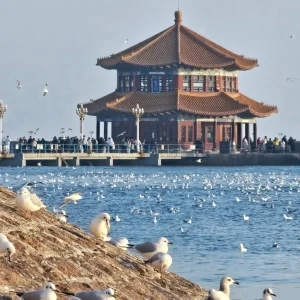
One of Qingdao's old-city landmarks, good for sea views, photos, and connecting with a Zhongshan Road itinerary.

A great viewpoint overlooking Qingdao's red roofs, green trees, and coastline in the old town.
Qingdao itineraries can be planned as quick highlights, classic sightseeing routes, or deeper experiences depending on how long you stay. For a first visit, it is best to build your core itinerary around Zhanqiao Pier, Badaguan, May Fourth Square, Signal Hill, Shilaoren Beach, and the Tsingtao Beer Museum, then add a Mount Lao day trip, an old-town neighborhood walk, or a seafood-focused food experience if time allows.
The following Qingdao itinerary is suitable for first-time visitors. You can adjust the order of attractions based on your flight, high-speed rail schedule, hotel location, and interests. During public holidays or when popular attractions have reservation limits, it is best to leave more buffer time.
Good for first-time visitors to Qingdao. The route covers beaches, old-city architecture, city squares, scenic parks, and the eastern coastline, offering a well-rounded feel for Qingdao's mountain-and-sea city character.
● Qingdao · Weihai · Yantai · 5 days
Jiaodong Coast highlights with private travel and flexible coastal experiences.
from
per person
● Qingdao · 4 days
Private Qingdao tour with classic sights and flexible Day 3 options.
from
per person
● Qingdao · 3 days
Qingdao essentials with private travel and flexible experiences.
from
per person
● Qingdao · 2 days
Qingdao city highlights plus a full-day Laoshan escape.
from
per person
For first-time visitors to Qingdao, the most recommended areas to stay are usually around May Fourth Square, Fushansuo, or Zhongshan Road, because transportation is convenient, major attractions are easy to reach, and hotel choices are relatively abundant. If you care more about nightlife, food, shopping, a quieter setting, or access to the airport or train stations, you can also choose areas such as Shilaoren Beach, around Qingdao North Railway Station, or toward Mount Lao based on your itinerary.
Most travelers reach Qingdao by plane or high-speed rail. Qingdao is mainly served by Qingdao Jiaodong International Airport for air travel, and it also has major railway stations such as Qingdao Railway Station, Qingdao North Railway Station, Qingdao West Railway Station, and Hongdao Railway Station. If you are traveling from nearby cities, high-speed rail is usually the most convenient and time-efficient option.
From Qingdao Jiaodong International Airport to the city center, you can choose the metro, high-speed rail transfer, airport express, taxi, ride-hailing service, or airport bus. The best option depends on your arrival time, amount of luggage, hotel location, and budget. Qingdao's main civil aviation airport is Qingdao Jiaodong International Airport. Before booking a hotel or transfer service, confirm the actual travel time between the airport, your hotel, and your planned attractions. In general, Jiaodong Airport is especially convenient for reaching Qingdao North Railway Station via Metro Line 8, and you can continue by transfer toward Shinan District, May Fourth Square, Zhongshan Road, and Mount Lao.
Qingdao also has multiple railway stations, and different stations may serve different high-speed rail or regular train routes. Before buying tickets, carefully confirm your departure and arrival stations, because travel times between Qingdao Railway Station, Qingdao North Railway Station, Qingdao West Railway Station, and Hongdao Railway Station can vary significantly.
For sightseeing within Qingdao, the metro is usually the most convenient and reliable way to get around. Taxis and ride-hailing services are useful for nighttime travel, carrying large luggage, or reaching places not directly served by the subway. If you plan to visit Mount Lao, Huangdao, or take a day trip, you can choose the metro, buses, high-speed rail, private cars, transfer services, or local tours depending on your destination.
Qingdao is an excellent place to try seafood, Shandong cuisine, and local street snacks, from classic regional dishes and street food to local restaurants. First-time visitors should prioritize signature foods such as Qingdao seafood dumplings, spicy stir-fried clams, and Mount Lao mushroom chicken stew. Some foods can be found near popular attractions and commercial areas, while others are better experienced in local neighborhoods, time-honored restaurants, or traditional markets.
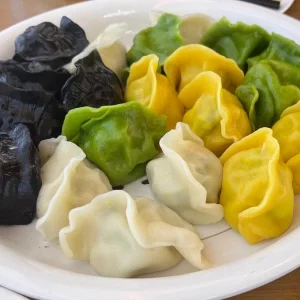
A signature Qingdao staple filled with seafood such as Spanish mackerel or shrimp, known for its fresh flavor.
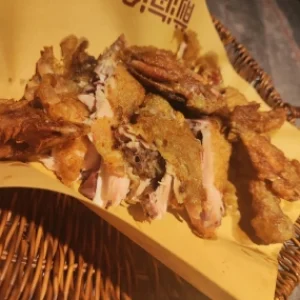
A common local-style Qingdao dish with crisp skin and tender meat.
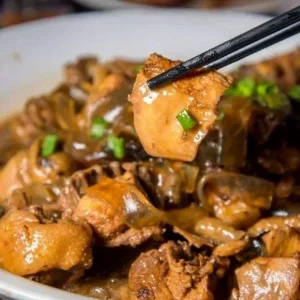
A stew made with Mount Lao mushrooms and chicken, known for its fresh, savory broth and best enjoyed at homestyle restaurants.

A traditional snack made from rendered pork, crispy and savory, often served with flatbread or used in dishes.

A classic Qingdao seafood dish, fresh, spicy, and great with rice or beer.
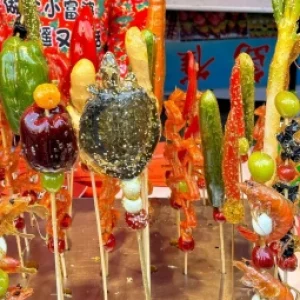
A traditional Qingdao sweet with a sugary coating, often found at temple fairs and snack stalls.
The best time to visit Qingdao is usually late spring to early summer and autumn, when the weather is mild and the sea breeze is comfortable, making it better for outdoor sightseeing and city walks. Summer can also be a good choice for a seaside vacation, while winter may reduce travel comfort because of cold sea winds and lower temperatures.
Before visiting Qingdao, it is a good idea to plan several practical details in advance, including reservations for popular attractions, payment methods, mobile internet, transportation apps, and packing for the season. Some popular attractions may require advance reservations or ticket purchases, and some services may work differently from what overseas visitors are used to.
Understanding Qingdao's city layout can make itinerary planning easier. This section gives a quick overview of Qingdao's location in China and the general distribution of its main administrative districts. For travelers, the most important areas are usually the city center, major transportation hubs, and the urban or suburban districts that connect popular attractions.
Qingdao is located in East China and belongs to Shandong Province. It is close to Yantai, Weihai, Weifang, Rizhao, and the coastal city cluster of the Shandong Peninsula, and it is connected to other major Chinese cities by air, high-speed rail, and expressways. Thanks to its location and strong transportation links, Qingdao is also a convenient starting point for trips to nearby destinations such as Mount Lao, Huangdao, Weihai, Yantai, Penglai, and the Shandong Peninsula coastline.
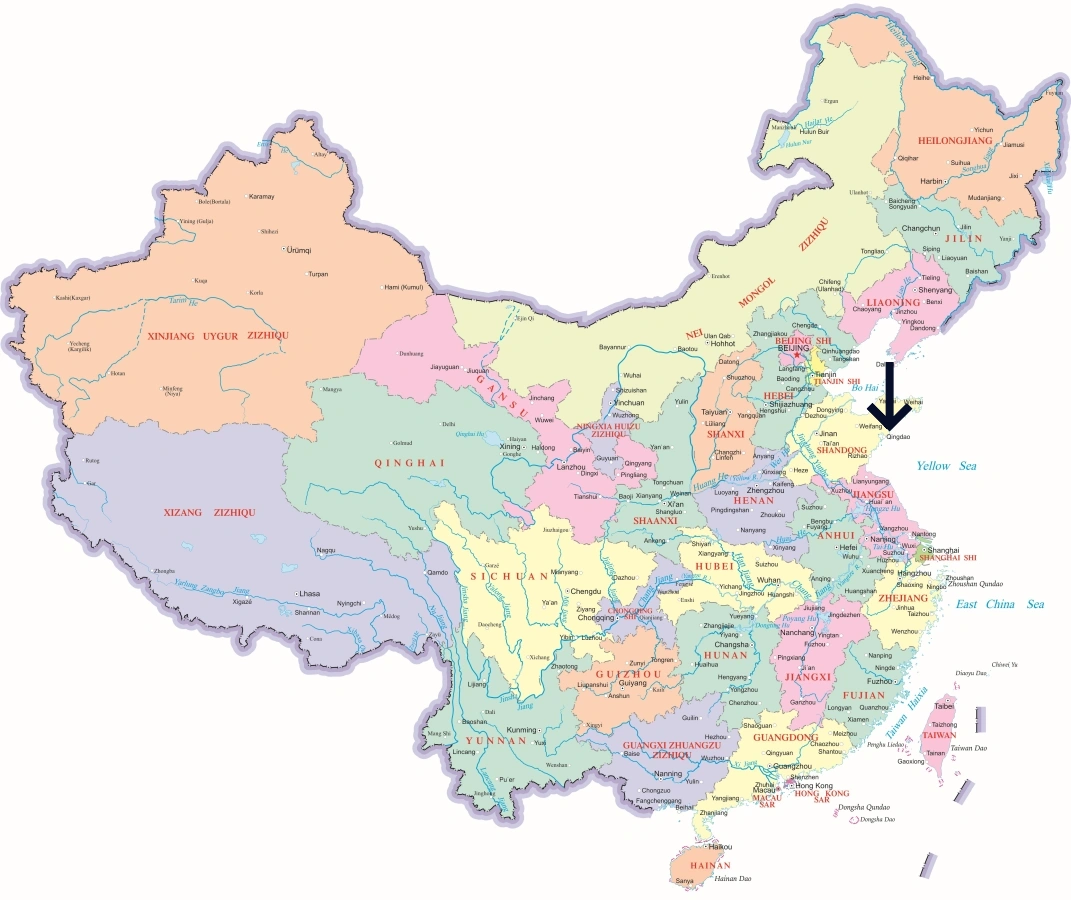
Qingdao has multiple administrative districts and county-level cities under its administration, but travelers do not need to understand every area in detail. For most trips, it is more important to focus on the areas where major attractions, hotels, restaurants, shopping streets, airports, and train stations are located.
Areas travelers should pay closer attention to include:

Qingdao covers a total area of about 11,293 square kilometers and has a permanent resident population of about 10.4425 million. Because the city includes central urban areas, suburbs, coastal scenic areas, and county-level cities under its administration, travelers should focus on distances between the city center, major transportation hubs, and popular attractions when planning accommodation and transportation.
Approximate population figures for major districts are as follows:
Qingdao's postal codes and telephone area code are commonly used for mailing documents, filling in hotel information, food delivery, local contacts, and some online forms. Qingdao's telephone area code is generally 0532, and 266000 can usually be used as a city-level postal code, but different districts and streets may have different postal codes.
If you need an accurate postal code, such as for sending documents, receiving items at a hotel, or online shopping, it is best to look it up based on the specific street or full address rather than relying only on the city-level postal code.
Yes. Qingdao is known for its old-city scenery of red roofs and green trees, seaside beaches, and beer culture, making it suitable for seaside vacationers, city walk lovers, and photographers. If this is your first trip to China, or if you want to experience a northern Chinese coastal city, European-style old buildings, beer culture, and seafood, Qingdao is usually well worth adding to your itinerary.
A stay of 3–5 days is generally recommended. If you have limited time, two days can cover the core attractions. If you want a more relaxed city experience, time for food, and a nearby day trip, plan for 4–5 days.
Qingdao is mainly known for red roofs and green trees, blue sea and sky, Tsingtao beer, seaside beaches, and Mount Lao scenery. For travelers, the most representative experiences usually include walking through the old town, visiting Zhanqiao Pier and Badaguan, touring the Tsingtao Beer Museum, and watching the sunset by the sea.
The most worthwhile experiences in Qingdao include Mount Lao, Tsingtao Beer Museum, Zhanqiao Pier, Badaguan, May Fourth Square, and Signal Hill. For a first visit, prioritize the most iconic attractions, then add neighborhood walks, food experiences, or nearby day trips depending on your schedule.
For a first trip to Qingdao, it is usually best to stay around May Fourth Square, Zhongshan Road, or Badaguan because transportation is convenient and major attractions and restaurants are easy to reach. If you care more about nightlife, shopping, airport access, or a quieter environment, you can also consider Shilaoren Beach, around Qingdao North Railway Station, or the direction of Mount Lao.
The best time to visit Qingdao is usually May–June and September–October. During these months, the weather is mild and the sea breeze is comfortable, making it better for outdoor sightseeing and city walks. Summer can also be considered, but beaches can be crowded during vacation season. Winter may affect travel comfort because of cold sea winds and lower temperatures.
The metro is usually the easiest way to get around Qingdao. For airport trips, train stations, nighttime travel, or large luggage, taxis or ride-hailing services are useful. For Mount Lao, Huangdao, or suburban attractions, you may need to combine the metro, buses, high-speed rail, private cars, or local tours.
When traveling in Qingdao, try Qingdao seafood dumplings, spicy stir-fried clams, Mount Lao mushroom chicken stew, and Qingdao zhizha. These foods represent local flavors well. Some are best enjoyed at time-honored restaurants, while others are better experienced in local neighborhoods, snack streets, or traditional markets.
Qingdao is usually a good choice for first-time visitors to China, especially if you are interested in coastal cities, historic architecture, or seafood. Before departure, prepare your payment methods, mobile internet, maps, and translation tools, and check whether popular attractions require reservations.
Some popular Qingdao attractions may require advance reservations or ticket purchases, especially on weekends, public holidays, and during peak travel seasons. Before departure, check opening hours, ticket rules, and entry requirements. For popular attractions, it is best to confirm details several days in advance.
Good day trips or short trips from Qingdao include Mount Lao, Huangdao Golden Beach, and Weihai. If the destination is farther away, confirm transportation time in advance and consider high-speed rail, direct buses, private cars, or local day-tour products.
The cost of traveling in Qingdao depends on where you stay, the restaurants you choose, how you get around, and attraction ticket prices. In general, staying near May Fourth Square, Badaguan, Zhongshan Road, or Shilaoren Beach is more convenient but more expensive. If you are on a budget, choose a well-connected non-core area, use public transportation often, and eat at local restaurants.
Explore detailed travel guides for China's most popular cities, covering attractions, local food, accommodations, and transportation tips.
Official WeChat Mini Program
Copy the official WeChat Mini Program link, then paste it into the WeChat search bar to open it:
1. Copy the Mini Program link
2. Open WeChat and go to the search bar
3. Paste the link and open the Mini Program
 English (US)
 繁體中文
 日本語
 한국어
 ไทย
 Русский