

Shangri-La is one of China’s most distinctive destinations for experiencing Tibetan plateau culture, snow mountains, and alpine meadows. It is best known for Dukezong Old Town, Songzanlin Monastery, and Pudacuo National Park. This guide covers Shangri-La’s must-see attractions, recommended itineraries, best areas to stay, transportation options, local food, best time to visit, map information, and practical travel tips to help you plan a smoother trip to Shangri-La.
Travel in Shangri-La usually centers on Tibetan old towns, snow mountains and meadows, monastery culture, and high-altitude lakes. For a first visit, it is best to prioritize the most iconic attractions and experiences, then add neighborhood walks, museums, food stops, night views, or nearby day trips depending on how much time you have.

Located inside Dukezong Old Town, this park overlooks the old town and has a large prayer wheel.

A trekking village at the foot of Meili Snow Mountain, suitable for experienced travelers with enough time and stamina.

Shangri-La itineraries can be planned as a short highlights trip, a classic sightseeing route, or a deeper experience depending on how long you stay. For first-time visitors, it is best to build your core itinerary around Dukezong Old Town, Songzanlin Monastery, Napa Lake, and Pudacuo, then add Tiger Leaping Gorge, Balagezong, or the Meili Snow Mountain extension route if time allows.
The following Shangri-La itineraries are suitable for first-time visitors. You can adjust the order based on your flight or high-speed rail schedule, hotel location, and personal interests. During holidays or when popular attractions require reservations, leave extra flexibility in your schedule.
Best for first-time visitors to Shangri-La with relatively limited time. This route covers the old town, monastery, lakes and grasslands, a national park, and Tiger Leaping Gorge, giving you a fairly complete introduction to Shangri-La’s plateau culture and natural scenery.
Best for travelers who want a deeper experience of Shangri-La and the core scenery of Diqing Prefecture. This route extends from classic city sights to Pudacuo, Balagezong, and the Meili Snow Mountain direction, combining Tibetan culture, canyons, meadows, snow mountains, and slow old-town travel.
● Lijiang · Dali · Shangri-La · 6 days
Lijiang, Dali and Shangri-La with snow mountains, gorges and Tibetan culture.
from
per person
● Lijiang · Dali · 5 days
Jade Dragon Snow Mountain, Erhai Lake and ancient towns at an easy pace.
from
per person
● Lijiang · Shangri-La · 3 days
Meili Snow Mountain sunrise, deep gorges and Tibetan highland scenery.
from
per person
● Lijiang · Shangri-La · 2 days
Tiger Leaping Gorge, Pudacuo and Tibetan culture in two days.
from
per person
For first-time visitors to Shangri-La, staying in Dukezong Old Town is usually the most recommended choice. Transportation is convenient, major attractions are relatively easy to reach, and there is a wide range of hotels. If you prioritize nightlife, food, shopping, a quieter environment, or airport/train station access, you can also choose areas near Napa Lake, around Pudacuo, near Shangri-La Railway Station, or the Feilai Temple area based on your itinerary.
Most travelers choose to reach Shangri-La by plane or bullet train. Air travel is mainly served by Diqing Shangri-La Airport, while Shangri-La Railway Station is the main rail arrival point. If you are coming from nearby cities such as Lijiang, Dali, or Kunming, bullet trains or road transportation are usually convenient options with relatively predictable travel times.
From Diqing Shangri-La Airport to the city center, you can take a taxi, ride-hailing service, airport transfer, or hotel transfer. Shangri-La currently does not have an urban metro system, so the best option depends on your arrival time, amount of luggage, hotel location, and budget. Shangri-La mainly uses Diqing Shangri-La Airport, so before booking a hotel or transfer service, check whether “Diqing Shangri-La Airport” is specified. In general, Diqing Shangri-La Airport is convenient for travelers heading directly to downtown Shangri-La, Dukezong Old Town, and Songzanlin Monastery. If you are coming from Lijiang, Dali, Kunming, or nearby areas, taking a bullet train to Shangri-La Railway Station or hiring a private car by road is also common.
Shangri-La Railway Station is usually the main railway arrival point and is suitable for arrivals from Lijiang, Dali, Kunming, and nearby directions. Before buying tickets, carefully confirm your departure and arrival stations, because transfers and local travel times between Lijiang Railway Station, Dali Railway Station, and Shangri-La Railway Station on the northwestern Yunnan route can vary significantly.
For getting around Shangri-La, taxis, ride-hailing services, buses, private car hire, and self-driving are all practical. Dukezong Old Town itself is best explored on foot. For attractions such as Songzanlin Monastery, Napa Lake, Pudacuo, Tiger Leaping Gorge, Balagezong, and Meili Snow Mountain, choose scenic-area shuttle buses, private car hire, self-driving, shared rides, or local tour groups depending on your destination. Distances between plateau attractions can be long, so avoid making your itinerary too tight.
Shangri-La is an excellent place to try Tibetan food and northwestern Yunnan plateau flavors, from classic local dishes and street snacks to neighborhood restaurants. First-time visitors should prioritize signature foods such as Nixi clay-pot chicken, yak beef hot pot, and butter tea. Some dishes are easy to find near popular attractions and commercial areas, while others are best experienced in local neighborhoods, Tibetan restaurants, or traditional markets.

A signature Shangri-La dish cooked in a Nixi black pottery pot, known for its flavorful broth.

Firm-textured meat in a rich broth, ideal for cold plateau weather and group meals.

Hearty, straightforward yak meat, usually served with dipping sauces and highland barley staples.

Thick, creamy, tangy, and refreshing, one of the signature dairy products of the plateau.
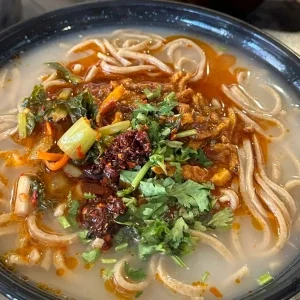
Simple noodles in a light broth, suitable for breakfast or a quick meal.

Rich and savory, a warming drink for cold high-altitude weather.
The best time to visit Shangri-La is usually May–June and September–October. During these periods, the weather is relatively comfortable, and the meadows, lakes, snow mountains, and fall colors are better suited to outdoor sightseeing and city walks. July–August is also a good option for escaping the heat and visiting grasslands. From December to February, however, cold weather, snowfall, and changing road conditions in mountain areas may reduce travel comfort. Winter is better suited to snow mountain photography and slow low-season travel.
Before visiting Shangri-La, it is worth planning a few practical details in advance, including reservations for popular attractions, payment methods, mobile internet, transportation apps, and packing for the season. Some popular attractions may require advance booking or ticket purchase, and certain services may work differently from what overseas visitors are used to.
Understanding Shangri-La’s city layout can make trip planning much easier. This section gives a quick overview of where Shangri-La is located in China and how its main towns and travel areas are generally arranged. For travelers, the most important areas are usually Dukezong Old Town, major transportation hubs, and the urban, grassland, and canyon areas connected to popular attractions.
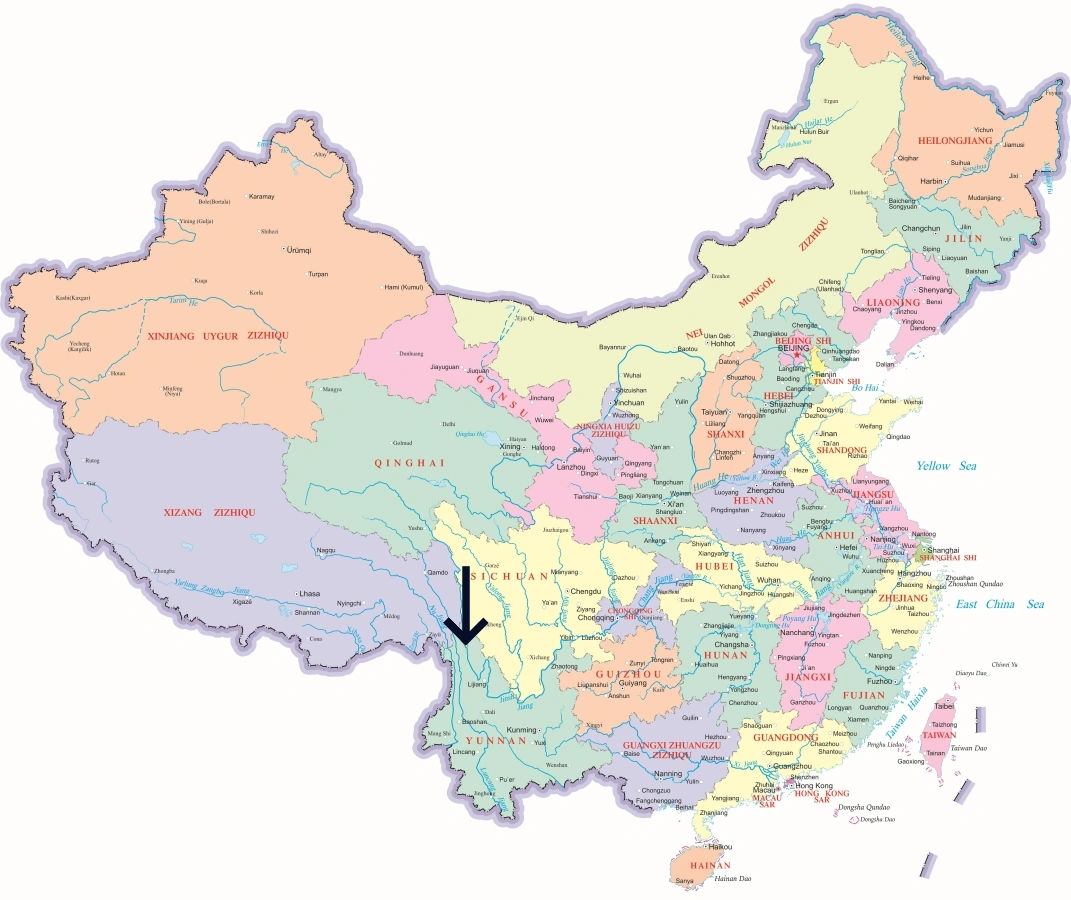
Shangri-La is located in Southwest China and belongs to Diqing Tibetan Autonomous Prefecture in Yunnan Province. It is near Lijiang, Dali, Deqin, Weixi, Daocheng in Sichuan, and the Jinsha River canyon area, and is connected to other major Chinese cities by air, rail, and road. Thanks to its location and transportation links, Shangri-La is also a convenient starting point for trips to Tiger Leaping Gorge, Pudacuo, Balagezong, Meili Snow Mountain, Yubeng Village, and Yunnan-Tibet route itineraries.
Shangri-La is made up of several towns and townships, but travelers do not need to know each one in detail. For most itineraries, it is more useful to focus on the areas where major attractions, hotels, restaurants, shopping streets, the airport, and railway station are located.
Areas travelers should pay attention to include:
Shangri-La covers a total area of about 11,400 square kilometers and has a permanent resident population of about 188,800. Because the city’s administrative area includes the central urban area, grassland wetlands, canyons, mountains, and some rural areas, travelers should focus on the distances between Dukezong Old Town, Shangri-La Railway Station, the airport, and popular attractions when planning accommodation and transportation.
Approximate populations of the main areas are as follows:
Shangri-La’s postal code and telephone area code are commonly used for mailing documents, filling in hotel information, food delivery, local contact details, and some online forms. Shangri-La’s telephone area code is generally 0887, and 674400 can usually be used as a city-level postal code reference.
If you need an exact postal code, such as for mailing documents, receiving items at a hotel, or online shopping, look it up based on the specific town, street, or full address rather than relying only on the city-level postal code.
Yes. Shangri-La is known for Dukezong Old Town, Songzanlin Monastery, and Pudacuo National Park, making it ideal for plateau scenery lovers, Tibetan cultural travelers, and photographers. If this is your first trip to China, or if you want to experience Yunnan’s Tibetan areas, snow mountains, meadows, and northwestern Yunnan plateau scenery, Shangri-La is usually well worth adding to your itinerary.
In general, 3–5 days is recommended for Shangri-La. If you have limited time, 2–3 days can cover the core attractions. If you want a more relaxed trip with food experiences and nearby extensions such as Balagezong, Meili Snow Mountain, or Yubeng Village, plan for 5–7 days.
Shangri-La is mainly known for Dukezong Old Town, Songzanlin Monastery, Napa Lake, and Pudacuo National Park. For travelers, the most representative experiences usually include exploring Dukezong Old Town, visiting Songzanlin Monastery, and going to Napa Lake or Pudacuo to see high-altitude natural scenery.
The best things to experience in Shangri-La include Dukezong Old Town, Songzanlin Monastery, Napa Lake, Pudacuo, and Tibetan food. For a first visit, prioritize the most representative sights, then add neighborhood walks, food experiences, or nearby day trips depending on your schedule.
For a first trip to Shangri-La, staying in Dukezong Old Town is usually the most convenient choice because transportation is easy and major attractions and restaurants are relatively accessible. If you care more about nightlife, shopping, airport access, or a quieter environment, you can also consider areas near Napa Lake, around Pudacuo, near Shangri-La Railway Station, or the Feilai Temple area.
The best time to visit Shangri-La is usually May–June and September–October. During these periods, the weather is relatively comfortable, and the meadows, lakes, snow mountains, and fall colors are better suited to outdoor sightseeing. July–August is also good for escaping the heat and grassland travel, but from December to February, cold weather, snowfall, and changing road conditions in mountain areas may affect travel comfort.
The easiest ways to get around Shangri-La are usually taxis, ride-hailing services, buses, private car hire, or self-driving. Shangri-La currently does not have an urban metro system. For airport or train station transfers, nighttime travel, or trips with large luggage, you can use taxis, ride-hailing services, or hotel transfers. For suburban attractions, you may need to combine scenic-area shuttle buses, private car hire, self-driving, shared rides, or local tour groups.
When visiting Shangri-La, try Nixi clay-pot chicken, yak beef hot pot, yak yogurt, and butter tea. These foods represent the local dining culture well. Some are best enjoyed in old-town restaurants, while others are better experienced in local Tibetan restaurants, rural restaurants, or traditional markets.
Shangri-La is generally suitable for first-time visitors to China, especially if you are interested in Tibetan culture, high-altitude natural scenery, or snow mountains and meadows. Before your trip, prepare payment methods, mobile internet, maps, and translation tools, and check whether popular attractions require reservations. Also pay attention to altitude sickness, strong UV exposure, dry air, and day-night temperature differences.
Some popular attractions in Shangri-La may require advance reservations or ticket purchases, especially on weekends, public holidays, during summer vacation, and in peak travel season. Before you go, check opening hours, ticket policies, and entry requirements. For popular attractions such as Songzanlin Monastery, Pudacuo, Balagezong, Tiger Leaping Gorge, and scenic areas related to Meili Snow Mountain, it is best to confirm details a few days in advance.
Good day-trip or short-trip destinations from Shangri-La include Pudacuo National Park, Napa Lake, and Tiger Leaping Gorge. If you have more time, you can also plan extended trips to Balagezong, Meili Snow Mountain, or Yubeng Village. If the destination is farther away, confirm travel times in advance and consider direct buses, private car hire, self-driving, or local day-tour products.
Travel costs in Shangri-La depend on where you stay, where you eat, how you get around, and which attractions you visit. In general, staying in the core area of Dukezong Old Town, choosing a lake-view guesthouse near Napa Lake, staying around Pudacuo, or traveling during public holidays will be more convenient but more expensive. If you are traveling on a budget, consider areas outside the old town, near Shangri-La Railway Station, or other well-connected non-core areas, and use public transportation, shared rides, and local restaurants more often.
Explore detailed travel guides for China’s most popular cities, covering attractions, local food, accommodations, and transportation tips.
Official WeChat Mini Program
Copy the official WeChat Mini Program link, then paste it into the WeChat search bar to open it:
1. Copy the Mini Program link
2. Open WeChat and go to the search bar
3. Paste the link and open the Mini Program
English (US)