
 English (US)
 繁體中文
 日本語
 한국어
 ไทย
 Русский
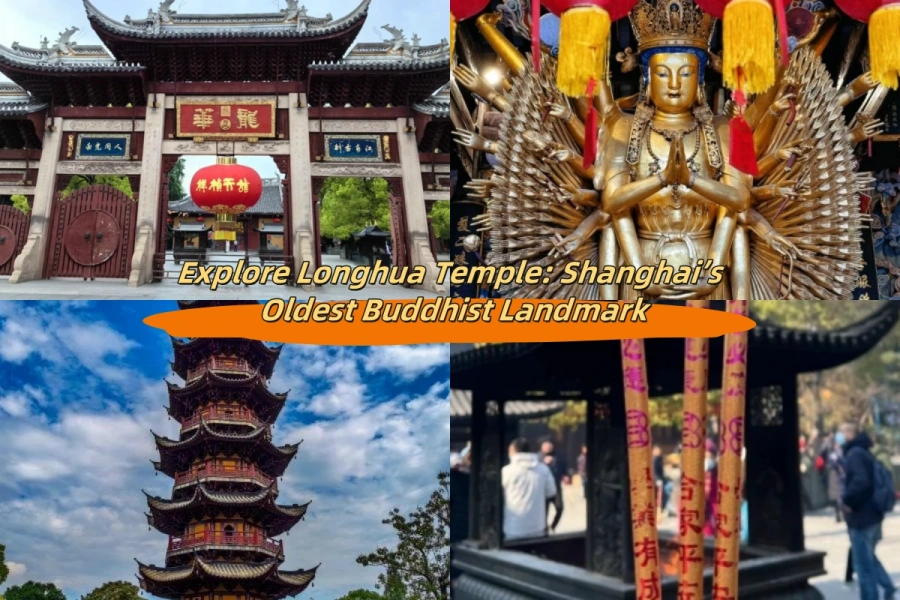
Hi, I’m Michael Zhang, a traveler from China who especially enjoys exploring historical and cultural sites. Longhua Temple is a historic Buddhist temple complex in Shanghai’s Xuhui District, and it is a good choice if you are interested in Buddhist architecture, Shanghai history, or a quieter cultural stop away from the busiest city-center sights. Most visitors should allow about 2–3 hours, which is enough for the main halls, the pagoda exterior, and a relaxed walk through the grounds. A practical way to arrive is by metro to Longhua Station, and the temple can also be combined with other sights in the Longhua area.
Summary
- Longhua Temple Overview
- Is Longhua Temple worth visiting?
- Longhua Temple Ticket Guide
- How Long Do You Need at Longhua Temple?
- Map of Longhua Temple
- Top Things to Do in Longhua Temple
- Guide to Visiting Longhua Temple
- How to Offer Incense at Longhua Temple
- Buddhist Activities at Longhua Temple
- Recommended Vegetarian Noodles Near Longhua Temple
- Recommended Hotels near Longhua Temple
- How to Get to Longhua Temple from Downtown Shanghai
- How to plan your Shanghai trip
- FAQ
Longhua Temple Overview
Longhua Temple, located in Longhua Town, Xuhui District, is the largest and oldest Buddhist temple in Shanghai. Spanning over 20,000 square meters with a 5219-square-meter building area, the temple is laid out along a central axis. Visitors can explore its six grand halls, including the Maitreya Hall, Heavenly Kings Hall, Grand Hall of the Great Sage, Three Saints Hall, Abbot’s Room, and Sutra Library.
The name Longhua Temple originates from Buddhist scriptures, referencing Maitreya Bodhisattva’s enlightenment beneath the Longhua Tree. According to legend, the temple was first built during the Three Kingdoms period by Emperor Sun Quan for his mother. While the temple has a history of over 1,700 years, documented records date its construction to 977 AD during the Northern Song Dynasty.
In 1066, it was renamed “Kongxiang Temple,” and remnants of the bestowed nameplate and stele still exist today. During the Ming Dynasty (1403–1424), the temple’s original name, Longhua Temple, was restored. In 1574, it was granted the formal title “Daxingguo Wanshou Cihua Chan Temple,” though the name Longhua Temple remains widely used.
- Address: 2853 Longhua Road, Longhua Town, Xuhui District, Shanghai (Apple Maps/Amap)
- Opening Hours: 7:00 AM to 4:30 PM year-round; during incense periods (lunar 1st and 15th): 6:00 AM to 4:30 PM
- Recommended Visit Time: 2–3 hours
- Best Season to Visit: All year round
- Admission Fee: Free
Is Longhua Temple worth visiting?
Generally, yes. Longhua Temple is especially worth visiting for travelers interested in Buddhist architecture, Shanghai history, and the atmosphere of an active temple rather than a purely museum-like site. Its main appeal is the combination of historic halls, Longhua Pagoda, worship activity, and a calm temple setting. If your Shanghai itinerary is very tight and focused only on major city-center landmarks, it may be a lower priority; otherwise, it works well as a 2–3 hour stop or as part of a Longhua-area route.
- Best for: travelers interested in Buddhist architecture, Shanghai history, temple culture, and quieter cultural sights
- Why it’s worth visiting: historic temple halls, Longhua Pagoda, an active worship atmosphere, and a calmer setting than many central-city landmarks
- Best combined with: Longhua Martyrs Memorial and other sights in the Longhua area
- You may skip it if: you have only a short landmark-focused itinerary and are not planning to spend time in the Longhua area
Longhua Temple Ticket Guide
Ticket Prices
- Admission: Free, no reservation required.
- Incense Offering: 20 CNY for 3 sticks.
How Long Do You Need at Longhua Temple?
Most visitors should allow around 2–3 hours for Longhua Temple. The exact amount of time depends on whether you only want to see the main highlights or plan to explore the temple in more detail and combine it with other sights in the Longhua area.
- Quick visit (about 1–1.5 hours): see the main halls and the exterior of Longhua Pagoda at a faster pace
- Recommended visit (2–3 hours): visit the main halls, see the pagoda exterior, and keep a comfortable pace through the temple grounds
- Extended visit (around 3 hours or more): spend more time on worship and cultural details, try the vegetarian food, or combine the temple with other sights in the Longhua area
For most first-time visitors, I recommend allowing around 2–3 hours.
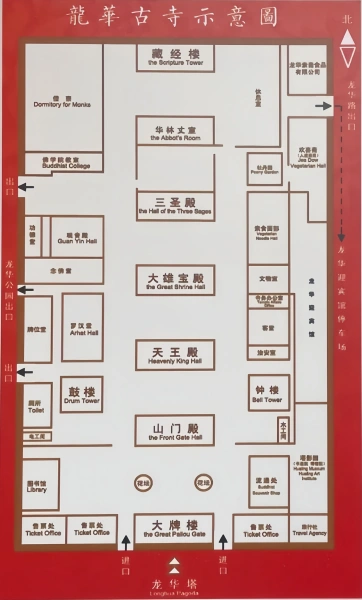
Map of Longhua Temple
Top Things to Do in Longhua Temple
Longhua Pagoda
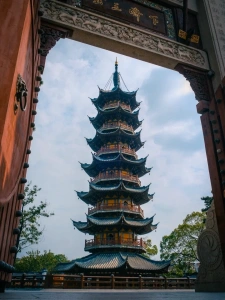
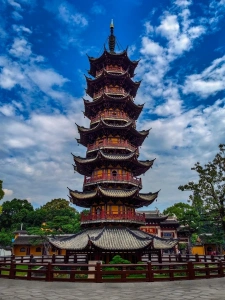
The Longhua Pagoda traces its origin to 247, while the historic form seen today was rebuilt in 977 during the Song Dynasty. It is a seven-tiered octagonal pagoda about 41 meters high, with a brick core, a small square inner chamber, and exterior wooden galleries that reflect Song architectural features. Longhua Pagoda itself is designated as a National Key Cultural Relic Protection Unit; this national protection status applies to the pagoda rather than the entire Longhua Temple complex.
Notably, the pagoda’s design incorporates a unique structure where the orientation of the square rooms alternates by 45 degrees at each level. This innovation balances the distribution of weight and creates an aesthetically pleasing, staggered appearance. Other notable architectural elements include intricate brickwork, cross-shaped brackets, and symbolic carvings, making the Longhua Pagoda a masterpiece of ancient Chinese engineering.
The Temple Gate
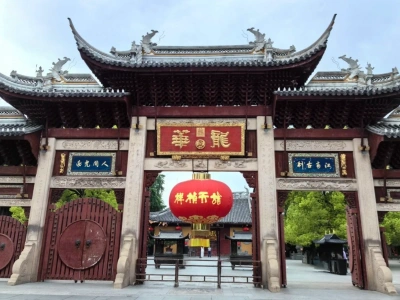
The main gate of Longhua Temple is a grand entrance that sets the tone for the sacred experience awaiting visitors. At the center of the gate, you’ll find a plaque inscribed with the characters “Longhua” in an elegant clerical script. Above the plaque, there is a large imperial seal bearing the inscription “The Treasure Seal of Longhua Lecture Hall Granted by the Emperor,” a significant artifact of the temple’s legacy. Interestingly, this “seal” is actually made of jade, but due to its imperial origins, it is referred to as a “golden seal.”
On either side of the gate, plaques read “Ancient Temple of Jiangnan” and “Dusita of the Mortal World.” These inscriptions highlight Longhua Temple’s status as one of the oldest temples in the Jiangnan region.
Maitreya Hall
Unlike most temples where the first hall is the Heavenly Kings Hall, Longhua Temple begins with the Maitreya Hall. This distinction underscores its unique architectural style. Hanging from the eaves is a plaque inscribed with “Longhua Temple” by the revered Buddhist leader and master calligrapher Zhao Puchu.
Flanking the entrance, two stone lions stand guard. The male lion on the left has a ball under its paw, symbolizing unity, while the female lion on the right steps on a cub, representing prosperity and lineage. These sculptures, known as the “Three Kings Lions,” feature intricate carvings of peonies, phoenixes, and lions on their bases, signifying their supreme status.
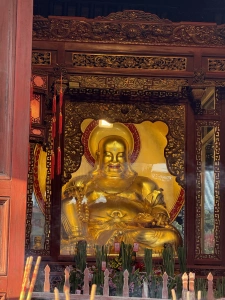
Inside, the hall houses a magnificent brick carving of “Nine Lions,” symbolizing the mission to “save the world.” At the center stands the jovial and rotund Budai Monk, the smiling incarnation of Maitreya Bodhisattva.
Heavenly Kings Hall
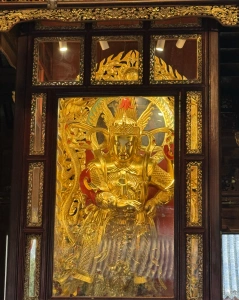
Directly behind the Maitreya Hall is the Heavenly Kings Hall, where the crowned statue of Maitreya Buddha in formal attire takes center stage. Flanking the Buddha are statues of the Four Heavenly Kings, each embodying a protective force. Behind Maitreya Buddha is the deity Wei Tuo, standing guard and facing the Grand Hall of the Great Sage.
Grand Hall of the Great Sage
The Grand Hall, also known as the Mahavira Hall, is one of the most significant parts of Longhua Temple. Its double-eaved roof and intricate ridge decorations epitomize traditional Chinese architectural elegance. Inside, the central statue is of Vairocana Buddha, adorned with a sacred crown and hand gestures symbolizing enlightenment.
Flanking Vairocana Buddha are Manjushri on the left and Samantabhadra on the right, both revered for their wisdom and virtue. The hall also features the Twenty Heavenly Kings, the Eighteen Arhats, and a depiction of the historical Buddha’s profound teachings at Vulture Peak, where disciples and deities gathered to hear his wisdom.
Guanyin Hall
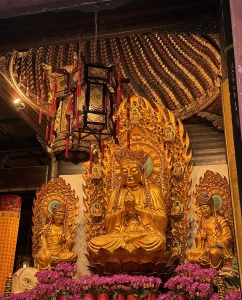
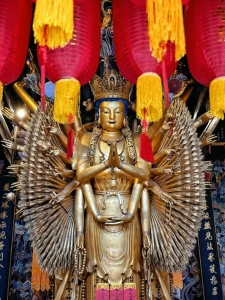
To the west of the Three Saints Hall lies the Guanyin Hall, dedicated to the compassionate Guanyin Bodhisattva. The hall showcases a diverse collection of statues, including the Thousand-Armed Guanyin, thirty-two transformative figures of Guanyin, and representations of major celestial, human, and mythical figures such as Mahadeva, King Prasenajit, and the Eight Kinds of Ghosts.
Guide to Visiting Longhua Temple
Longhua Temple does not require professional tour guides, as it is relatively compact with a well-organized layout. Visitors can explore the temple independently by following the clear signage and descriptions at each hall. The primary experience revolves around incense offerings and soaking in the serene atmosphere. Each hall provides ample historical and cultural context, making it easy for visitors to understand the temple’s rich heritage.
How to Offer Incense at Longhua Temple
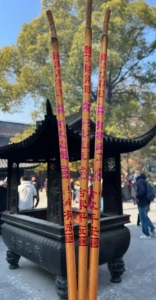
- Enter through the South Gate (main entrance). On the right-hand side, purchase incense: 20 CNY for three large sticks or 3 CNY for a bundle of smaller ones.
- Hold the incense with both hands, make a wish silently, and walk clockwise around Longhua Pagoda three times.
- After completing the walk, light the incense, bow in all four directions clockwise, and place the incense in the censer.
Buddhist Activities at Longhua Temple
New Year’s Eve Bell Ringing
Longhua Temple has a long-running New Year bell-ringing tradition. For the edition held from December 31, 2024 to January 1, 2025, participation used free real-name reservation and no public admission tickets were sold. The participation format can change from one edition to another, so this dated arrangement is a practical example rather than a permanent ticket or fee policy.
Longhua Temple Fair
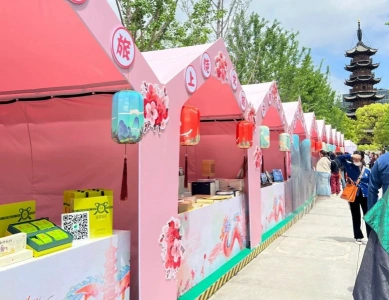
Every spring, typically in March or April, Longhua Temple holds its lively Temple Fair, inspired by the old saying, “On the third day of the third lunar month, visit Longhua and see the peach blossoms.” This festival honors the Bodhisattva Maitreya’s incarnation as the Budai Monk. During this time, the temple hosts commemorative rituals, bustling market stalls, and cultural performances such as dragon and lion dances, traditional crafts, and local snacks.
Temple Ceremonies
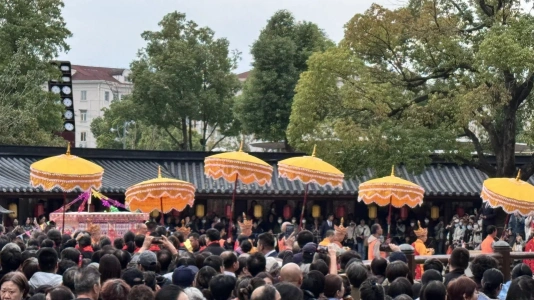
Longhua Temple conducts regular Buddhist ceremonies almost every month, lasting 1–2 days each. Notable events include the Ullambana Festival on the 15th day of the seventh lunar month. If you visit during a ceremony, participating is highly recommended for a deeper cultural experience.
Recommended Vegetarian Noodles Near Longhua Temple
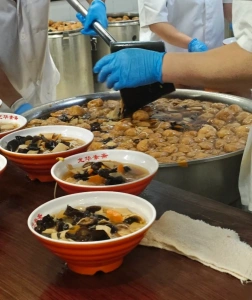
For vegetarian food enthusiasts, Longhua Temple offers its signature vegetarian noodles, a favorite among visitors. Both the noodles and toppings can be refilled at no extra cost.
- Location: Inside the temple, at the farthest end.
- Price: Luohan Noodles – 15 CNY.
Recommended Hotels near Longhua Temple
It’s recommended to stay around Nanjing West Road. There aren’t many other attractions near Longhua Temple, and the visit itself is best planned as a half-day stop. For most travelers, it makes more sense to return to the city center afterward.
By staying near Nanjing West Road, getting to different parts of the city is easy, including the Bund, Yu Garden, Jing’an Temple, People’s Square, Tianzifang, and the former site of the Provisional Government of the Republic of Korea. Nanjing West Road Metro Station is served by Line 2, which provides direct access to most popular attractions and all major transportation hubs. The area also offers a wide range of restaurants and dining options. More detailed hotel recommendations can be found at <Shanghai Hotel Recommendations>.
CitiGO Hotel Jing’an Shanghai
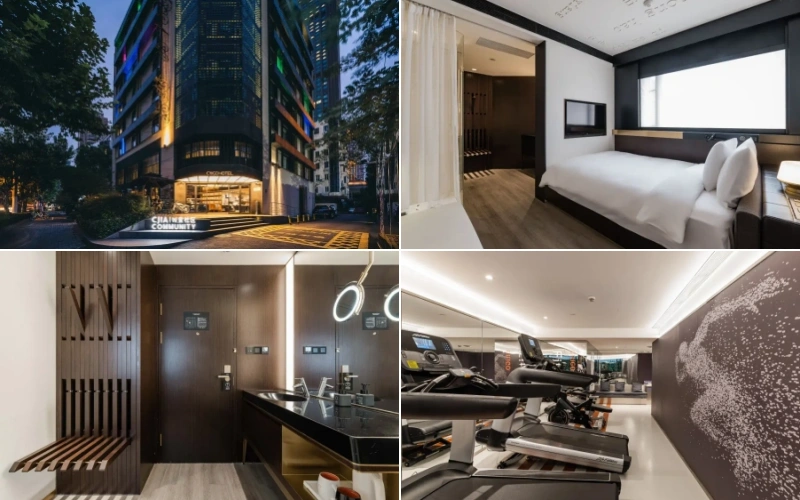
- Location: 12-minute walk from Nanjing West Road Metro Station, 14-minute walk from Shanghai Natural History Museum Metro Station
- Price Range: 422 CNY
- Check Rates: Trip.com Specials, Agoda Deals
- Rating: Trip 9.5 / Agoda 9.4
- Special Amenities: Gym, laundry, robot room service
The hotel is located near the West Nanjing Road shopping district in Jing’an, within walking distance of shopping and dining areas such as HKRI Taikoo Hui, making it convenient for combining shopping, dining, and central Shanghai sightseeing. It is also close to locations related to U.S. Consulate visa services, while West Nanjing Road and the Shanghai Natural History Museum area are easy to reach. Overall, it is best suited to travelers who prioritize a central location, short stays, or business trips.
Rooms are generally compact and better suited to solo travelers or short stays, but cleanliness is consistent, the bedding is soft, and the shower water pressure is good. Breakfast is served until noon, and late-night snacks are also available, which is convenient for late arrivals or travelers with later schedules. The hotel also has a shared workspace, self-service laundry room, gym, and robot delivery, making it especially practical for business travelers and solo trips.
Ji Hotel (Shanghai People’s Square Nanjing Road)
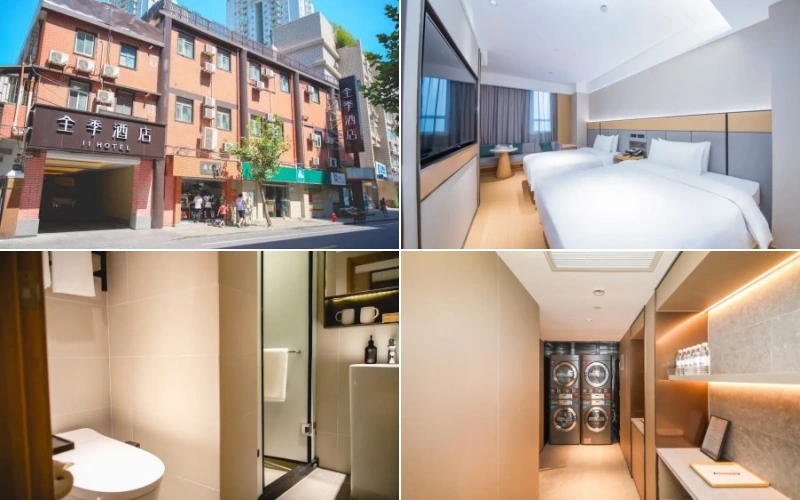
- Location: 9-minute walk from Huangpi South Road Metro Station, 10-minute walk from Nanjing West Road Metro Station
- Price Range: 487 CNY
- Check Rates: Trip.com Specials, Agoda Deals
- Rating: Trip 9.3 / Agoda 9.2
- Special Amenities: Laundry, robot room service, triple rooms
The hotel is located around People’s Square and Nanjing Road, with Shanghai Grand Theatre, Shanghai Museum, and People’s Park all within walking distance, while Nanjing Road Pedestrian Street is also easy to reach. There are plenty of restaurants, convenience stores, and other everyday amenities nearby, making it a practical base for museums, theater performances, and sightseeing around central Shanghai. Both South Huangpi Road and West Nanjing Road metro stations are within walking distance, providing convenient connections to other parts of the city.
Rooms are generally compact and practical, with limited space but all the basic amenities needed for a comfortable stay. Cleanliness and bedding are consistently reliable. Free washing and drying facilities are useful for longer stays or extended trips, and the hotel also offers robot delivery. With plenty of dining options nearby, it suits travelers who value location, transportation, and everyday convenience, while triple rooms are available for groups traveling together.
Taikoo Hui Atour X Hotel, Nanjing West Road, Shanghai
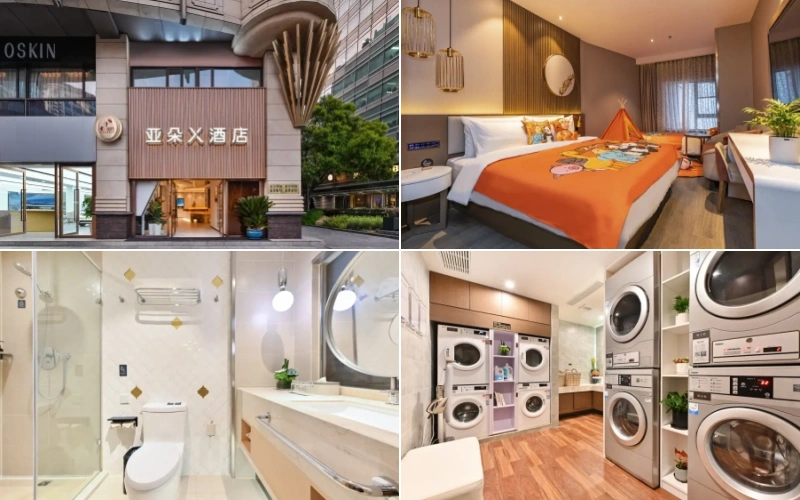
- Location: 7-minute walk from Nanjing West Road Metro Station, 9-minute walk from the Shanghai Natural History Museum Metro Station
- Price Range: 649 CNY
- Check Rates: Trip.com Specials, Agoda Deals
- Rating: Trip 9.5 / Agoda 9.4
- Special Amenities: Laundry, robot room service, triple rooms, family rooms
The hotel is located in the heart of the West Nanjing Road shopping district, with shopping and dining destinations such as HKRI Taikoo Hui, Wujiang Road Food Street, and the Shanghai Starbucks Reserve Roastery nearby, making it especially convenient for travelers interested in shopping and food. West Nanjing Road Metro Station is a 7-minute walk away, and several metro lines provide easy connections to other parts of central Shanghai, including attractions such as the Shanghai Natural History Museum. The surrounding area is packed with shops and restaurants, making the hotel suitable for both family trips and itineraries focused on central Shanghai sightseeing.
Rooms are generally clean, with comfortable bedding and pillows, while the bathrooms and in-room facilities feel relatively well maintained and up to date. Breakfast offers a good range of choices, and evening snacks include congee, xiaolongbao, and side dishes. The hotel has a laundry room and robot delivery, as well as triple rooms and family rooms, making it a convenient choice for families or groups traveling together.
Okura Garden Hotel Shanghai
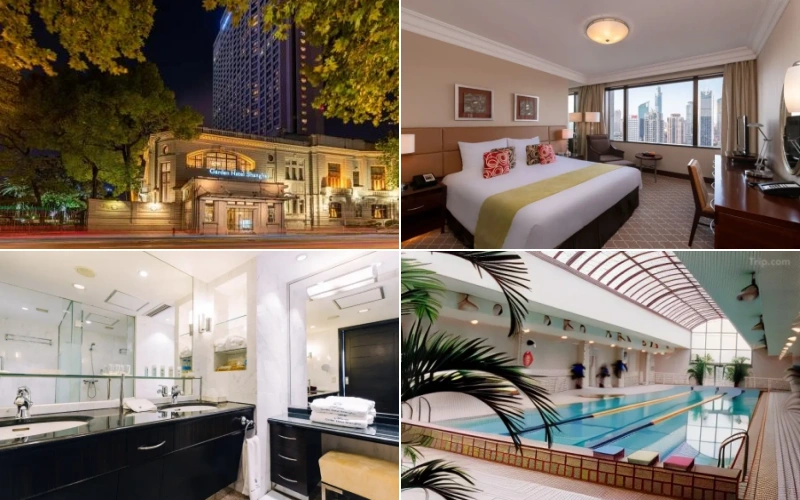
- Location: 5-minute walk from Shaanxi South Road Metro Station, 12-minute walk from Nanjing West Road Metro Station
- Price Range: 885 CNY
- Check Rates: Trip.com Specials, Agoda Deals
- Rating: Trip 9.4 / Agoda 9.1
- Special Amenities: Triple rooms, family rooms, connecting rooms
The hotel is located near Huaihai Road, a 5-minute walk from South Shaanxi Road Metro Station, with Changle Road and numerous restaurants and small shops within easy walking distance. It features a large garden and historic architectural spaces, providing a relatively peaceful environment despite its central location. It is well suited to travelers who enjoy the atmosphere of old Shanghai, walking around the Huaihai Road area, and combining convenient transportation with a quieter setting.
The hotel’s public areas and garden are major highlights, with distinctive historic architecture, a spiral staircase, and landscaped grounds that also give families space to walk around within the property. Mattresses, pillows, and bedding are comfortable, and room cleanliness is consistently maintained, although the in-room facilities show their age more noticeably. Breakfast has a distinct Japanese influence, while the overall service style is attentive and traditional.
The St. Regis Shanghai Jingan
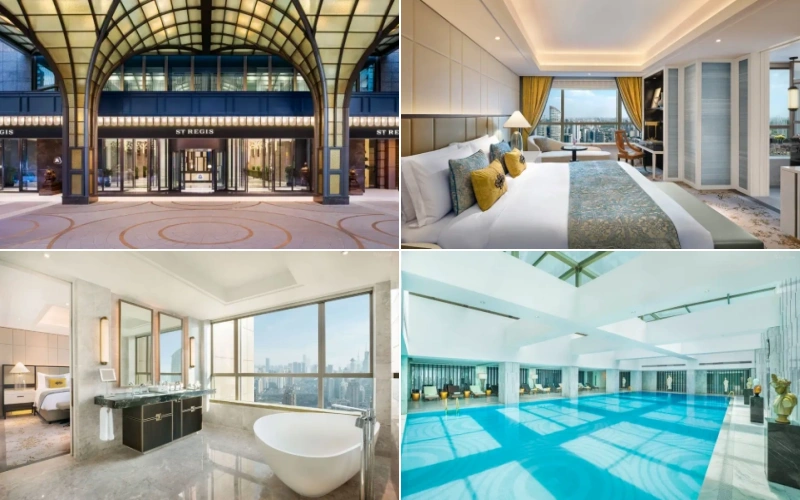
- Location: 7-minute walk from Nanjing West Road Metro Station
- Price Range: 1,639 CNY
- Check Rates: Trip.com Specials, Agoda Deals
- Rating: Trip 9.4 / Agoda 9.3
- Special Amenities: Gym, swimming pool
The hotel is located in a prime area of Jing’an near West Nanjing Road, surrounded by a wide selection of shopping and dining options. Jing’an Temple, the West Nanjing Road shopping district, Shanghai Natural History Museum, and other central Shanghai destinations are convenient to reach. West Nanjing Road Metro Station is a 7-minute walk away, making the hotel a good choice for travelers who want to stay in central Shanghai while combining shopping, family travel, and city sightseeing.
Rooms are spacious and commonly feature walk-in closets, double vanities, and bathtubs. Higher floors offer better views, while the bedding is comfortable and soundproofing is generally reliable. The hotel has a more traditional luxury style, and although some facilities have been in use for some time, they are well maintained. Butler service is one of its key features, and the hotel also has a swimming pool and gym, along with a wide breakfast selection.
How to Get to Longhua Temple from Downtown Shanghai
By Metro
- Take Line 11 or Line 12 of the metro, get off at Longhua Station, exit from Exit 4, and walk for 5 minutes to reach Longhua Temple.
- Take Line 3 of the metro, get off at Longcao Road Station, exit from Exit 3, and walk about 10 minutes to reach Longhua Temple.
- Transportation Card Purchase: Trip.com Discounts, Klook Deals, KKday Offers
By Bus
Several bus lines, including 41, 44, 73, 87, and 104, provide direct access to Longhua Temple.
- Transportation Card Purchase: Trip.com Discounts, Klook Deals, KKday Offers
By Taxi or Rideshare
A taxi or rideshare from downtown Shanghai to Longhua Temple takes approximately 20–30 minutes, with an estimated fare of 30 CNY.
How to plan your Shanghai trip
Most first-timers spend 2–3 days in Shanghai for the highlights. Add a 3rd day for Shanghai Disneyland or a nearby water town. If you want the classic Jiangnan loop, plan 4–5 days to include Suzhou and Hangzhou. Here are our most popular private tour options:
- 5-Day Shanghai, Suzhou & Hangzhou Private Tour (with Shanghai Disneyland) — Disneyland, Suzhou gardens and West Lake in one trip.
- 4-Day Shanghai Private Tour (with Shanghai Disneyland & Oriental Pearl Tower) — Disneyland and Shanghai’s iconic landmarks in one trip.
- Shanghai 3-Day Private Tour (with Disneyland) — Disneyland fun with private comfort and flexible pace.
- Shanghai 2-Day Private Tour — Private 2-day tour of Shanghai’s top sights.
FAQ
Due to the stone-paved pathways and several staircases within the temple, strollers may not be convenient. It’s recommended to use a baby carrier for a smoother visit.
Although Longhua Temple does not have official luggage storage facilities, a storage service is available about 200 meters from the temple’s entrance, near Exit 3 of Longhua Metro Station. The service operates between 8:00 AM and 9:00 PM.
Essential Shanghai Travel Resources
- Comprehensive Shanghai Travel Guide 📖
- Shanghai Travel Recommendations 🏙️
- Hotel Recommendations 🏨
- Transportation Guides ✈️ 🚇 🚄 🚆
- Essential Travel Tips and Tools 🗺️ 🍜 📱 💸 🌤️ 💊🛍️🔌📶🧳
- 🗺️ Shanghai Maps
- 🍜 Shanghai Food and Dining Guide
- 🎁 Shanghai Souvenirs Guide
- 📱 Essential Travel Apps
- 💸 China Tax Refund Guide
- 🌤️ Shanghai Weather Guide
- 💊 Essential Medicines for Traveling
- 🛍️ Travel Deals China
- 🔌 China Plug Types and Power Adapter Guide
- 📶 How to Use eSIM China
- 🧳 Packing List and Travel Checklist